What Is The Best Time Of Day To Snorkel In Kauai?
Morning light, calm wind and slack swell make the hours before 10 a.m. the best snorkel window on Kauai. Here is how the day, the wind and the season change the water, and which boat departures match.
What Is The Best Time Of Day To Snorkel In Kauai?
Kauai's clearest snorkel water exists in a narrow window, and it opens early. Between roughly 7 and 10 a.m., the trade winds are still light, the sun is low enough that light penetrates the water rather than glaring off it, and the overnight wind lull has left the surface glassy. By early afternoon, all three of those conditions have usually reversed, and the reef that looked like an aquarium at 8 a.m. can turn milky and choppy by 1 p.m. This page walks through what changes hour by hour, how the season stacks on top of the time of day, and which boat departures on this coast actually put you in the water during the good window.
When Is The Best Time To Snorkel On Kauai?
The best time to snorkel on Kauai is the morning, ideally between 7 and 10 a.m., when trade winds are light, the surface is calm and underwater visibility is at its peak. Afternoon wind and chop degrade visibility on most reefs, and operators schedule their snorkel stops around this pattern. On a boat tour, that means choosing a morning departure.
The morning advantage is not a local superstition. It is the predictable result of how trade winds behave over an island. Overnight, the pressure gradients that drive the trades relax, and the first hours after sunrise are usually the calmest of the day. The National Weather Service coastal waters forecast for Kauai's leeward waters describes a repeating pattern: east to northeast winds around 15 to 20 knots persisting through the day, with scattered showers concentrated in the morning. Those showers are mostly a land phenomenon; the wind is the ocean one.
That matters because visibility underwater is destroyed by two things: suspended sediment and surface chop. Sediment gets stirred by swell and surge, and chop scatters light at the surface so that everything below ten feet goes flat and green. Morning minimizes both. The surface has not yet been roughed up, the sun angle sends light down into the water column instead of bouncing off it, and the fish are mid-morning active rather than hiding from midday glare.
For a snorkeler standing on a beach choosing a time, the rule is simple: be in the water before the wind fills in, and be out before it turns the surface to whitecaps. For a snorkeler booking a boat tour, the rule is nearly the same but expressed as a departure slot. A five and a half hour trip that leaves Port Allen at 7 a.m. puts its snorkel stop in the late morning. A trip that leaves at noon puts it in the worst hours. The same reef, the same operator, the same gear, and a completely different experience, purely because of the clock.
If you are still narrowing down whether a snorkel tour on this coast is worth the money at all, the honest breakdown is in is the Napali Coast boat tour worth it, and the full snorkel-product landscape is in the Napali Coast snorkel tours guide.
Why Is Morning Water Clearer?
Morning water is clearer because overnight calm lets suspended particles settle, low sun angle drives light into the water column instead of off the surface, and fish feed actively in the first hours. By afternoon, wind-driven chop resuspends sediment and scatters light, cutting visibility on the same reef, sometimes by more than half.
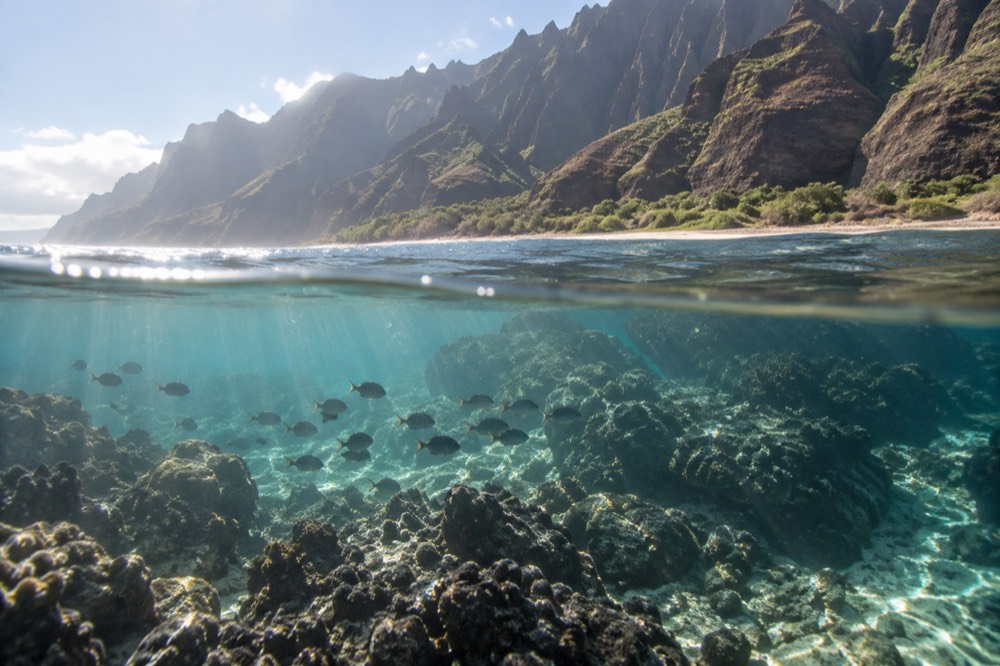
Three separate mechanisms stack up, and it is worth understanding each because they fail independently.
The first is settling. Fine sediment, plankton and sand stirred by the previous day's wind and surge need calm hours to drop out of the water column. The overnight wind lull provides exactly that. A reef that was churned up at 4 p.m. can be visibly clearer by 7 the next morning without anything else changing. This is why the first snorkelers of the day so often report the best conditions, and why the same spot an hour later can look completely different.
The second is light angle. When the sun is low, light enters the water at an angle that illuminates rather than blinds. Underwater photographers chase this window for a reason: colors stay saturated, the reef texture reads in three dimensions, and fish are lit from the side instead of from above as harsh points of glare. As the sun climbs toward noon, surface reflection increases and the contrast underwater collapses. Snorkelers notice this as the water "going flat" even when the surface is still calm.
The third is animal behavior. Reef fish feed heavily in the first hours of daylight and again toward dusk. Midday, many species drop into the reef structure or into shade. A morning snorkel puts you in the water during the busy shift: wrasse working the sand, butterflyfish on the coral heads, schools of convict tang moving through. The reef is not empty in the afternoon, but it is quieter.
None of this requires a boat. It applies equally to a shore snorkel. But on this coast the best snorkel spots, places like Nualolo Kai below the Napali cliffs, are only reachable by water, so the morning window and the boat schedule have to line up. Operators know this. Makana Charters describes a snorkel stop of about one hour at a location chosen by the day's conditions, typically on the leeward coast, and the permitted raft tours that land at Nualolo Kai schedule it as a late-morning centerpiece of the trip, not an afterthought.
What Changes By Afternoon?
By afternoon, three things change: the trade wind has typically built to its 15 to 20 knot daytime speed, surface chop scatters light and stirs sediment, and the sun's high angle flattens underwater color and contrast. Visibility drops, surge increases near reef edges, and the same site feels rougher and quieter.
The afternoon reversal is reliable enough that you can plan around it. The wind builds through the morning as the island heats and the trade regime re-establishes itself, usually peaking mid to late afternoon. On the water this shows up first as a texture change, then as wind against tide or swell, then as spray and whitecaps. For a snorkeler, chop matters more than wind speed itself: even 15 knots of breeze over a long fetch can rough a surface badly enough that you cannot see down your own mask.
| Condition | Morning (7 to 10 a.m.) | Midday (11 a.m. to 1 p.m.) | Afternoon (2 p.m. onward) |
|---|---|---|---|
| Wind | Light, building slowly | Established trades | Peak trades, 15 to 20 knots common |
| Surface | Glassy to light ripple | Moderate chop | Choppy, occasional whitecaps |
| Visibility | Best of the day | Declining as light flattens | Reduced by stirred sediment |
| Light underwater | Angled, saturated color | High angle, flat contrast | Long angle but rough surface scatters it |
| Fish activity | Feeding, active | Quieter, in structure | Mixed, sheltering from surge |
| Comfort on a raft | Dry ride | Occasional spray | Wet, bumpy ride |
There is one genuine afternoon exception worth naming: on the leeward west side, some afternoons stay workable when the trades are weak, and in winter the pattern softens overall. But "workable" and "best" are different standards, and the afternoon products on this coast reflect that. Kauai Sea Tours notes that from late October to May it does little afternoon snorkeling, and its afternoon sailing in those months becomes a sunset and whale watch cruise instead of a snorkel trip. When the operator whose business is snorkeling quietly removes the afternoon snorkel stop from its own winter schedule, that is the pattern speaking.
The other afternoon factor is people. Beach snorkel sites on Kauai fill through the day, and the popular shore spots are at their most crowded exactly when conditions are at their worst. A morning start gets you better water and fewer fins in your face. On a boat tour, crowding is capped by the passenger list, which is a real advantage at peak times; mid-2026 Kauai was still absorbing well over 100,000 visitor arrivals a month through the summer, and the water reflects it.
One more thing belongs in the afternoon column: safety. Hawaii Department of Health data for 2019 to 2023 show 91 percent of snorkeling drowning victims were visitors, and ocean drownings accounted for 83 percent of all drownings in the state. Rougher afternoon water, tired swimmers and a long day in the sun are a bad combination. The morning window is not just prettier, it is the lower-risk window.
How Does Wind Build Through The Day?
Wind on Kauai follows a daily cycle: overnight calm, a light-morning fill-in, and a mid to late afternoon peak as heating drives the trade regime. The National Weather Service forecasts leeward Kauai waters with east to northeast winds of 15 to 20 knots through the day, and the calmest surface hours are reliably before that flow establishes.
The mechanism is island heating. Kauai's interior, including the high wet country around the island's summit region, warms through the morning and pulls the trade flow across the leeward waters harder as the day progresses. The leeward coast where the snorkel boats run sits in the wind shadow of the island itself, which is exactly why the harbors are there, but the shadow erodes as the wind builds and bends around the island's ends. The practical result: the first two or three hours after sunrise are the closest thing to a guarantee this coast offers.
Forecasters even define surf danger by shore orientation, which tells you how much the direction of the wind and swell matters here. The National Weather Service Honolulu issues high surf advisories for Kauai's west-facing shores beginning at 12 feet and warnings at 20 feet, and for south-facing shores at 10 and 15 feet. Those thresholds are about swell, not wind, but they underline the same point: conditions on any given Kauai shore are directional, and the west side where every tour on this roster departs is a different ocean from the north shore on the same day.
For snorkelers, the wind cycle sets the deadline. Whatever you want from the water, clear photos, calm entry, a relaxed hour on the reef, it needs to happen before the afternoon fill-in. That is why the short snorkel products are morning products, and why the afternoon slots on this coast sell sunset and sightseeing instead.
Which Boat Departures Match That?
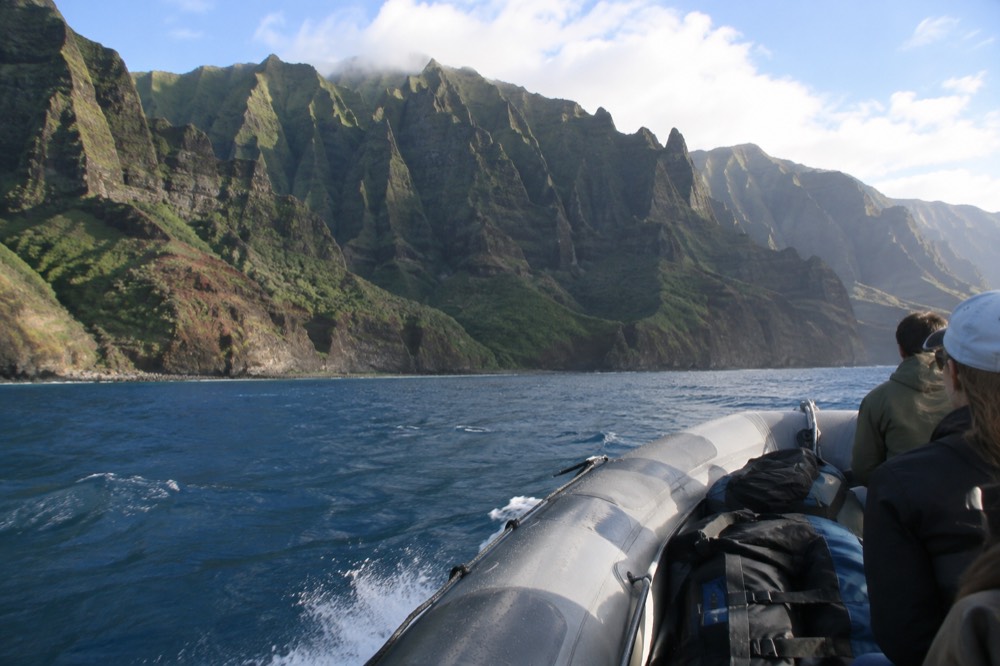
The departures that match the morning window are the early ones: the 5 and a half hour raft and catamaran snorkel trips from Port Allen and the 3 hour Zodiac trips from Kikiaola all put their snorkel stop inside the late morning. On this roster, that means the raft and Zodiac products, plus the morning catamaran sails, are the correct booking for best-water snorkeling.
The roster's structure makes this easy to read. The trips designed around a snorkel stop run long enough to reach the coast, stop for roughly an hour in the water, and get back, which only works as a morning or early afternoon product. The sunset products do not include a snorkel stop at all, or in one case pair dinner with a brief swim late in the day. The full index of guides sits on Napali Coast Boat Tours.
| Tour | Operator | Length | Departs | Snorkel Stop | Rating And Reviews | From (Per Person) |
|---|---|---|---|---|---|---|
| Zodiac Raft Sea Caves and Snorkel Option | Na Pali Riders | 3 hours | Kikiaola (Waimea) | Yes, conditions permitting | 4.9 from 279 reviews | $225 |
| Na Pali Raft Snorkel Adventure | Kauai Sea Tours | 5 hours 30 minutes | Port Allen (Eleele) | Yes, conditions permitting | 4.8 from 1,656 reviews | $217 |
| Na Pali Coast Power Catamaran | Na Pali Experience | 4 hours 30 minutes | Kikiaola (Waimea) | Yes, conditions permitting | 5 from 811 reviews | $274.93 |
| Express Na Pali Snorkel Tour aboard 'Imiloa | Kauai Sea Tours | 4 hours 30 minutes | Port Allen (Eleele) | Yes | 4.7 from 346 reviews | $212 |
| Na Pali Boat Tour on the Amelia K | Makana Charters | 5 hours | Port Allen (Eleele) | Yes, conditions permitting | 4.9 from 2,050 reviews | $227.13 |
Read that table as a timing map. The 3 hour Zodiac option from Na Pali Riders is the tightest morning product: a short, fast run out of Kikiaola, sea caves when the swell allows, and a snorkel stop inside the good window. Its own listing notes that cave entry and snorkeling are most reliable in summer, which is the honest version of what every operator on this coast sells as conditions permitting.
The longer morning products buy you more coast, not better water. The 5 and a half hour raft trip from Kauai Sea Tours includes breakfast, holds a maximum of 14 guests, and runs year round, weather permitting, with a snorkel stop and sea cave runs when conditions allow. The power catamaran from Na Pali Experience covers similar ground with more deck space and snacks. If your priority is the snorkel itself rather than the mileage, the shorter morning trips deliver the same water window for less time committed, and the longer ones trade an early finish for caves, coastline and a meal.
One timing note that surprises people: the shortest trips are not automatically the earliest in the water. A 3 hour trip from Kikiaola and a 5 and a half hour trip from Port Allen may both put their snorkel stop around 10 to 11 a.m., because the Port Allen boat spends more of its day getting there and back. If the snorkel stop is the point of the trip, check the departure time and do the arithmetic before you book.
Does The Season Matter More?
Yes, on this coast the season matters more than the hour. Two recent years of buoy data show summer mornings with offshore seas almost never above 2.5 meters, while December and January reach that level in about half of observations. In winter, no time of day rescues a trip the swell has canceled; in summer, almost any morning works.
Time of day controls wind and light. Season controls swell, and swell controls whether the trip happens at all. The pattern from the measured record is stark: from June through September, the north shore buoy recorded seas at or above 2.5 meters in 0.1 to 1.6 percent of observations, essentially never. In January, 52 percent of observations hit that level, and a quarter exceeded 3.5 meters. The west side runs calmer than the buoy's north shore position, but the direction of the pattern holds everywhere on this island.
| Period | Offshore Sea State Pattern | Snorkel Outlook On The West Side |
|---|---|---|
| June to September | Tiny seas, near-zero share of large swell observations | Best window; morning snorkel stops almost always run |
| April to May | Shoulder, occasional large swell events | Good; book early in your stay to allow a rebook |
| October to November | Shoulder, swell events increasing | Workable mornings, more cancellations |
| December to March | Frequent large swell, trade winds variable | Snorkel stops least reliable; sunset and whale products dominate |
Operators publish the same conclusion in their own words. Kauai Sea Tours sells its raft beach landing and afternoon raft snorkel from May to October, and Makana Charters describes Nualolo Kai as accessible roughly April through October when northwest swells settle enough for safe access. The 15 May to 7 September dates you will see quoted around the internet are the kayak and Miloli'i landing rules, not a boat season; motor boat tours run year round, conditions permitting. But the product mix rotates: winter is when the roster leans toward sunset sails and whale watching, and the snorkel-centered trips thin out.
The booking strategy that falls out of this is the one operators themselves recommend: reserve early in your stay, not at the end. If a morning swell cancels the trip, you still have days left to rebook, and every product on this roster carries free cancellation. A snorkel tour booked for your last morning has no second chance.
What About North Shore Sites?
Kauai's north shore has well known shore-snorkel sites around Hanalei and Haena, and in summer their mornings are excellent, but no boat tour on this roster departs there. All 26 tours leave Port Allen or Kikiaola on the west side. For a north shore snorkel you drive, and winter surf makes many of those sites unswimmable.
This is the honesty gap on this page: if you found it hoping to book a north shore snorkel boat, that product is not on this roster. Hanalei has no small boat harbor at all; boats there work off the open bay, and the north shore's exposed reefs are a shore-access story, not a tour one. The west side is where every bookable trip on this site begins, and the comparison between the two coasts, swell exposure, drive time, harbor facilities, is laid out in Kauai north shore versus west side boat tours.
For shore snorkeling, the same morning rule applies with a north shore modifier. The famous summer sites near Haena are calmest and clearest before the trade wind fills in, but they sit inside a state park reservation system: non-residents need a day-use entry reservation at $5 per person plus a parking reservation at $10 per vehicle, available 30 days in advance. In winter, the same beaches face the largest seas in the measured record, and the snorkel season there effectively closes.
The west side's snorkel advantage is exactly this: it sits in the island's lee, it departs from real harbors, and its reefs sit along a coast that boat tours can reach in under an hour. If your Kauai trip is built around a boat day, the west side morning is the plan that works in the most months of the year.
Which Departure Should You Book?
Book the earliest morning snorkel departure that fits your trip, in the calmest month you can manage. On this roster that means a morning raft or Zodiac product: the 3 hour Zodiac sea caves and snorkel option from Na Pali Riders, or the 5 and a half hour raft snorkel from Kauai Sea Tours, both of which place their water time in the late morning window.
Put the whole article into one decision. The hour gives you clear, calm, well-lit water before the trade wind builds, and the morning is when that hour exists. The season decides whether the swell lets the boat reach the good reefs at all, so summer and the April to October shoulder are the reliable months, and booking early in your stay buys you a rebook if the ocean says no. The format decides how much of the coast you see around the stop: a Zodiac gets you into sea caves when the swell allows, a raft adds a beach landing season on some trips, a catamaran adds space and a meal.
Three practical rules finish it off. First, book the earliest departure on the list, not the cheapest slot; the price difference between morning products on this roster is small and the water difference is large. Second, take the motion sickness question seriously if you are prone, because a morning start on calmer water is also the easiest ride of the day; the full picture is in will I get seasick on a Napali boat tour. Third, respect the wildlife rules that come with clear water: Hawaiian monk seals carry a recommended 50 foot viewing distance, 150 feet for mothers with pups, and green sea turtles are fully protected with no take allowed at any time, per the state Division of Aquatic Resources.
The reef itself is protected too. Hawaii law prohibits the sale of sunscreens containing oxybenzone or octinoxate without a prescription under Act 104, so bring a mineral formula. And if you are snorkeling from your own vessel or off a beach near boat traffic, state rules require a diver's flag at least 12 by 12 inches, with snorkelers staying within 100 feet of it, per the Division of Boating and Ocean Recreation.
That is the whole formula: morning, west side, a raft or Zodiac format, a summer or shoulder month, and a booking made early enough in your stay to survive a swell day. The rest, caves, landings, dolphin sightings, is what the ocean gives you on top of a decision you have already made correctly.
Common Questions About Snorkeling On Kauai
What Is The Best Time Of Day To Snorkel In Kauai?
The morning, roughly 7 to 10 a.m., before the trade wind builds. Light is angled into the water, the surface is calm, sediment has settled overnight, and reef fish are actively feeding. Afternoon wind and chop reduce visibility and comfort on the same reef.
Is afternoon snorkeling ever worth it on Kauai?
Occasionally, when the trades are weak or a south swell is absent, a leeward afternoon stays workable. But it is never better than the same morning, and in the October to May half of the year many operators quietly remove afternoon snorkel stops from their schedules entirely.
Does the time of day matter more than the season?
No. The season matters more. Summer mornings are close to a sure thing; winter mornings can still be canceled by swell. Time of day controls wind and light, but season controls whether the boat runs and whether the cave and snorkel stops happen at all.
Which boat tours put you in the water during the clear window?
The morning raft and Zodiac products. The 3 hour Zodiac sea caves and snorkel option from Na Pali Riders and the 5 and a half hour raft snorkel from Kauai Sea Tours both schedule their stops in the late morning, when visibility is at its best.
Why is morning water clearer than afternoon water?
Overnight calm lets suspended particles settle, and low sun angle sends light down into the water instead of glaring off the surface. Afternoon wind chop resuspends sediment and scatters light at the surface, cutting visibility on the identical reef.
Do I need reef-safe sunscreen for Kauai snorkeling?
Yes, and it is the law, not a suggestion. Hawaii prohibits the sale of sunscreens containing oxybenzone or octinoxate without a prescription, so bring a zinc oxide or titanium dioxide formula for your snorkel stop.