Can You See Whales From The Shore In Kauai?
Yes, humpback whales are visible from Kauai shorelines from November through April, and the north shore lookouts inside the whale sanctuary are the reliable spots. Here is how shore watching compares with a winter boat day.
Can You See Whales From The Shore In Kauai?
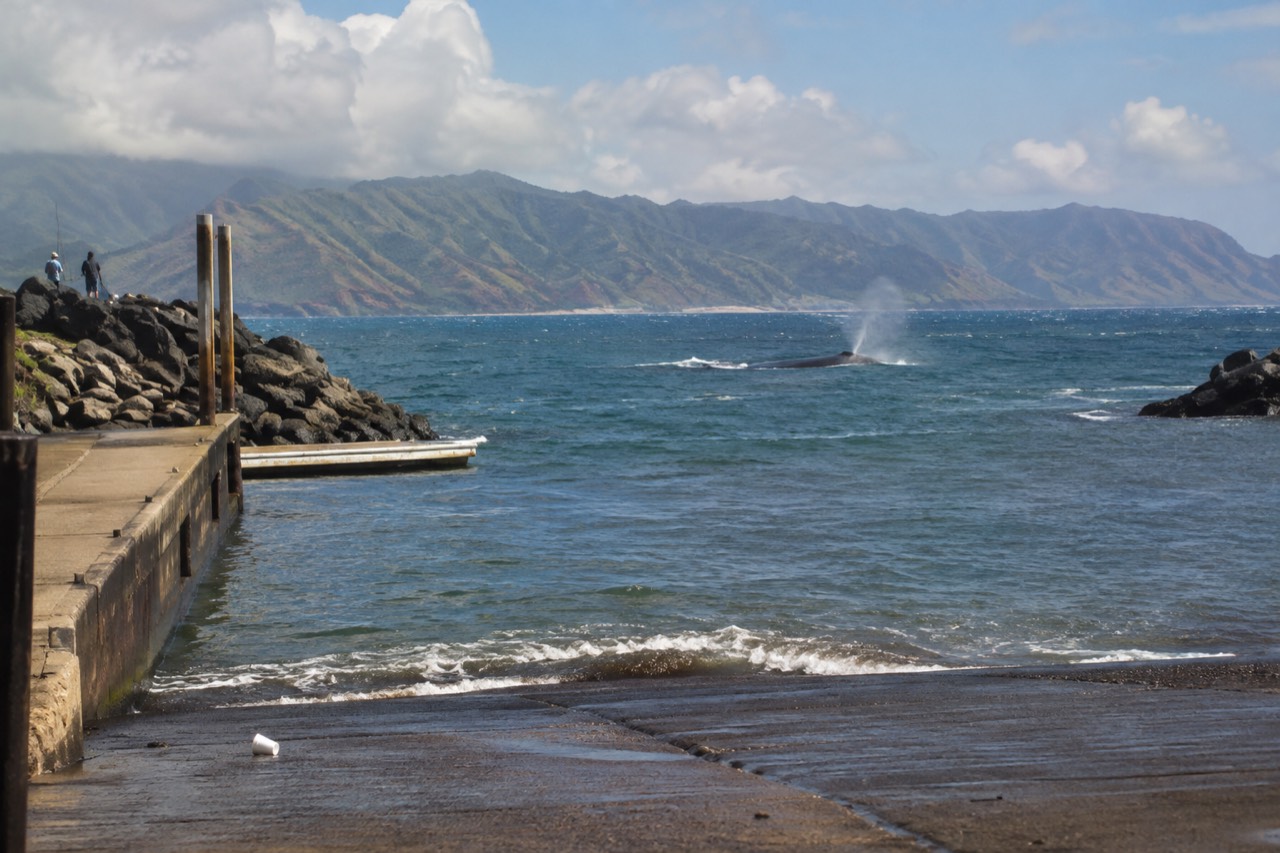
Yes, and reliably. North Pacific humpbacks winter in Hawaiian waters from November through April, and the sanctuary's own Kauai unit covers the north shore from Kailiu Point east to Mokolea Point, so whales regularly surface within sight of land. A coordinated shore count in late February 2026 logged 337 whale sightings from Kauai's shore stations alone. The catch is distance and luck: from shore you watch blows and flukes far offshore, while a boat brings the encounter to eye level.
Can You See Whales From Shore On Kauai?
Yes, humpback whales are visible from Kauai's shorelines every winter, and the north shore is the statistically best place to stand. The Hawaiian Islands Humpback Whale National Marine Sanctuary runs its Kauai unit along the north shore precisely because whales congregate in the shallow water there. Expect distant blows, breaching silhouettes and tail slaps rather than close encounters, and plan on scanning the water for a while between sightings.
The sanctuary's own visitor guidance is direct on the season: humpbacks travel to Hawaii's warm, shallow waters each winter to mate, calve and raise their young, and from November through April visitors to the sanctuary can see whales. Kauai's piece of that sanctuary runs from Kailiu Point eastward to Mokolea Point, which maps to the coastline around Hanalei and out toward Kilauea. That is the stretch of island where the whales are structurally closest to land, because the sheltered, shallow shelf they prefer for calving sits just offshore.
What a shore sighting actually looks like matters for expectations. An adult humpback's blow can reach several metres and is visible from a long way off, and a full breach is unmissable at any distance. But most shore watching is quieter: a distant plume of spray, a dark back rolling once, a fluke raised before a dive. Binoculars change the experience completely. A spotting scope or a good pair of 10x binoculars turns a speck on the horizon into an animal.
The community-science record backs the claim with numbers. The Sanctuary Ocean Count and Great Whale Count on February 28, 2026 used 46 shore stations across the main Hawaiian Islands and recorded 1,935 total humpback sightings, of which 337 came from Kauai. Those are trained volunteers counting from land, on a single morning, in the peak of the season. Across the whole 2026 count season, more than 1,200 volunteers observed 4,325 humpbacks over three coordinated count days. Shore watching is not a consolation prize in Kauai, it is a genuine wildlife activity with its own organised infrastructure.
One honest note before anything else: this site sells boat tours, and it does not sell a dedicated whale-watch product. Nothing on our roster is a whale-watch tour. What we can book are sunset, snorkel and sightseeing trips that run the same waters where the whales are, and in winter the crews watch for them. The rest of this article separates what a free afternoon at a lookout gets you from what a paid day on the water adds, without pretending the two are the same product.
If a winter evening on the water sounds better than a morning at a railing, the three trips above are the ones to compare first. All three depart Port Allen on the southwest shore, all three carry free cancellation, and none of them promises whales, because nobody honestly can.
Which Lookouts Work Best?
The north shore between Kailiu Point and Mokolea Point is the strongest ground, because it faces the sanctuary's Kauai unit where the whales actually gather. Hanalei Bay overlooks and roadside coastal pull-offs are free, while the Kilauea Point National Wildlife Refuge charges $11.00 per adult and takes a reservation, open Wednesday to Saturday, so budget for that one; any elevated coastal trailhead with a clear ocean view rounds out the reliable picks. On the west side, beaches near Polihale and the Waimea stretch can produce sightings but the odds are thinner and the animals typically farther out.
The single most useful fact for a shore watcher is the sanctuary boundary. The Kauai unit of the Hawaiian Islands Humpback Whale National Marine Sanctuary runs to the 100-fathom isobath from Kailiu Point eastward to Mokolea Point. Kailiu Point sits at the western edge of Hanalei's coastal stretch, and Mokolea Point is the headland near Kilauea on the island's northeast corner. Everything between them is the calving-and-mating ground the federal government drew a line around. Standing anywhere on that coastline with a view of the water puts you on the rim of the whale grounds.
Elevation helps more than proximity. A beach at sea level gives you a narrow slice of the ocean surface, while a headland or a coastal trail even 30 metres up widens your field of view dramatically and lets you pick out blows at greater distance. The Kilauea Point area works because of height. The Hanalei overlooks work because the bay is a known aggregation area. Any west-side beach works occasionally because whales pass along that coast too, but the sanctuary line stops at Kailiu Point, and the densest activity is east of it.
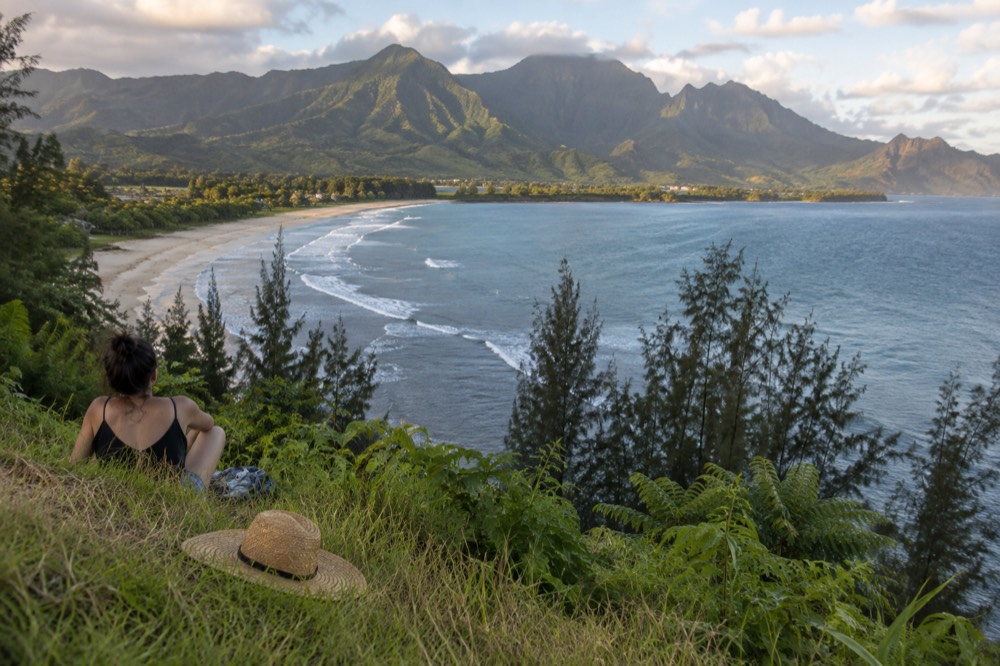
Timing within the day matters less than people assume. Whales do not keep office hours, and the shore count stations run standardized morning windows mainly for consistency of the data, not because mornings are when whales perform. What does help is light: a low sun behind you lights up the sea surface and makes distant blows pop, while a high noon glare flattens everything. If you have a choice, mid-morning to early afternoon with the sun at your back beats staring into a sunrise.
Bring the right kit and the free activity gets better. Binoculars are the difference between "I think that's a whale" and watching a mother and calf travel together for ten minutes. A hat, reef-safe sunscreen, water and something to sit on cover the rest. If you want structure, the sanctuary's Ocean Count program runs shore stations on Kauai on set winter Saturdays, and volunteering at one is a way to watch from a proven site alongside people who know what to look for.
What Months Give The Best Odds?
November through April is the official sanctuary season, with December through March the peak and January to February the strongest months of all. The February 2026 coordinated count recorded 1,935 sightings across the islands in a single morning, which tells you how dense the population is at the season's midpoint. Outside the season, May through October, shore sightings are rare enough that planning around one is not realistic.
The sanctuary publishes the window plainly: from November through April, visitors can see whales. The first arrivals show up in late autumn, numbers build through December, and the population peaks in the middle of winter. The Ocean Count calendar is itself a map of the peak: the 2026 counts ran on January 31, February 28 and March 28, three Saturdays placed exactly where the sightings curve is highest. Nobody schedules a count in July.
There is a wrinkle worth knowing, and it is the kind of thing that does not make the first page of a search result. The whale peak and the big-swell season are the same months. Two recent years of measured offshore wave data from the Hanalei buoy show the north shore's largest seas in November through February, with roughly half of January observations at or above 2.5 metres significant wave height. The whales and the surf arrive together. That is exactly why dedicated winter whale-watch boats run from the west and south sides of the island rather than the exposed north shore, and why a shore watcher on a north-shore overlook in January may be watching 15-foot surf as often as watching whales.
For a winter visitor, the practical read is simple. Book nothing whale-specific for November or April and expect a guaranteed show, because the edges of the season are thin. If your trip falls in January or February, both a lookout morning and a boat afternoon have excellent odds. And if your trip falls outside the season entirely, the whales are genuinely not the reason to be on or beside the water, but the coast itself still is.
How Close Do They Come In?
Close enough to surprise people, occasionally. Humpbacks sometimes enter bays and work water just outside the surf line, and mothers with calves favour shallow, sheltered stretches, which is exactly what Hanalei Bay is. But the law caps every encounter: vessels must stay at least 100 yards from a humpback, so even a boat never gets what most people picture as "close". From shore, a whale inside a bay is a gift of geography, not a schedule.
The legal distance is the number to hold onto. Federal regulations prohibit approaching within 100 yards of any humpback whale by any means, including by vessel, and prohibit operating aircraft within 1,000 feet of one. Those limits apply throughout waters within 200 nautical miles of the main Hawaiian Islands, so they cover every inch of Kauai's coast, sanctuary or not. A tour boat that is doing everything right looks, from the passenger's seat, like it is keeping a respectful distance, because it is.
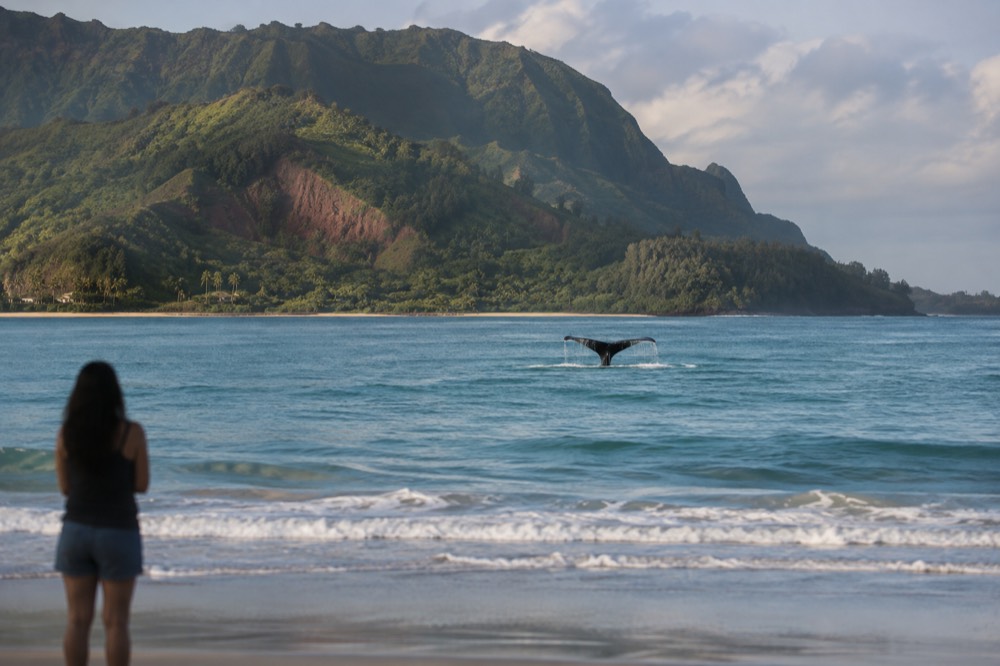
Calves change the arithmetic. Mothers with newborns spend their first weeks in the shallowest, calmest water they can find, and a north-shore bay qualifies. That is why the occasional viral photo of a whale just off a Kauai beach exists, and why it is never a prediction anyone can make. If it happens while you are standing there, enjoy it from where you stand, and give a mother and calf even more room than the law asks if you are ever on the water yourself.
Spinner dolphins are a separate encounter people confuse with whale behaviour. They ride boat wakes and work nearshore shallows, and a federal rule in effect since October 2021 prohibits swimming with or approaching within 50 yards of Hawaiian spinner dolphins by vessel in waters within 2 nautical miles of the main islands. So the acrobatic animals leaping near the beach in the middle of the day are almost always dolphins, not whales, and they are protected by their own distance rule.
Monk seals and turtles round out the shore-watching bonus. The state recommends staying at least 50 feet from a Hawaiian monk seal on land or in water, 150 feet from a mother with a pup, and at least 10 feet from sea turtles. A winter beach walk on Kauai's west side can produce a seal hauled out on the sand, which is a sighting most visitors rate as highly as a distant blow.
What Does A Boat Add?
A boat adds eye-level proximity, a much larger search area, and a crew that spends every working day learning where the animals are. The same whale that is a speck from a lookout is a body you hear breathing from a deck. The honest trade is money and sea time: a paid trip costs real dollars and still cannot promise whales, because no operator guarantees sightings and the law keeps every vessel 100 yards away.
Start with what does not change. Whether you watch from a headland or from a boat, the whales are wild, the season is the season, and the 100-yard rule applies to everyone on the water. No captain can drive up to a whale, and no tour can promise one on the schedule. Any product that guarantees a sighting is selling something the regulations do not allow it to deliver.
What changes on the water is scale. From shore you watch a fixed slice of ocean and wait for something to cross it. A boat covers miles of coastline in an afternoon, and the crew is reading the water the whole time: a cluster of seabirds working a bait ball, a distant blow, a radio call from another vessel. Two people with binoculars on a cliff are competing with that network, and mostly losing.
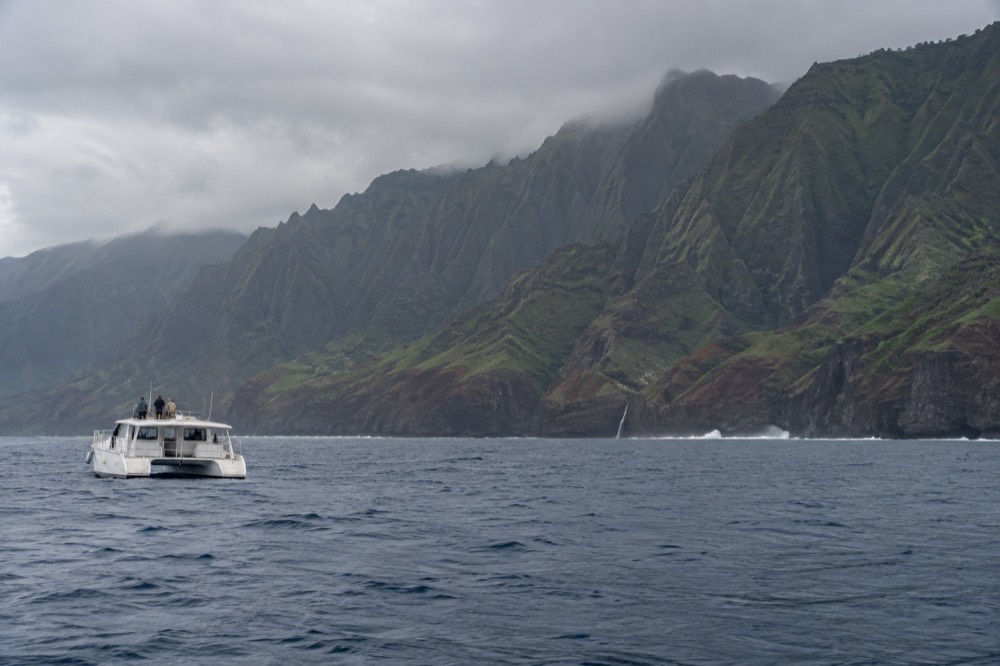
The Na Pali Sunset & Sightsee Boat Tour is the natural winter pick from this site's roster, and not because it is a whale tour, because it is not one. It is a 3 to 4 hour power catamaran trip from Port Allen with dinner included, rated 4.7 from 1,249 reviews, from $263.82 per person with free cancellation. What makes it the right winter product is the timing: it puts you on the water in the late afternoon, in the same season when the humpbacks are present, along a coast that is otherwise impossible to see from land. Whales are a bonus the crew will absolutely slow down for, not the itinerary.
There is also a sensory difference that is hard to overstate. A whale's blow is audible from a surprising distance, and hearing one before you see it is a boat experience with no shore equivalent. The trade is motion: three to four hours of open-ocean swells, which is why our article on whether a Napali boat tour is worth it pairs naturally with this one, and why anyone prone to seasickness should plan medication ahead rather than gamble on the day.
Do Boats Have A Sighting Policy?
No operator on this roster guarantees whale sightings, and none could legally promise a close one, since federal law caps every approach at 100 yards. What the better operators offer instead is honest framing: whales are a seasonal bonus on Napali trips, spotted when present, announced when seen. This site's roster contains no dedicated whale-watch product at all, so any whale you see on one of our tours is a gift of the season, not a line item.
That last point deserves plain language, because search results are full of pages that blur it. The tour roster on this site is sunset, snorkel and sightseeing trips. There is no whale-watch listing, and pretending otherwise would be fabrication. What exists is a set of winter-capable boat tours through water the whales share, run by crews who watch for them.
The industry pattern is the same elsewhere. Operators that do sell dedicated winter whale trips on Kauai run them on the west and south shores, not along the Napali Coast, precisely because the winter swell that arrives with the whales makes the exposed northwest coast the wrong place to hunt for a calm viewing platform. A dedicated whale product and a Napali product are, in winter, two different routes chosen for two different reasons.
What a good policy looks like on any booking: free cancellation or easy rescheduling, a plain statement that wildlife is wildlife, and a crew that communicates honestly on the day. Every tour on this roster carries free cancellation, which matters in winter specifically, because winter weather is the least predictable of the year and a rebooking window is your insurance. Book early in your stay, not on your last day, so a weather reschedule has room to land.
What Are The Approach Rules?
Vessels must stay at least 100 yards from humpback whales and aircraft at least 1,000 feet, under federal rules that apply within 200 nautical miles of the main Hawaiian Islands. Spinner dolphins carry a 50-yard no-approach rule within 2 miles of shore, monk seals call for 50 feet of distance, 150 feet for mothers with pups, and sea turtles 10 feet. From shore, the practical rule is simpler: never approach, never feed, never swim toward.
The humpback rule is the one that shapes every boat tour. It prohibits approaching within 100 yards by any means, causing another vessel or person to approach, and any action that disrupts a whale's normal behaviour. The federal regulation applies throughout Hawaiian waters, not just inside the sanctuary, so a Napali trip is covered even though the Napali Coast itself lies outside the sanctuary boundary. The sanctuary's Ocean Count program is the same body's community-science arm, and its shore-station methods are a good model for respectful land-based watching.
The dolphin rule is newer and less known. Since October 2021, it has been unlawful to swim with, approach or remain within 50 yards of Hawaiian spinner dolphins by vessel in waters within 2 nautical miles of the main islands, a rule written because spinner dolphins rest in shallow bays during the day and repeated close encounters were disrupting that rest. If a boat slows near dolphins and holds position while they pass, that is compliance, not a missed opportunity.
For the shore watcher, the whole framework collapses into good manners. You cannot get within 100 yards of a whale from a headland, so the law mostly takes care of itself. What remains is the wildlife-viewing guidance the state publishes for the other animals: keep distance from monk seals and turtles, never feed anything, and let every animal control the encounter. The best whale watching, from land or water, is the kind where the animal never notices it was watched.
Shore Or Boat This Winter?
Choose shore if your budget is zero, your mobility is limited, or you want a low-commitment morning with binoculars, and pick a north-shore overlook between December and March. Choose a boat if you want the coast itself, the caves, the cliffs and the dinner, with whales as a live possibility rather than a promise. The strongest winter plan is both: a free lookout morning and a paid sunset afternoon, because they deliver different things on the same day.
The comparison comes down to what you are actually buying. A shore watch is free, zero-risk and genuinely rewarding in peak season, but it is one activity: scanning, waiting, and a distant payoff. A boat trip buys the Napali Coast, a stretch of shoreline with no road access and no other viewing method, plus a meal, plus the possibility of wildlife at eye level. Comparing them head to head is slightly beside the point, which is why the table below separates them honestly rather than crowning a winner.
| Factor | Shore Watching | Winter Boat Tour |
|---|---|---|
| Cost | Free | From $190 per person on this roster |
| Best window | December to March, north shore | December to March, west-side departures |
| What you see | Distant blows, breaches, flukes | The Napali cliffs, sea caves when conditions allow, wildlife at eye level |
| Whale odds | Real in peak season, no guarantee | Real in peak season, no guarantee |
| Time commitment | Any length you like | 3 to 6 hours depending on the tour |
| Physical demand | A short walk and standing | Boarding, swell, possible seasickness |
| Weather sensitivity | You can leave whenever | Free cancellation on every roster tour |
If the boat side wins for you, the choice is about format. The sunset trips run shorter and carry dinner, which suits families and anyone who wants the coast without a full day on the water. The longer snorkel and sail trips buy more coastline and more time but cost more and demand more from your stomach. Our guide to the best Napali Coast sunset cruise breaks the evening options down tour by tour, and our piece on choosing morning or afternoon for a Napali boat tour covers the timing question, which matters more in winter than any other season.
The Amelia K is the roster's strongest all-round day trip: a 5-hour power catamaran tour from Port Allen with lunch included, rated 4.9 from 2,050 reviews, from $227.13 per person with free cancellation. In winter it runs the same cliffs as everything else, with the same honest caveat that whales appear when they appear. Five hours, a meal and the highest review count on the roster make it the default for a visitor who wants one substantial boat day and has no interest in comparing twenty tabs.
The one thing not to do is book any tour, ours or anyone's, expecting a whale-watch. Book the coast, book the sunset, book the caves and the dinner, and let the whales be the reason you bring binoculars even on the boat. The visitors who enjoy Napali Coast Boat Tours and Kauai winters most are the ones who treat every whale as a surprise, because out here, that is exactly what it always is.
Common Questions About Seeing Whales In Kauai
Can You See Whales From The Shore In Kauai?
Yes. Humpbacks winter in Hawaiian waters from November through April, and the sanctuary's Kauai unit covers the north shore, so lookouts around Hanalei and the Kilauea Point area produce regular sightings. A February 2026 coordinated shore count logged 337 whale sightings from Kauai's stations in a single morning.
What Is The Best Month To See Whales In Kauai?
January and February are the peak, inside the official November to April season. The 2026 community counts ran on three Saturdays between late January and late March, placed exactly where sightings are highest. December and March are good shoulder months, and November and April are thin.
Where Are The Best Shore Spots For Whale Watching On Kauai?
The north shore between Kailiu Point and Mokolea Point, which is the sanctuary's Kauai unit. Elevated overlooks beat sea-level beaches because height widens your field of view. Bring binoculars, face the sun behind you, and scan patiently.
Can A Boat Tour Guarantee Whale Sightings?
No. No operator guarantees whales, and federal law requires every vessel to stay at least 100 yards from a humpback regardless. This site's roster has no dedicated whale-watch product at all, just winter-capable sunset, snorkel and sightseeing tours through the same waters.
Do Whales Come Close To Kauai Beaches?
Occasionally, especially mothers with calves seeking shallow, sheltered water in bays like Hanalei. It is unpredictable and never scheduled. If it happens, watch from where you stand, and on the water give mother-and-calf pairs extra distance beyond the legal minimum.
Is Shore Watching Or A Boat Tour Better In Winter?
They deliver different things. Shore watching is free and rewarding in peak season but distant. A boat buys the Napali Coast itself plus the chance of eye-level wildlife. The strongest winter plan is both: a lookout morning on the north shore and a sunset trip from Port Allen in the afternoon.