Can You Swim In Sea Caves On The Napali Coast? What Tours Actually Allow
The honest answer to whether you can swim inside Napali Coast sea caves: what operators allow, why surge makes it risky, and which raft tours get you closest.
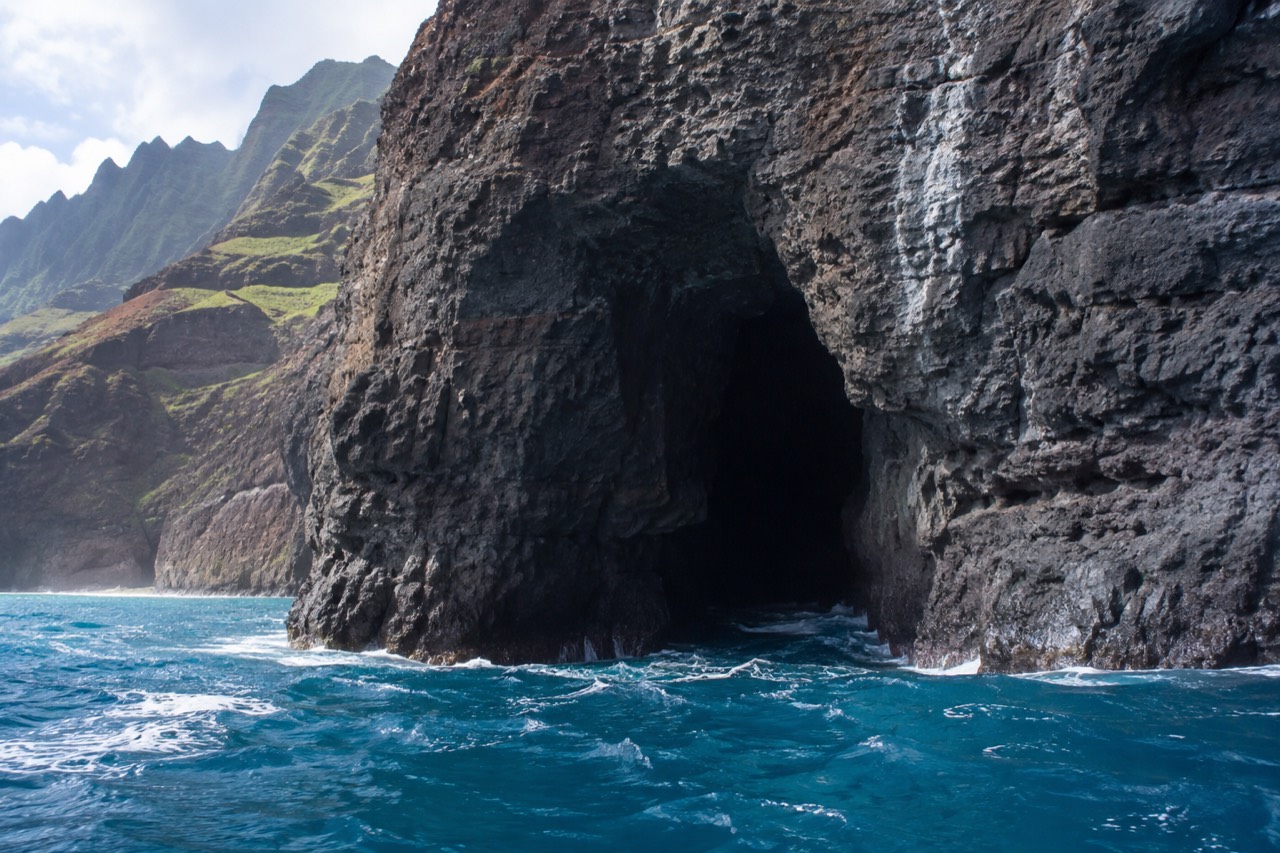
The Napali Coast is carved with sea caves, and the raft tours that run this coastline sell them hard. The brochures show boats nosing into dark openings in the cliff, waterfalls pouring over cave mouths, sunlight through collapsed ceilings. What the brochures do not always spell out is what happens to you, the passenger, once the boat is inside. Can you get in the water? Is that even allowed? Is it safe?
The short version: swimming inside a Napali sea cave is not something any commercial tour operator offers or permits, and the reasons are physical rather than bureaucratic. The same tours that take boats inside the caves do stop for snorkelling outside them, at reefs and coves chosen by the captain on the day. This page walks through the whole question honestly: what the operators themselves say, what the ocean does inside a cave mouth, which tours actually go in, and what the law says about where you can and cannot get wet along this coast. The site behind this page, Napali Coast Boat Tours, lists the bookable options side by side, and the cave question is the single most common thing readers ask before booking one.
Can You Swim Inside A Sea Cave?
No commercial tour on the Napali Coast lets passengers swim inside a sea cave. Rafts and Zodiacs enter the caves with guests seated and holding on; catamarans do not enter at all. Every operator treats cave entry as a boat maneuver at the captain's discretion, never as a swim stop. The snorkelling happens outside the caves, at a reef the captain picks that day.
The distinction that matters is between entering a cave and swimming in one. Entering, by boat, is a real and bookable experience. The rigid-hull inflatable rafts that run out of Kikiaola and Port Allen are small enough and shallow enough in draft to pass through cave mouths when the swell allows it, and the crews that run them are explicit that this is the whole point of the format. Captain Andy's, one of the longest established operators on the coast, describes its 24 foot rigid hull rafts as the vessels that enter the caves, and states plainly that larger catamarans cannot get in due to their height, width and draft.
Swimming is a different matter. Inside a Napali cave the water is moving in ways that are not obvious from a photograph, and no operator on this coast sells a cave swim, permits one on a tour, or has any product that involves guests in the water inside a cave opening. The guides on this site reflect that reality: every raft product listed carries the same qualifier, sea caves conditions permitting, and none carries a swim-in-the-cave promise, because none exists.
That is worth knowing before you read the rest of the internet. Plenty of travel content blurs the line between "we went inside the caves" and "we swam in the caves", and the second thing did not happen. If swimming through a cave mouth is the specific image in your head, the honest answer is that the Napali Coast does not offer it, and the sections below explain what the ocean would do to you if it did.
What Do Operators Actually Allow?
Operators allow boat entry only, with every cave call made by the captain on the day after reading the swell. No Napali operator guarantees cave entry, and three of them disclaim it in writing. Swimming inside is never on the menu; snorkelling outside, at a captain chosen reef, is the standard water portion of a cave tour.
The operator language on this is unusually consistent, which is helpful for a buyer. Captain Andy's states that cave access is conditions permitting and not guaranteed, and that its captains evaluate swell, wind and surf before any entry decision. Makana Charters says its captains decide once they see the water that day, not before. Na Pali Catamaran says the captain makes the determination on the day of the tour. Three independent companies, one position: the cave call belongs to the person driving the boat, made that morning, with your party already aboard.
What you are allowed to do in the water is snorkel, and the stop is outside the caves. Operators describe choosing the snorkel location based on the day's conditions, typically a sheltered reef or cove along the coast, with roughly 30 to 60 minutes in the water on a standard tour. The caves come before or after, as a boat run, with cameras out and fins off.
One more thing the operators are candid about, and that most first time visitors miss: swell size, not time of day, governs whether the boat goes in. Captain Andy's FAQ states that the caves are affected by ground swells and that swell size is generally unrelated to the time of day, with summer months offering a higher likelihood of entry than winter. So the honest planning advice is to treat cave entry as a bonus that is more likely in summer, book the raft format if caves are the priority, and hold the itinerary loosely.
For anyone comparing formats before reading on, the raft is the cave boat and the catamaran is the comfort boat, and that choice drives everything else on this page. The full breakdown lives in the Napali Coast sea caves guide, which covers the cave system itself.
Why Is Swimming Inside Risky?
A cave is a wave energy concentrator. Surge, the in and out piston of water driven by each swell, slams bodies against rock, and the same swell that lets a boat in can double in amplitude inside. Add cold upwelling, poor light and no exit except the way you came, and no operator will put a swimmer in that.
The physics are simple and unforgiving. Every wave that reaches a cave mouth pushes a column of water in, and the cave pushes it back out. This is called surge, and it is the reason a cave that looks glassy from outside can be violent a few metres in. The water does not circulate; it oscillates. A swimmer inside is moved back and forth on a cycle of seconds, toward the back wall and toward the mouth, and the rock on both ends does not move. The standard description among cave divers, who are the only people who routinely enter flooded caves, is that surge is what injures and kills people in sea caves, and they train for years before entering one.
The boat is a different proposition. A rigid hull raft with an experienced captain can time a cave mouth between sets, hold inside for a look, and exit on the lull. That is a maneuver, not a swim, and the crew does it with everyone seated. What the boat cannot do is protect a person in the water from the same energy, which is exactly why no one offers it.
There is also the visibility problem. Inside a cave the light drops fast, the bottom is invisible, and the water is often clouded with suspended particles stirred by the surge itself. And there is the exit problem: the only way out of a cave is the way in, against the same oscillation. If something goes wrong, there is no second exit and no quick rescue. None of this makes the caves dangerous from a boat, and the tours have strong safety records, but it does mean the line the operators draw, boats in, people out, is drawn for reasons you can watch happen on any day with a modest swell.
What Does Surge Do In A Cave?
Surge moves the entire water body in and out of the cave with each swell cycle, often several metres in each direction, and it scales with the ground swell outside. A cave that is calm at 8 a.m. can be unenterable by noon. It is why captains make the cave call on the day, from the water, not in advance.
Picture the cave as a tube with one open end. Each arriving swell pushes water into the tube; the tube fills and shoves it back out. In a cave with a narrow mouth and a wide chamber, the water level inside can rise and fall dramatically with each cycle, and the current at the mouth reverses direction completely, in, then out, then in. On a small day this is a gentle breathing motion, and it is what makes the caves feel alive from the deck. On a moderate day it is a firehose alternately pointing in and out of the entrance.
The critical property of surge is that it is invisible from land and only partly predictable from buoy data. The wave buoys that track Hawaiian swell sit well offshore; a west or northwest ground swell that reads as modest on the buoy can arrive at a specific cave mouth amplified by refraction and focussed by the cliff geometry. This is why every operator on the coast says the same thing about cave entry: the captain decides on the day. Captain Andy's FAQ puts it in exactly those terms, and adds that swell size, not the hour, is the governing variable.
For a swimmer, surge inside a cave means being moved several metres in each direction every few seconds, with no wall to hold that is not covered in sharp rock and urchin spines, and no floor to stand on that is not a wash zone. For a boat, it means timing. The difference between the two is the entire answer to this article's question, and it is why the tours that advertise the caves are selling a ride, not a dip.
Do Any Tours Stop Inside?
No. No Napali tour stops inside a cave, drops anchor in one, or lets guests out of the boat inside. The stops happen outside: a snorkel reef, and on three permitted raft products, a beach landing at Nu'alolo Kai. Inside the caves the boats slow, hold, and move on.
This is worth stating plainly because marketing language can blur it. A tour that "goes inside the sea caves" means the boat goes inside, typically for a slow pass, a pause under a waterfall or a skylight, and then out again. The stop, where you actually get in the water, is elsewhere. On a standard cave and snorkel raft tour the sequence is coastline sightseeing, cave runs where conditions allow, then a snorkel stop at a reef the captain selects, with the time in the water measured in tens of minutes, not hours.
The one place along this coast where a tour legally puts passengers onto the shore is Nu'alolo Kai, an ancient Hawaiian archaeological complex at the foot of the cliffs, and the state names the only companies that may land there. That landing is a separate thing from the caves: it is a beach, with snorkelling off it, and it is offered on specific raft products in the calmer part of the year. It is the closest thing the coast offers to getting out of the boat inside the wilderness park, and it is not a cave.
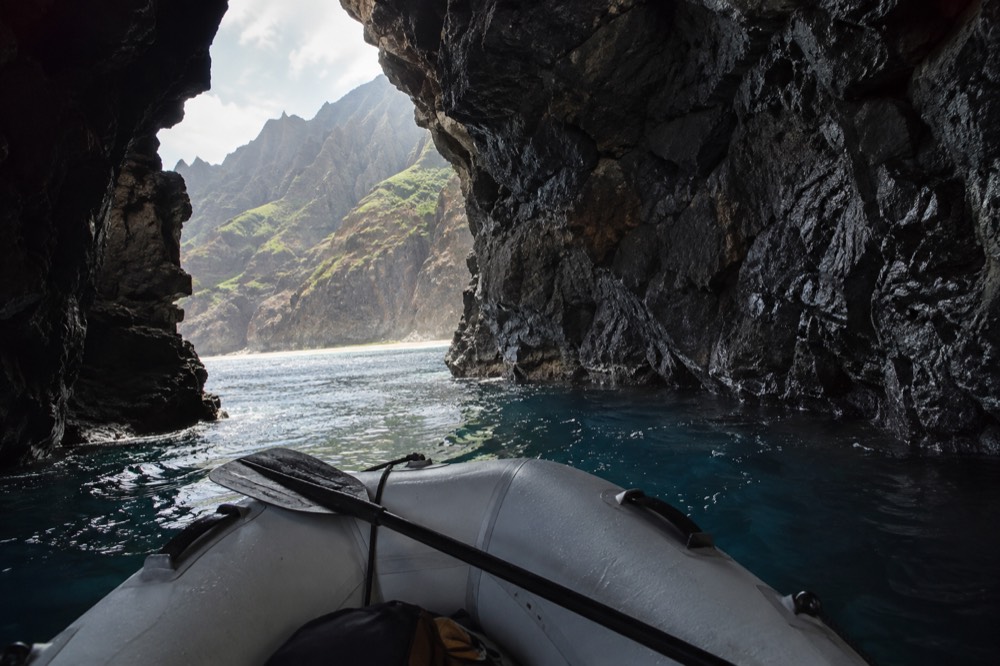
If your mental picture of the day is "boat inside the caves, then snorkel", that is exactly what the good raft products deliver. The 4 hour 30 minute Super Raft Snorkel Adventure from Port Allen, rated 4.8 from 1,723 reviews and priced from $235 per person, runs that pattern with snacks included, and it carries the same honest caveat: caves and snorkelling are conditions permitting. The full field of raft options is compared in the Napali Coast raft tours guide.
What Do You Do Instead?
You snorkel outside the caves, at a reef the captain picks for the day's conditions, usually for 30 to 60 minutes. You watch the caves from inside the boat, and you get the waterfall and skylight moments that way. If getting wet is the priority, book a tour with a snorkel stop and treat cave entry as the bonus, not the headline.
The snorkelling on a Napali tour is genuinely good, and it is the part of the day designed for being in the water. Operators describe choosing between sheltered spots depending on swell, with typical stops offering reef fish, coral and the occasional turtle or monk seal at a respectful distance. The water is warm enough that wetsuits are generally not supplied or needed, and the stop is supervised, with crew in the water or watching from the boat. If you want the full picture of the snorkel side, the Kauai snorkel tours guide covers the whole island, including the Napali stops.
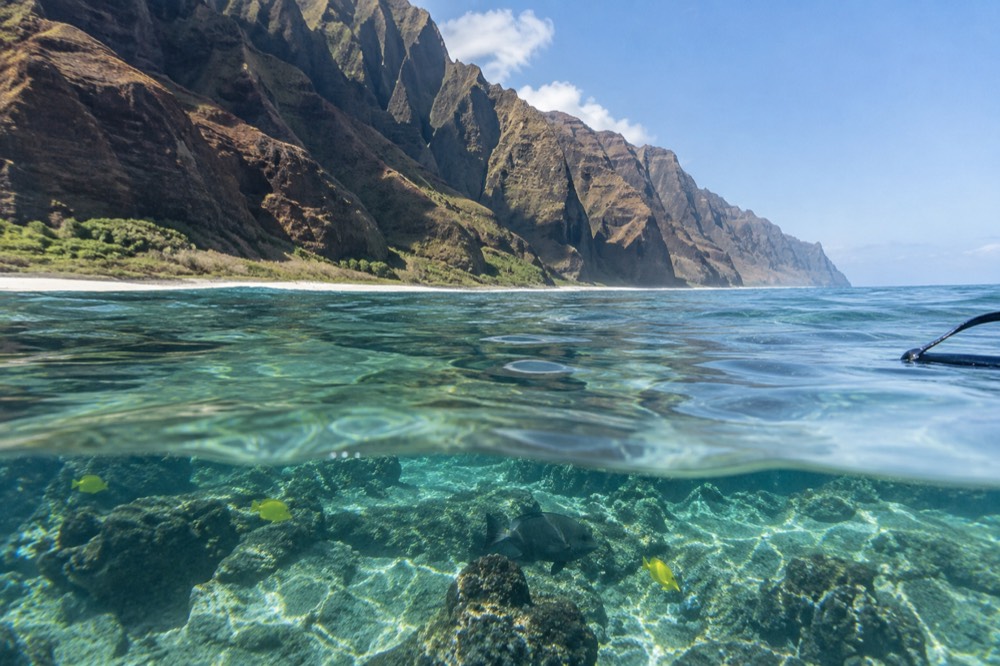
A few practical notes that make the substitute better than the original would have been. Bring reef safe sunscreen: Hawaii law prohibits the sale of sunscreens containing oxybenzone or octinoxate without a prescription, so whatever you buy on island complies, but check the bottle you packed. Keep distance from marine life, 50 feet from a monk seal, 150 from a mother with a pup, 10 feet from a turtle, per state and federal guidance. And listen to the crew on where in the water you may go; snorkellers must stay within 100 feet of the displayed diver flag under Hawaii rules, and vessels must stay 100 feet away from it.
The cave experience from the boat is not a consolation prize. The rafts hold inside the cave mouths, and some feature waterfalls that pour over the entrance, which the crew may drive through when conditions allow, soaking everyone aboard. Passengers get the dark, the echo, the skylight ceilings and the up close cliff geology without ever leaving their seat, and the photographs from inside a cave at water level are the ones that come home.
What Rules Apply In The State Park?
The Napali Coast State Wilderness Park is a protected wilderness area, and the rules attach to landing, not to travelling past. A boat needs no permit to cruise the coast or enter a cave. Going ashore is restricted, only three companies may land at Nu'alolo Kai, and kayaks may land at only two beaches.
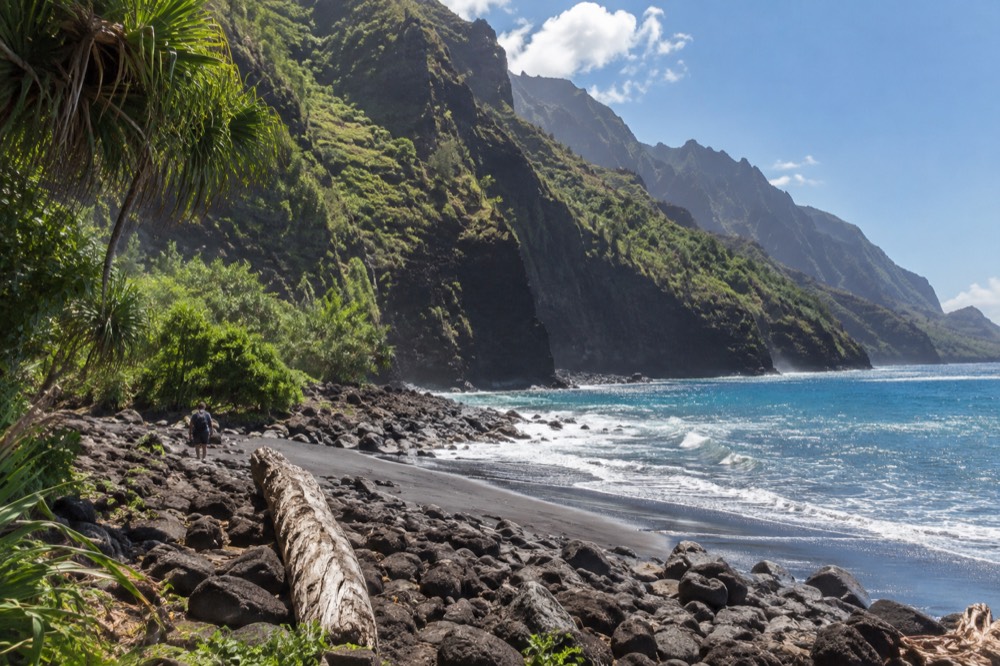
This is the most commonly misunderstood piece of the legal picture, so it is worth getting right. No permit is required to take a boat along the Napali Coast. What is regulated by the state is landing: the Division of State Parks states that the only legal shore access in the park is by boat, and only via concessionaires holding permits, and it names the companies permitted to land passengers at Nu'alolo Kai on motorised raft tours. Everyone else, including every tour on this site that does not land, keeps you on the water.
For swimmers and snorkellers, the practical rules are the marine wildlife protections and the diver flag rules described above, plus the general no take ethos of Hawaii's marine managed areas. There is no rule that specifically bans a person from being in the water near a cave mouth on their own private vessel; the reason you cannot swim in the caves on a tour is the operators' safety judgment and the physics, not a sign on the cliff. But no commercial tour will take you there to swim, and swimming inside a cave alone, with no crew, would be reckless for the reasons in the surge section.
One regulatory fact that shapes the whole market is worth knowing. Following a 2024 court order, the state is issuing no new Commercial Use Permits for ocean recreation and existing permittees cannot increase passenger capacity, per the DLNR's own clarification. The number of boats legally working this coast is effectively frozen, which is one reason the permitted operators hold their safety standards tightly: the permits are irreplaceable.
Which Tour Gets You Closest?
The raft and Zodiac products get you inside the caves, and the 4 hour Zodiac Raft Expedition from Kikiaola is the closest format on this site: 4.9 from 956 reviews, from $255 per person, with cave entry and snorkelling both conditions permitting. Catamarans get close to the mouths but do not enter.
If the caves are the reason you are booking, the format choice is the whole decision. Rigid hull inflatable rafts, sold on this site under both the raft and Zodiac labels, are the vessels that enter the caves when the swell allows. They are small, fast and shallow in draft, they carry fewer passengers, and they trade deck comfort for access. The catamarans, power and sailing, are the comfort and meal boats: stable, spacious, often with food and drink included, and limited to approaching the cave mouths from outside.
The Na Pali Riders Zodiac Raft Expedition and Snorkeling tour is the clearest cave focused product on this roster. It runs 4 hours from Kikiaola near Waimea, includes snacks, carries a 4.9 rating from 956 reviews, and starts from $255 per person. Its cave entry and snorkelling are both at the captain's discretion on the day, which is the honest way every cave product on this coast is sold. Makana Charters' Amelia K, a 5 hour power catamaran from Port Allen with lunch included, rated 4.9 from 2,050 reviews and from $227.13 per person, is the contrast case: more comfort, a meal, and a coastline run that gets close to the caves without going in.
| Tour | Format | Duration | Departure | Rating | From (per person) | Caves |
|---|---|---|---|---|---|---|
| Zodiac Raft Expedition and Snorkeling | Rigid hull inflatable | 4 hours | Kikiaola (Waimea) | 4.9 from 956 reviews | $255 | Entry, conditions permitting |
| Super Raft Snorkel Adventure | Rigid hull inflatable | 4 hours 30 minutes | Port Allen (Eleele) | 4.8 from 1,723 reviews | $235 | Entry, conditions permitting |
| Na Pali Boat Tour on the Amelia K | Power catamaran | 5 hours | Port Allen (Eleele) | 4.9 from 2,050 reviews | $227.13 | Close approach only |
Two planning notes close the decision. First, book early in your stay rather than at the end, so that if the swell cancels a day there is room to rebook; every product on this roster carries free cancellation for exactly this reason. Second, if you are travelling in winter, weight your expectations accordingly: the same swell that makes the caves less likely also makes the snorkel stops more sheltered, and the winter trade is whales over caves. The seasonal picture is laid out in the Napali Coast boat tour season guide.
The bottom line on the original question is a clean one. You can go inside the Napali sea caves, by raft, with a crew that reads the water every morning. You cannot swim in them, on any tour, from any operator, and the ocean's own behaviour inside those mouths is the reason nobody sells it. Book the raft if the caves are the point, book the catamaran if the coast is the point, and let the snorkel stop outside be where you get wet.
Common Questions About Swimming In Napali Sea Caves
Can You Swim In Sea Caves?
Not on any commercial Napali Coast tour. Rafts and Zodiacs enter the caves with passengers seated, and the snorkelling happens outside at a reef the captain chooses. No operator permits swimming inside a cave, and the surge inside makes it unsafe regardless.
Do the tours guarantee going inside the caves?
No. Every operator on the coast sells cave entry as conditions permitting, at the captain's discretion on the day. Three of them state in writing that entry is not guaranteed. Summer offers a higher likelihood than winter.
Can catamarans enter the Napali sea caves?
Generally no. Large catamarans are too tall, wide and deep in draft to enter safely. Rigid hull inflatable rafts are the cave format, and the raft products on this site are the ones that go inside when the swell allows.
Where do you actually snorkel on a cave tour?
Outside the caves, at a sheltered reef or cove selected for the day's conditions, usually for 30 to 60 minutes in the water. Some raft products also land at Nu'alolo Kai, one of the only legal shore landings in the park.
Is it safe to swim near a cave mouth on your own?
It is unwise. Surge at a cave mouth moves water in and out several metres with each swell cycle, and the current reverses direction repeatedly. Without a crew and a boat, there is no safe way to exit if conditions change.
Do I need a permit to visit the caves by boat?
No. No permit is required to travel along the Napali Coast or enter a cave by boat. Permits govern landing: only three permitted operators may land passengers at Nu'alolo Kai, and kayaks may land at only two beaches in the park.