Is Kauai Nicer Than Maui?
An honest island-by-island comparison of Kauai and Maui: beaches, boat trips, crowds, costs and which island suits a first Hawaii trip, with Napali Coast boat tour facts and prices.
Is Kauai Nicer Than Maui?
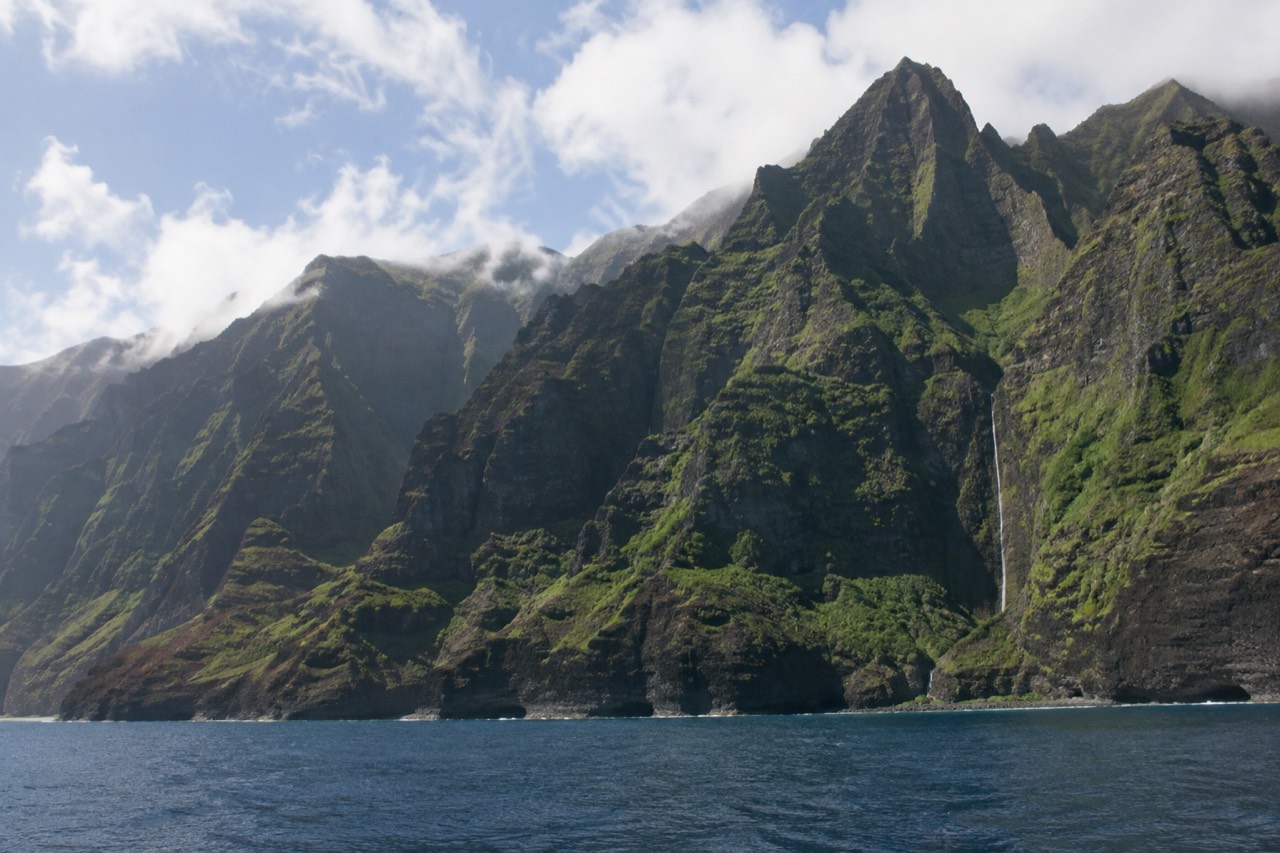
The Napali Coast is a 16-mile wall of sea cliffs, valleys and sea caves on Kauai's northwest shore, and no road reaches it. You see it from a boat, from a helicopter, or on foot along the Kalalau Trail, and the boat is the way most visitors choose. That coast is the single strongest card Kauai holds in any comparison with Maui, and it is the reason a site devoted to Napali boat tours exists. Whether it makes Kauai "nicer" depends on what you want from an island, so this page compares the two honestly: beaches, boat trips, crowds, costs and first-trip fit, with current figures rather than slogans.
Is Kauai Nicer Than Maui?
Kauai is nicer than Maui for travellers who want dramatic scenery, quieter coastlines and small-group ocean tours, while Maui is the stronger pick for resort infrastructure, dining and nightlife. Roughly 647,009 visitors arrived on Kauai by air in the first half of 2026, down 8.5% year on year, so the island is running measurably quieter than Maui. In short, "nicer" means greener and wilder on Kauai, more convenient and varied on Maui.
The word "nicer" hides the real question, which is what kind of trip you are buying. Kauai is the oldest of the main Hawaiian Islands, and geologic age shows: the island is deeply eroded, stacked with valleys, canyons and ridgelines. Waimea Canyon alone, ten miles long and over 3,000 feet deep, is something Maui has no answer to. Maui counters with Haleakala's summit crater, the Road to Hana and a string of polished resort areas from Kaanapali to Wailea.
Crowds tell part of the story. Kauai recorded 139,974 visitor arrivals by air in July 2026, down 1.1% from July 2025, with an average daily census of 28,097 visitors on an island that is the fourth largest of the main Hawaiian chain. Maui, by contrast, is Hawaii's second most visited island and its visitor base is substantially larger, concentrated along a developed west-side coast. Neither island is empty in July, but the feeling on the ground differs: Kauai's development is scattered and low-rise, while Maui's resort corridors are genuinely busy.
The one thing Kauai has that Maui cannot replicate is a coastline with no road access at all. Maui's famous sights, Hana's road, the crater, the beaches, are nearly all reachable by car. Kauai's single most famous sight is not, and that shapes everything about how you experience it. A Kauai helicopter tour comparison covers the air option, but the sea option is the classic one, and it is the experience this site is built around.
How Do The Two Islands Differ?
Kauai is older, greener, smaller and less developed, with its population concentrated in a few towns and one main road that does not fully circle the island; Maui is larger, more populous, more resort-oriented and easier to get around for a first-time visitor. Kauai's defining feature is inaccessible coastline, Maui's is accessible variety. The two islands reward different travellers, and the difference is structural, not just a matter of vibe.
Geologically, Kauai is the oldest of the main islands, roughly five million years since its shield-building stage, which is why its volcano has collapsed into deep valleys rather than a single crater. The Napali Coast State Wilderness Park covers 6,175 acres along that eroded northwest shore, with narrow valleys, waterfalls and stone-walled terraces from ancient Hawaiian taro cultivation still visible from the water. Maui's Haleakala is younger, drier on its leeward side and far more developed around its base.
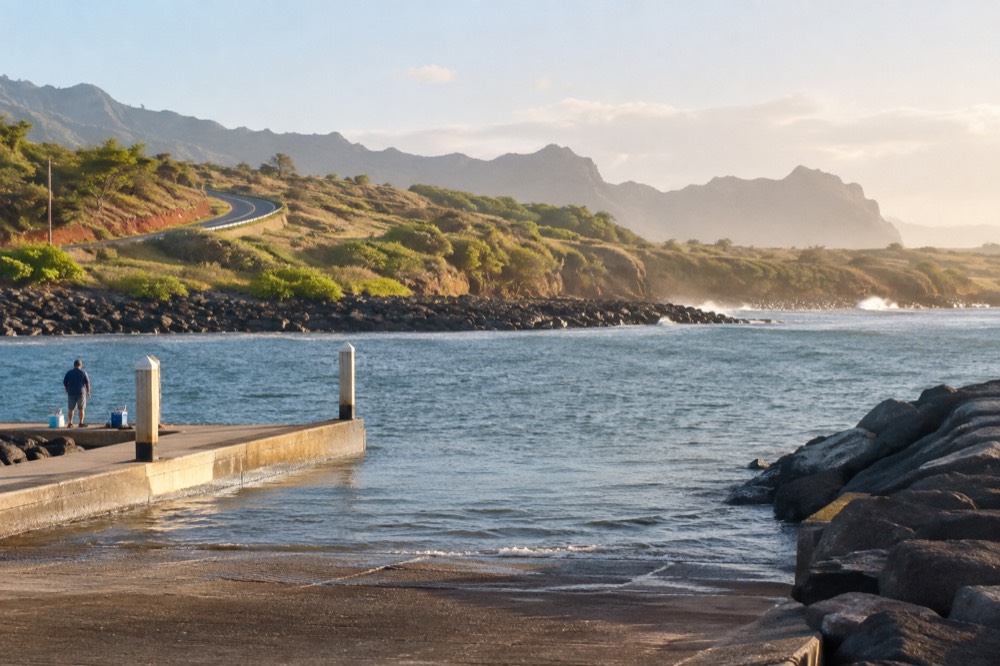
Practically, Kauai runs on one highway that dead-ends at Haena State Park on the north shore and at Polihale on the west, so you can never drive around it. Maui has a full ring road, which makes a first visit logistically simpler. Kauai compensates with concentration: most boat tours leave from two harbours a short drive apart on the west side, as the guide to getting to Port Allen and Kikiaola explains.
Weather splits by side rather than by island. Kauai's north shore is one of the wettest places on earth inland, while its west side, where the boat harbours sit, is dry. Maui has the same leeward and windward split. The difference that matters for a boat day is swell: Kauai's Napali faces open northwest ocean, so summer is the calm, reliable window and winter trips are conditions-dependent, a pattern covered in detail in the Napali Coast boat tour season guide.
For a sense of scale on the water, the crossing from Kauai to Niihau, the privately owned island some boat tours visit, runs 17.2 statute miles across the Kaulakahi Channel. That is open-ocean Hawaii, not a sheltered bay cruise, and it is a class of trip Maui's calmer leeward waters mostly do not offer.
Which Has Better Beaches?
Maui has the better swimming-and-sunbathing beaches, with long golden stretches like Kaanapali and Wailea that are easy to reach and easy to lie on; Kauai's beaches are more dramatic but more conditional, with Hanalei Bay and Poipu excellent in season and north shore beaches unsafe for swimming in winter surf. If a beach holiday is the point, Maui wins. If the beach is a viewpoint for cliffs, Kauai does.
Maui's leeward coast is built around its beaches. The sand is golden, the entries are gentle, lifeguards and parking are organized, and the resort infrastructure sits directly behind the sand. For a family whose plan is swim, eat, repeat, that is genuinely nicer, and pretending otherwise would be dishonest.
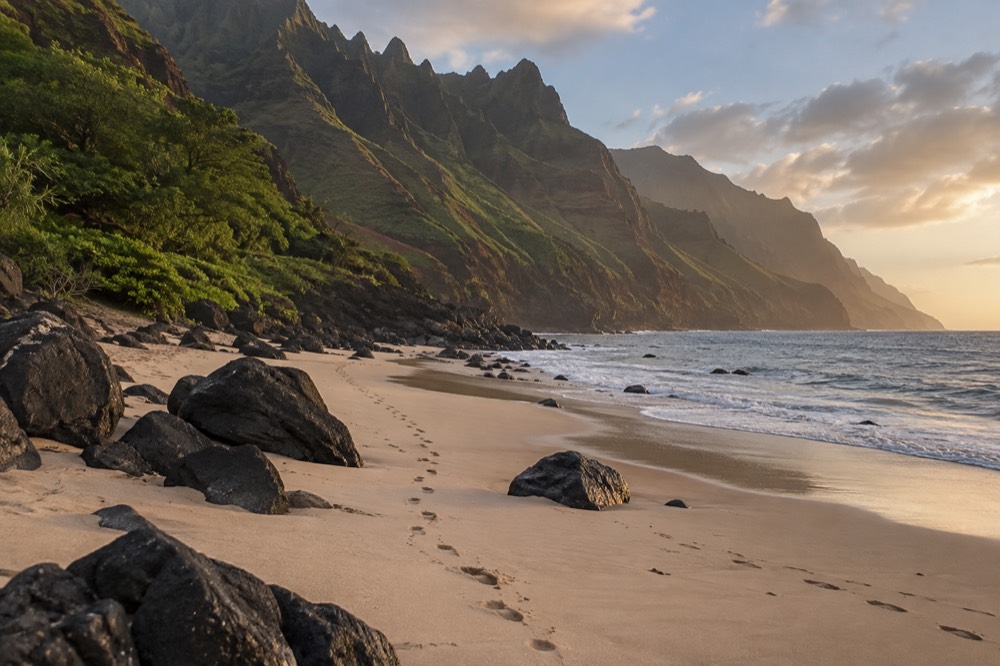
Kauai's beaches are wilder and less predictable. Hanalei Bay is a two-mile crescent that is superb in summer and hammered by winter surf. Poipu on the south shore is the reliable all-year option. The beaches near the Napali Coast itself, Ke'e and Polihale, are scenic bookends rather than swimming resorts, and Haena State Park now requires non-resident day-use entry reservations at $5 per person plus $10 per vehicle for parking, bookable 30 days ahead, per the Hawaii DLNR State Parks page.
The honest framing: Kauai's best beaches are beautiful in a way Maui's mostly are not, but Maui's beaches are usable more of the time by more people. Neither island is about beaches the way Oahu's Waikiki is. If your Hawaii fantasy is a chair on golden sand with a drink within reach, Maui is the safer buy.
Which Has Better Boat Trips?
Kauai has the better boat trips, and it is not close: the Napali Coast is a 16-mile stretch of cliffs, sea caves and waterfalls with no road access, and boat tours are the standard way to see it, while Maui's boat scene is centred on Molokini crater snorkelling and whale watching, both good but both more conventional. Kauai's raft tours run into sea caves that no Maui trip matches, at the captain's discretion when the swell allows.
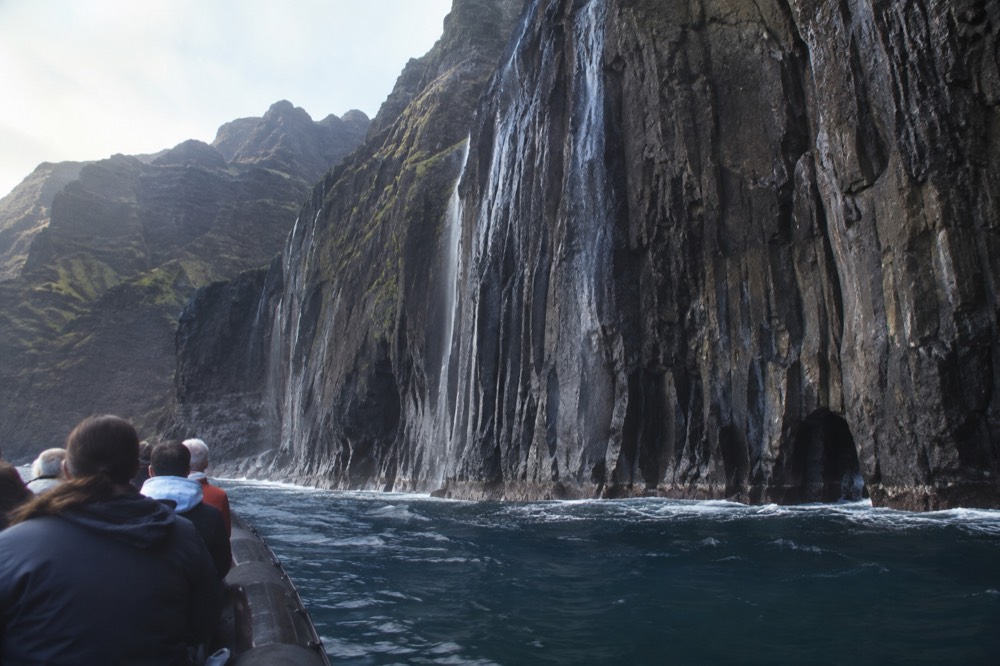
The comparison is really between two different products. Maui's flagship is the Molokini snorkel run: a crescent crater with clear water, usually combined with a second reef stop, sold on dozens of large vessels. It is polished, reliable and crowded. Kauai's flagship is the Napali run: a crossing along a wilderness coast where the attractions are sea cliffs up to several thousand feet tall, lava-tube caves, waterfalls and, in the right season, a beach landing at a permitted archaeological site.
The sea caves are the differentiator. On Kauai, rigid-hull inflatable rafts enter the caves when captains judge the swell safe, and operators state plainly that entry is never guaranteed and always at captain discretion. Larger catamarans get close but are too tall and wide to enter. No Maui product offers anything equivalent, because no Maui coastline is built like Napali.
Prices are comparable. Kauai's Napali tours run from $190 per person at the floor of the roster to $361.31 at the top for the Niihau full-day crossing, with most four-to-six-hour tours in the $215 to $292.48 range, meals often included. A sample of what the money buys:
| Kauai tour | Boat type | Duration | Rating | From (per person) |
|---|---|---|---|---|
| Nā Pali Zodiac Raft Sea Caves Expedition | Rigid-hull inflatable raft | 3 hours | 4.9 from 155 reviews | $235 |
| Na Pali Raft Snorkel Adventure | Rigid-hull inflatable raft | 5 hours 30 minutes | 4.8 from 1656 reviews | $217 |
| Napali Coast Boat Tour and Snorkeling | Power catamaran | 5 hours | 5 from 226 reviews | $215 |
| Na Pali Coast Snorkel and Sail Tour | Sailing catamaran | 6 hours | 4.8 from 582 reviews | $292.48 |
| Ni'ihau and Na Pali Coast Snorkel Boat Tour | Power catamaran | 8 hours | 4.7 from 481 reviews | $361.31 |
Every tour on that list carries free cancellation, and none is a private charter. Cave entry and snorkelling are conditions permitting on all of them, because no operator on this coast guarantees either.
Whale watching splits the seasons. Humpbacks visit all main Hawaiian Islands from November through April, per the Hawaiian Islands Humpback Whale National Marine Sanctuary, and federal law keeps vessels 100 yards from any humpback. Maui's west-side waters are a designated sanctuary hotspot with dense winter whale traffic. Kauai sees the same whales, but its winter boat scene is more weather-limited, and some winter products run the south and west shores rather than Napali at all. For a dedicated whale trip, Maui has the edge; for everything else on the water, Kauai does.
Which Is Quieter?
Kauai is quieter, both in visitor volume and in the feel of its developed areas: its July 2026 average daily census was 28,097 visitors spread across scattered low-rise towns, while Maui hosts a larger visitor base concentrated in resort corridors with significantly more built density. Kauai's quietest experiences, a raft with 14 guests or a small catamaran, are also smaller-group by design. If crowd avoidance is the deciding factor, Kauai wins.
The numbers back the impression. Kauai's 2026 arrivals have been running below 2025 levels every recent month: 128,883 arrivals in June, down 4.9%, and 139,974 in July, down 1.1%, per the Hawaii DBEDT monthly visitor statistics. Fewer visitors on a physically smaller, less developed island means shorter lines, easier parking and more coastline per person.
Maui is not a theme park, and its quiet corners exist, Hana's side, Upcountry, the back of Haleakala. But its visitor economy is bigger and its resort areas are genuinely busy in a way Kauai's towns, Hanalei, Kapaa, Waimea, are not. Kauai also enforces quiet in places by rule: drones are prohibited from launch or landing in all Hawaii state parks without written DLNR approval, per the state park rules, which keeps even the famous viewpoints free of buzzing cameras.
On the water, Kauai's small-group products are a quiet traveller's friend. Two of the raft tours on this site cap at 14 guests, one catamaran caps at 36 and another at 49. The permitted-operator system also caps activity: following a 2024 court order, the state issues no new commercial use permits and allows no capacity increases for existing Napali operators, so the number of boats on that coast is fixed by regulation rather than by demand.
Which Costs More?
The islands cost about the same per day, with the differences hiding in the details. Hawaii charges a statewide 11% lodging tax, plus a 3% Kauai County transient accommodations tax, and rental cars carry a $7.50 per day state surcharge on both islands. Kauai's boat tours run $190 to $361.31 per person, with most options in the $215 to $292.48 band. Maui's broader resort dining scene makes overspending easier there, but neither island is a budget pick.
Lodging taxes are worth knowing precisely. Effective January 1, 2026, the state transient accommodations tax rose from 10.25% to 11%, and Kauai County adds its own 3% tax on gross rental proceeds, so short-term rentals on Kauai carry a combined 14% tax burden on top of the quoted rate, per the Hawaii Department of Taxation. Rental cars add the $7.50 per day surcharge authorized through 2027. These apply statewide; Maui adds its own county levies on top.
Where the money goes differs. A Kauai trip's signature spend is the boat day, roughly $215 to $292.48 per adult for the mainstream tours, meals included on most, and that day is often the trip's highlight rather than an extra. A Maui trip's signature spends are accommodation upgrades, dining and the Molokini or luaus circuit. Two travellers can spend identically on either island and get very different trips for it.
A rough planning budget for a couple, using only verified figures:
| Item | Kauai | Notes |
|---|---|---|
| Napali boat tour, per person | $215 to $292.48 typical | Meals included on most tours; free cancellation standard |
| Lodging tax | 11% state plus 3% county | On the quoted nightly rate |
| Rental car surcharge | $7.50 per day | Statewide, through 2027 |
| Haena park entry, per person | $5 plus $10 parking | Non-residents; Hawaii residents exempt |
One Kauai cost warning that has no Maui equivalent: the boat day is weather-exposed. Operators cancel for unsafe conditions, not for rain, and they reschedule or refund when they do, so booking the boat early in your stay leaves room to rebook. That is a planning fact, not a cost, but it changes how a Kauai budget behaves.
Which Suits A First Hawaii Trip?
Maui suits a first Hawaii trip better for travellers who want certainty: full road access, organized beaches, dense dining and a smooth logistics curve. Kauai suits a first trip better for travellers whose first trip is really a scenery pilgrimage, and it rewards a little more planning: harbour check-ins, park reservations and a boat day booked early in the stay. Neither choice is wrong, but Maui forgives improvisation and Kauai does not.
The case for Maui first is the case for training wheels. Everything is reachable, everything is bookable at short notice, and the classic first-timer itinerary, beach, Haleakala sunrise, Road to Hana, luau, works without much research. If Hawaii is a one-time bucket-list visit for older parents or a group with mixed mobility, that frictionlessness is worth real money.
The case for Kauai first is that its best sights are unrepeatable elsewhere, and the boat day is the headline. A first-timer on Kauai should anchor the trip around a Napali tour: pick the format that fits the group, raft for caves and adventure, catamaran for stability and lunch, sailing catamaran for the romance of it, and book it for the front of the stay so weather has room to be weather. The best Napali Coast boat tour guide walks that choice in detail.
Families with young children face one honest constraint on Kauai: raft tours, the cave boats, are generally not suitable for pregnant travellers or people with back or neck problems, and operators publish those restrictions plainly. Large power catamarans are the family-friendly format. Maui imposes fewer of those choices on a mixed group.
What Would Decide It For You?
Choose Kauai if the Napali Coast, Waimea Canyon, small-group boat tours and quiet are the point, and accept that some beaches, landings and cave entries depend on conditions and season; choose Maui if resorts, swimming beaches, whale density and logistical ease matter more than raw scenery. The deciding question is simple: would you rather have a coast no road reaches, or an island where everything is easy to reach?
Run the decision through your own priorities. If you answer yes to any of these, Kauai is your island: you want to photograph a wilderness coastline from the water; you would rather a 14-guest raft than a 150-guest vessel; a 6,175-acre state wilderness park with no road sounds like a feature; you are visiting in summer, when the sea state along Napali is at its calmest and cave entry is most likely.
Turn to Maui if: swimming beaches are the daily plan; someone in the party needs flat, organized access everywhere; the trip is short and unplanned; or winter whales are the headline and you want the densest whale waters in the state with the most departure options.
Whichever island wins, one planning rule carries: on Kauai, book the boat day first and early in the stay. The coast is the argument, the tours fill up, and conditions get a vote. Every tour on this site carries free cancellation, so the cost of booking ahead is low and the cost of arriving too late is missing the thing Kauai is actually nicer for. That is the whole comparison in one sentence: Maui is the easier island, Kauai is the more unforgettable one, and Napali Coast Boat Tours exists because a coastline this good deserves its own guidebook.
Common Questions About Kauai Versus Maui
Is Kauai Nicer Than Maui?
For scenery, quiet and small-group ocean tours, yes, Kauai is nicer; for resorts, swimming beaches, dining variety and easy logistics, Maui is nicer. Kauai's Napali Coast, a 16-mile roadless stretch of cliffs and caves, is the strongest single argument in its column.
Is Kauai More Expensive Than Maui?
Roughly equal. Both islands share Hawaii's 11% state lodging tax and the $7.50 per day rental car surcharge; Kauai adds a 3% county accommodations tax. Kauai boat tours run $190 to $361.31 per person, with most four-to-six-hour options between $215 and $292.48.
Which Island Has Better Boat Tours?
Kauai. The Napali Coast has no road access, sea caves that rigid-hull rafts can enter at the captain's discretion, and permitted beach landings at an archaeological site. Maui's Molokini snorkel runs are good but more conventional, with larger vessels and more crowding.
Is Kauai Too Quiet For A First Trip?
Not too quiet, but less forgiving of improvisation. Kauai needs slightly more planning: boat tours booked early in the stay, Haena entry reservations if you visit the north shore, and acceptance that some activities depend on ocean conditions.
When Is The Best Time To Visit Kauai Over Maui?
Summer, roughly April through October, is the calm-water window when Napali cave entry and snorkel stops are most reliable. Winter brings humpback whales to both islands but also the biggest surf on Kauai's exposed northwest coast, making boat days more conditions-dependent there.
Can You See The Napali Coast Without A Boat?
Yes, but only partly: the Kalalau Trail reaches the coast on foot, and helicopter tours fly it. The trail is 11 miles one way to Kalalau Beach, and the boat remains the standard way most visitors actually see the coast.