When Not To Go To Kauai?
The honest answer to when not to visit Kauai: which months the winter swell shuts down Napali boat access, when crowds and prices peak, and which months are actually fine.
When Not To Go To Kauai?
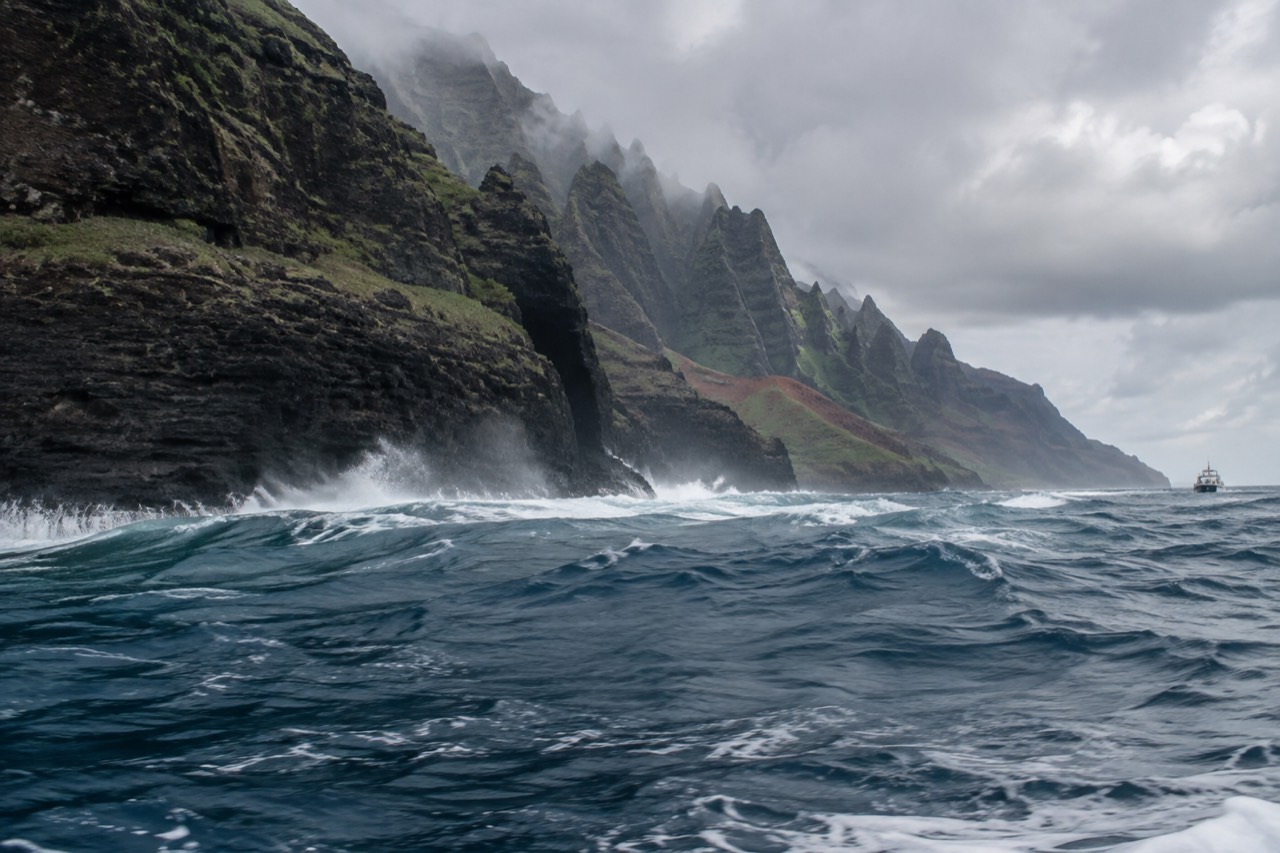
Kauai sells itself as a year-round island, and in the narrow sense that is true: the airport never closes, the beaches never freeze, and somebody is snorkelling somewhere in every month of the calendar. But the island has a rhythm, and the rhythm has teeth. The northwest swells that make the Napali Coast's cliffs so dramatic from your lounge chair are the same swells that keep boats tied to the dock, and the winter months that bring humpback whales bring the largest seas of the year with them. Choosing the wrong month does not ruin a Kauai holiday. It does ruin the specific reason most people pick Kauai over the other islands, which is that coastline.
This page answers the question honestly, month by month, using measured wave data rather than brochure optimism. It also points at the flip side: the stretches of the year when the same coast is at its calmest, its cheapest and its least crowded, which is the most useful thing a boat-tour site can tell you before you book anything.
When Should You Not Go To Kauai?
The months to avoid are November through mid-March if a Napali Coast boat tour is the centrepiece of your trip. That is when northwest ground swells are largest, when north shore boat departures mostly stop, and when sea cave entry and snorkel stops become unlikely rather than routine. If you cannot move your dates, book a west side departure and expect a conditions-dependent day.
That is the blunt answer, and it deserves the reasoning behind it. Two full years of measured wave data from the NOAA and PacIOOS buoy moored off Hanalei, station 51208, show the pattern plainly. In June, July, August and September the buoy essentially never records offshore significant wave heights at or above 2.5 metres, somewhere between 0.1 and 1.6 percent of all observations. In January it records heights at or above 2.5 metres in 52 percent of observations, and above 3.5 metres in 24 percent of them. December and February sit close behind. April and October, not May and September, are the real shoulder months.
The practical consequence is not that boats stop existing in winter. West side operators run year round, conditions permitting, and the roster on this site reflects that: the raft snorkel adventure lists its season as all year, weather permitting. What changes is what the day actually delivers. Cave entry is governed by ground swell rather than time of day, and in winter the captains decline it more often than they accept it. Snorkel stops get moved or dropped. Some days the tour runs a shortened route, and some days it does not run at all.
If your dates are locked into the winter months, the honest advice is to book early in your stay rather than at the end, so there is a spare day to rebook onto if the ocean forces a cancellation. Operators themselves give exactly this advice, because they see the consequences of the opposite choice every week.
What Does Winter Swell Close?
Winter swell closes sea cave entry, most snorkel stops on the exposed coast, and effectively the whole north shore boat scene. It does not close the harbours or the tours themselves: west side boats from Port Allen and Kikiaola run year round, conditions permitting, with the captain trimming the route, the caves and the swim stop to match the day.
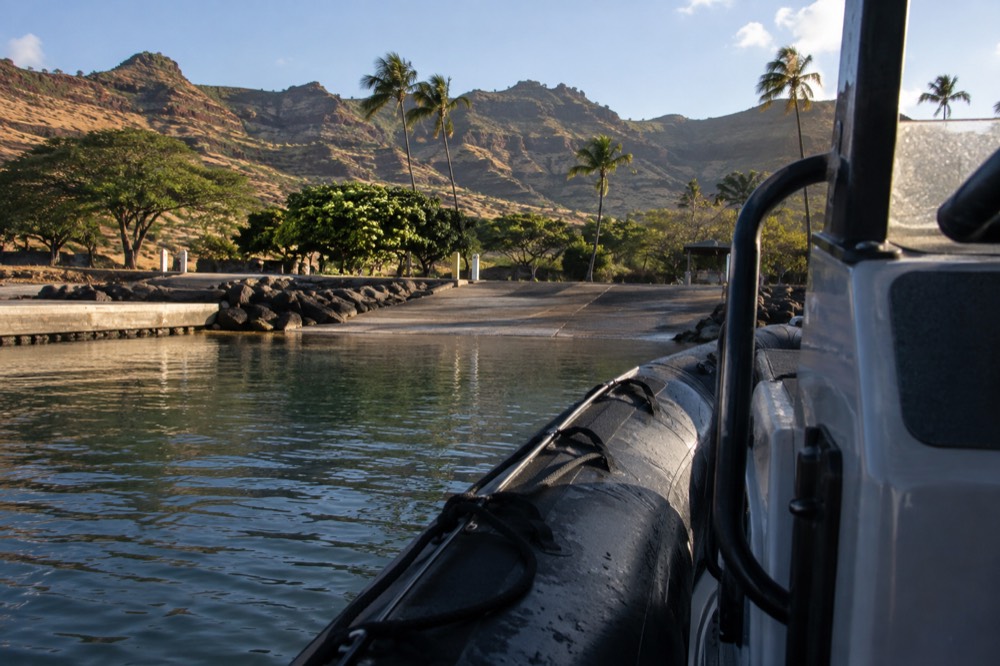
Start with the caves, because they are what most people are picturing. The Napali sea caves are lava tubes widened by wave erosion, and their entrances face the open Pacific. When the ground swell rises, the entrances become unsafe for any vessel, and every operator on this coast says so in writing. Captain Andy's, which runs 24 foot rigid-hull rafts built for cave work, states that entry is never guaranteed and always at captain discretion, evaluated against swell, wind and surf on the day. The same operator notes that in summer it is usually possible to enter the caves, and in winter it is less likely you will explore all of them.
The National Weather Service in Honolulu publishes the exact surf thresholds it uses for its advisories, and they show how exposed this coast is. For Kauai's north facing shores a High Surf Advisory starts at 15 feet and a Warning at 25. For west facing shores, which is where the Napali Coast faces, an Advisory starts at 12 feet and a Warning at 20. Winter northwest swells routinely push the west shore toward those numbers. No responsible captain takes a raft or a catamaran into a cave mouth in that.
Snorkelling follows the same logic. The classic snorkel stops along this coast sit at the foot of the cliffs, open to the same swell. Operators move the stop to a sheltered patch when they can, shorten the water time, or drop it entirely. One north shore operator's winter product drops snorkelling and lunch on purpose and sells a sightseeing-only tour, which is the most honest piece of winter marketing on the island.
What winter does not close is the basic tour. The state's boating rules set no season for motor vessels along the coast; the May 15 to September 7 dates that get repeated in travel writing govern kayaks and the Miloli'i landing, not boats. West side departures from Port Allen and Kikiaola run in every month, and the two raft tours in the trio above, the super raft snorkel adventure and the raft snorkel adventure, both list all year operation, weather permitting, with free cancellation if the ocean wins.
| Month | Offshore mean wave height off Hanalei | Share of observations at or above 2.5 m | What it means for a boat day |
|---|---|---|---|
| January | 2.77 m | 52.2% | Caves and snorkel stops unlikely, cancellations common |
| February | 2.47 m | 47.5% | Same as January, slightly gentler |
| March | 2.12 m | 28.3% | Genuinely mixed, improving late in the month |
| April | 1.93 m | 16.3% | The real shoulder begins |
| May | 1.73 m | 5.6% | Calm season underway |
| June | 1.61 m | 0.2% | About as reliable as this coast gets |
| July | 1.50 m | 0.1% | Peak calm |
| August | 1.40 m | 1.6% | Peak calm |
| September | 1.42 m | 0.1% | Still peak calm |
| October | 1.76 m | 10.8% | Shoulder, holding better than its reputation |
| November | 2.42 m | 42.6% | Winter arriving |
| December | 2.61 m | 46.4% | Full winter conditions |
Two honest caveats travel with that table. It is two recent years of buoy record, not a 30 year climatology, and it is offshore sea state in deep water, not breaker height at the cliff line or what the deck of a boat feels like. It shows the shape of the year, not a forecast for your Tuesday.
How Wet Is The Wet Season?
Kauai's wet season runs roughly November through March, and it is real but badly misunderstood. The rain is wildly localised: the summit of Waialeale is one of the wettest places on earth while the west side departure harbours sit in Kauai's dry zone, and it rains on land while the water stays clear more often than visitors expect.
The numbers behind the island's wet reputation belong mostly to the island's interior and its north shore. The Rainfall Atlas of Hawai'i, built on the 30 year period from 1978 to 2007, maps the famous extremes, and the official climate normals tell the same story with less drama. The Lihue airport station's 1991 to 2020 normals list a January mean maximum of 78.6 degrees Fahrenheit with 2.78 inches of rain across the month. The Waimea station on the west side, the side you actually depart from, lists a January mean maximum of 79.5 degrees. That is not a monsoon profile. That is a warm winter with showers.
What this means for a boat day is counterintuitive. Operators on this coast are explicit that rain alone does not cancel tours. One major operator states that it does not cancel for rain unless there is a safety concern such as thunder and lightning, and that it is common for it to be raining on land while conditions remain clear out on the water. The cliffs, it turns out, are better in rain: the waterfalls that are trickles in August become ribbons in January, and the wet season is the season of the coast's best photography.
The genuinely wet problem is not the rain that falls. It is the rain that keeps falling for days on the north shore and in the interior, which muddies streams, closes trails and makes the Kalalau Trail, the hiking alternative to seeing the coast, miserable and sometimes closed. If your plan was to hike to Hanakapi'ai on a rest day, winter is the wrong season for that half of the itinerary. The trail needs a Haena State Park reservation for non-residents either way, 5 dollars per person for entry plus 10 dollars per vehicle for parking, and winter adds flooded stream crossings to the deal.
So the wet season is a reason to hesitate about a winter trip only in one specific sense: it degrades the land half of a Kauai holiday more than the sea half. The boat half mostly shrugs at it.
What Happens To North Shore Boats?
North shore boat tours from Hanalei Bay effectively go seasonal: departures cluster in the calm months, some operators dry dock entirely in winter, and those that keep running sell shortened, sightseeing-only, conditions-dependent trips. There is no harbour at Hanalei at all, which is the structural reason the north shore cannot offer what the west side offers.
Hanalei has no small boat harbour. Boats work off the open bay, launched and boarded from the beach, which is why the north shore product is hostage to the same swell the buoy measures a few miles offshore. In winter that bay is a surfing destination first and a boat departure point a distant second. The west side, by contrast, has two real harbours, Port Allen with 34 berths and Kikiaola with its ramp and loading dock, both sheltered enough to work year round. Every one of the 26 tours on this site departs from one of those two west side harbours, 18 from Port Allen and 8 from Kikiaola, and none from the north shore.
The seasonal pattern on the north shore is operator by operator rather than regulated. One Hanalei operator, which previously dry docked through the winter, now runs a reduced October to December sightseeing season when the ocean cooperates, with snorkelling only on October mornings and no lunch served in those months because cancellations make catering wasteful. That is a candid operator describing a candid problem. The winter swell does not negotiate.
For a visitor comparing dates, the takeaway is simple. If you travel between November and March and you want to be on a Napali boat, the west side is not the better option, it is the only option. The practical pages on this site cover the comparison in detail: the guide to Kauai north shore versus west side boat tours breaks down the trade, and Hanalei Bay covers what the north shore does offer in its good months.
When Are Prices Highest?
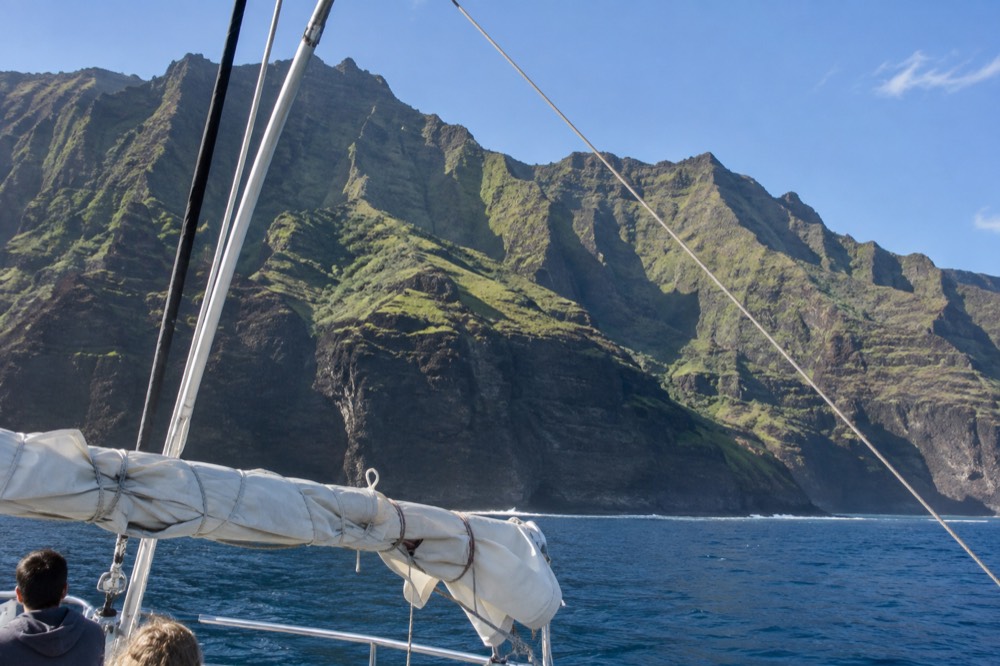
Tour prices on this coast barely move with the calendar: the 26 bookable Napali boat tours on this site span 190 dollars to 361.31 dollars per person in every season, because the price is set by boat type and trip length, not by month. What winter changes is availability, not the sticker, and what peak season changes is your chance of getting a seat at all.
This is the part of Kauai pricing that surprises people who have planned trips to Europe or the Caribbean. A raft tour from Kikiaola costs about the same in February as in July. The express sunset tour aboard 'Imiloa starts at 190 dollars per person, the lowest figure on the whole roster, and it starts at 190 dollars whether the trade winds are blowing or not. The super raft snorkel adventure starts at 235 dollars. The Niihau crossing, the longest trip at 8 hours, starts at 361.31 dollars. The roster's price floor and ceiling are constants; the month is not a variable in them.
What the month does change is everything around the sticker. Hawaii's taxes and fees stack up regardless of season: the state's transient accommodations tax rose to 11 percent from January 1, 2026, Kauai County adds its own 3 percent on short term rentals, and the rental motor vehicle surcharge is 7.50 dollars per day. None of that is seasonal either, but it all lands on the same credit card as your tour.
The seasonal price action in Kauai happens in lodging and rental cars, not in tour seats, and it follows the demand peaks rather than the weather. That makes the crowd calendar, covered next, the real price calendar.
When Is The Island Most Crowded?
Kauai's crowd peaks are the December holidays, mid June through mid August, and the March spring break window, in that order of intensity. The summer peak and the calm season overlap almost perfectly, which is the island's central bargain: the best boat months are also the busiest ones.
The visitor counts make the shape of the year concrete. The state's monthly statistics show Kauai running near 140,000 arrivals in July 2026 and roughly 129,000 in June, against a softer first half overall, down 8.5 percent year on year. Those summer numbers are families with school calendars, and they land exactly in the months when the buoy records its flattest water. The winter holiday spike is shorter and sharper, and it lands in the months when the buoy records its largest seas, which is why a December trip can feel crowded on land and frustrated on the water at the same time.
The crowd problem on a boat is not the same as the crowd problem at a resort. Boats have hard caps: the raft tours on this roster carry at most 14 guests, the express catamaran tours cap at 36, and the big catamarans at 49. Once a July morning raft is full, it is full, and the summer weeks sell out ahead of time. A winter date, by contrast, often has same week availability, because the demand follows the weather even though the tours keep running.
There is a regulatory reason supply cannot simply grow to meet the summer queue, and it is one of the more useful facts on this site. Following a December 2024 court order, the state is issuing no new Commercial Use Permits for ocean tour operators, and existing permittees may not increase their passenger capacity; vessel substitutions are only allowed at equal or lower capacity. The number of Napali tour seats that exists today is close to the number that will exist next summer. Demand softens and swells with the economy, but the supply is fixed by law.
| Period | Crowd level | Sea conditions | Verdict for a boat day |
|---|---|---|---|
| Mid December to early January | Highest of the year | Worst swell months | Avoid if the coast is the point |
| January to mid March | Low | Large, frequent swell | Whales yes, caves rarely |
| Late March to April | Spring break bump | Genuine shoulder | Reasonable compromise |
| May | Moderate | Calm arriving | Good value window |
| Mid June to mid August | Peak family season | Calmest water | Book well ahead |
| September to mid October | Quietest of the calm season | Still very calm | The insider window |
| November | Low | Swell returning | Coin flip on the water |
Is Any Month A Write-Off?
No month is a total write-off, and the honest ranking is: November through February are the gamble months, March and April are the compromise months, and May through October are the reliable months, with September and early October the best calm to crowd ratio on the island.
The gamble months still buy you something. Humpback whales arrive in Hawaiian waters from November through April, per the national marine sanctuary, and the operators' commercial whale windows sit inside that, roughly December through March. The trade is stark and worth stating plainly: the whales and the swell arrive together. The same months that fill the ocean with 40 ton visitors fill it with the ground swells that keep boats out of the caves and off the north shore. A winter visitor who wants whales and accepts a sightseeing-only west side trip at a fair price has chosen a good trip. A winter visitor who has been promised cave entry and snorkelling has been sold something nobody on this coast can deliver on a guarantee.
March and April are the months people underestimate. The buoy data puts April's mean offshore height at 1.93 metres with 16.3 percent of observations at or above 2.5 metres, which is closer to May than to February. The spring break bump in late March is the only crowd pressure, and it is nothing like July. If your school calendar or your budget forces a compromise, April is the compromise that mostly works.
September and October are the quiet answer. The water is statistically as calm as July, the family crowd has gone home, and the October shoulder holds better than its reputation, with a mean of 1.76 metres and only about 11 percent of observations at the rough threshold. One caveat applies to the late autumn: check the operator's own seasonal notes on the listing before booking, because a small number of products on this coast run limited windows, and one express catamaran tour on the roster lists an April to December season.
When Should You Go Instead?
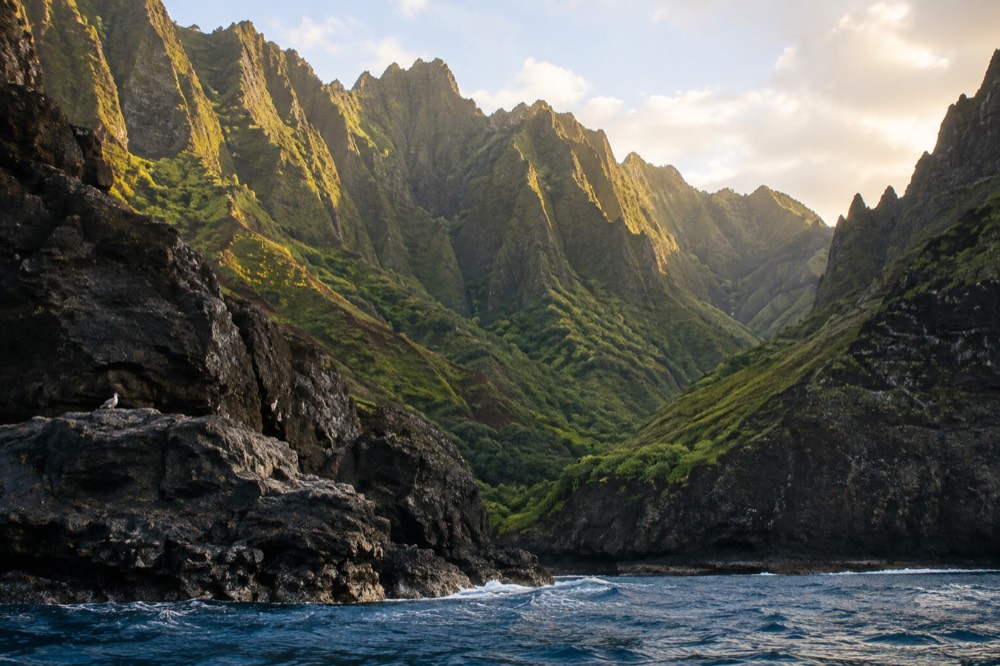
Aim for May through early October, and if you can be flexible, target September or early October: the ocean is at its calmest, the crowds are at their thinnest within the calm season, and every tour format on this coast is running. Book early in your stay rather than on your last day, so weather has a spare day to be moved to.
Within that window, match the month to the boat. The all format summer, roughly April through October, is when cave entry is most likely, when snorkel stops run their full length, and when the raft tours, the small rigid hull inflatables that are the only reliable way inside the caves, are doing the thing people book them for. The super raft snorkel adventure, 4.8 from 1,723 reviews and from 235 dollars, and the raft snorkel adventure, 4.8 from 1,656 reviews and from 217 dollars with breakfast included, both run all year but deliver their full itinerary in the calm months. The express sunset tour aboard 'Imiloa, from 190 dollars, is the budget contrast in the same season.
Booking tactics matter as much as dates. Every tour on this roster carries free cancellation, so the standard play is to book the morning tour on your second or third day, not your last, and to keep the final day free as a rebooking slot. Morning departures also carry a practical edge in the trade wind seasons, when east to northeast winds build through the day. The question of morning versus afternoon has its own full answer at morning or afternoon for a Napali boat tour, and the wider date planning question is covered in the guide to the best time to visit Kauai.
One last reframe for anyone stuck with winter dates. The worst month to visit Kauai is still a month on an island where a west side harbour is working, a captain is reading the swell, and a 5 hour tour with lunch is departing at 227 dollars. The month decides the odds; the coast decides nothing. This site, Napali Coast Boat Tours, keeps the full roster with current prices and honest season notes, so you can see exactly what runs in the month you actually have.
Common Questions About When Not To Go To Kauai
When Not To Go To Kauai?
Avoid November through mid March if a Napali Coast boat tour is the main reason for the trip. Those are the months of the largest northwest swells, when cave entry and snorkel stops become unlikely and north shore departures mostly stop. December holidays combine the worst seas with the biggest crowds, making that stretch the single worst window for a coast focused visit.
What Is The Rainiest Month In Kauai?
January and February are the wettest months on average, but the rain is heavily localised. The Lihue station's official normals list about 2.78 inches of January rain, while the island's interior summit is one of the wettest places on earth. The west side departure harbours sit in Kauai's dry zone, and operators do not cancel tours for rain alone.
Are Boat Tours Cancelled In Winter On Kauai?
Some are, when swell and wind make conditions genuinely unsafe, but west side tours run year round, conditions permitting. Operators offer reschedule or full refund options when they cancel, which is why booking early in your stay matters in winter. No operator publishes a cancellation rate, and any specific percentage you read should be treated as invented.
Can You Enter The Sea Caves In Winter?
Sometimes, but it is unlikely and never guaranteed. Cave entry is governed by ground swell rather than time of day, and captains decide on the morning of the tour once they see the water. Operators state in writing that winter conditions make full cave access less likely than in summer.
Is Kauai Too Crowded In Summer?
The summer weeks from mid June to mid August are the island's family season peak, with around 130,000 to 140,000 monthly arrivals by air. Boats have hard passenger caps, so the real summer risk is sell outs rather than deck crowding. September and early October deliver the same calm water with noticeably thinner crowds.
What Is The Cheapest Time To Visit Kauai?
Tour prices on this coast do not fall in the off season: the roster spans 190 to 361.31 dollars per person year round, set by boat type and trip length. The savings in the quiet months come from lodging and rental cars, not from the boat ticket. April and late September offer the best combination of decent conditions and soft demand.