Why Do I Feel Sick After Snorkeling In Kauai?
Why snorkeling on a Napali Coast boat tour can leave you nauseated, dizzy or foggy, and what actually prevents it, from swell timing to medication onset and boat choice.
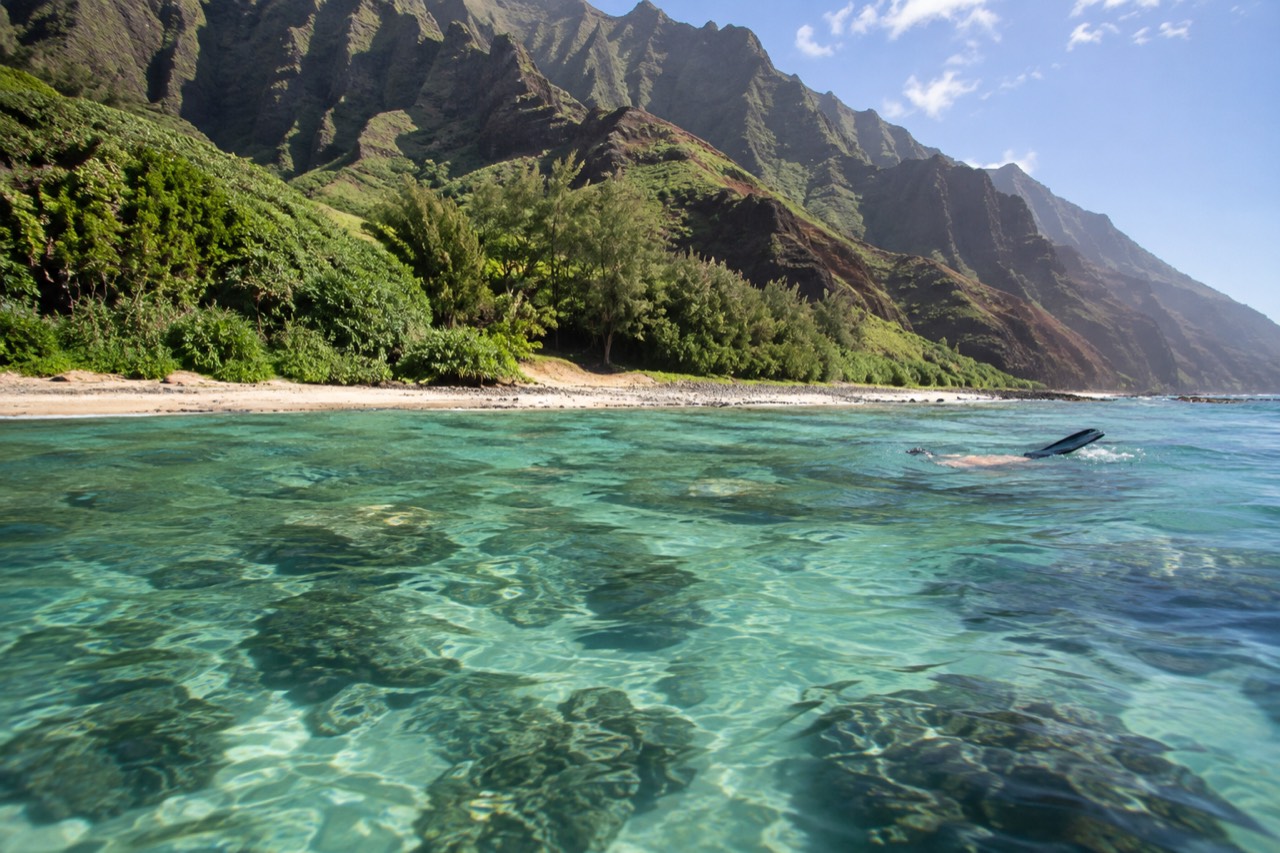
Snorkeling is the quiet centerpiece of most Napali Coast boat tours, and for a surprising number of guests it is also the moment the day goes sideways. Not on the boat, not in the caves, but floating face down with a tube in your mouth, breathing hard against a small resistance, rolling in leftover swell. The feeling usually fades within hours. Sometimes it does not, and understanding why is the difference between a ruined afternoon and a quick recovery.
This page walks through the mechanics, the Kauai specific swell patterns that drive it, the medication timings that actually work, and which boats on this coast give a nervous stomach the easiest ride.
Why Do You Feel Sick After Snorkeling?
Feeling sick after a snorkel stop is usually a combination of three things stacking up: motion sickness from rolling in swell while your head is locked still, a mild inner ear conflict from breathing against a tube's resistance, and swallowed saltwater irritating your stomach. The snorkel safety literature has a name for the more serious version, and it hits experienced swimmers as often as first timers.
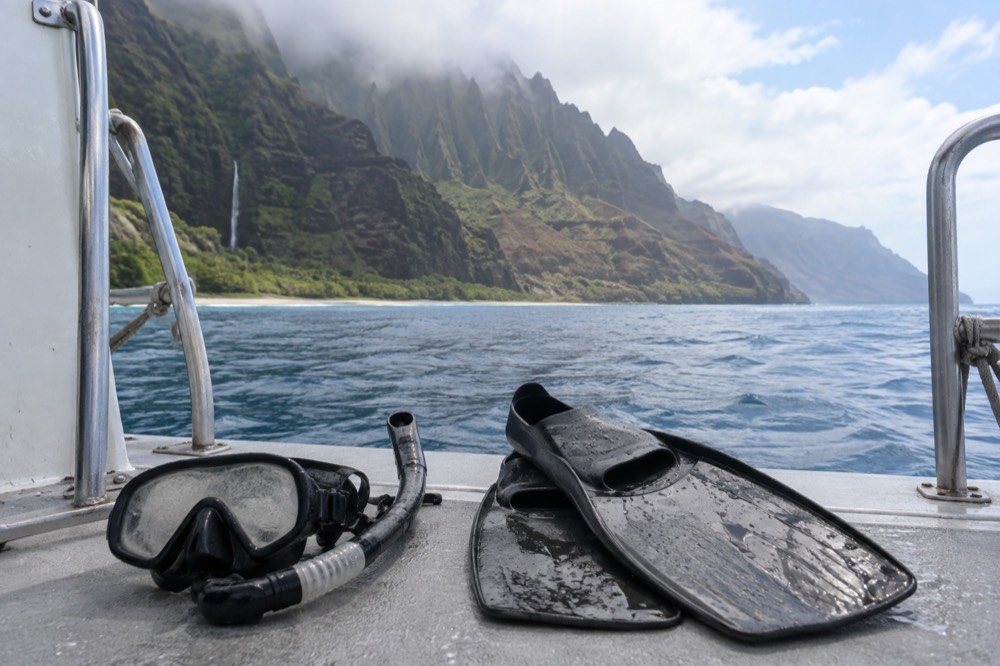
The mildest and most common explanation is plain motion sickness with a twist. On deck, your body constantly makes micro adjustments to the boat's motion, and your eyes, inner ears and muscles stay roughly in agreement. Floating in the water changes that. Your head is down and fixed on the reef, your body rolls with whatever swell is left in the lee of the coast, and your eyes are locked on a scene that does not move with you. That three way disagreement is the classic trigger for nausea, and snorkeling manufactures it almost perfectly.
The second mechanism is less familiar and more important. A 2025 snorkel safety study summary found that Snorkel Induced Rapid Onset Pulmonary Edema, or SIROPE, is a common factor in many snorkel related drownings in Hawaii, and notably, the reported symptoms struck experienced and inexperienced swimmers equally. Fluid builds in the lungs under the combined load of exertion, a restricted airway and water pressure on the chest. Most people who feel awful after a snorkel stop have nothing this serious, but the study is why the standard advice is to treat post snorkel breathlessness, coughing or a tight chest as something to get checked rather than slept off.
The third is simply mechanical. Nearly everyone swallows some seawater. A mouthful or two of saltwater is enough to irritate the stomach lining and add a genuine gastrointestinal layer on top of vestibular nausea. Add a breakfast eaten at 6 a.m. in a hurry and the picture is complete.
The scale of the problem on this island is real. Hawaii Department of Health data for 2019 to 2023 show 91% of snorkeling drowning victims were visitors, and ocean drownings accounted for 83% of all drownings in the state. That statistic is about the worst outcomes, not about feeling sick, but it underlines the same point: the snorkel stop is where a relaxed tour day concentrates its real risk, and it deserves a little preparation rather than none.
Why Is Floating Worse Than Sailing?
Floating is worse because it removes the two things that keep motion sickness manageable on deck: a stable platform and a visible horizon. In the water your body rolls freely with the swell while your eyes stare down at a stationary reef, the strongest possible sensory conflict. On the boat, the horizon gives your brain a fixed reference, which is why most people feel fine the moment they climb back aboard.
The practical detail is that the swell does not disappear just because you are in a sheltered spot. Napali snorkel stops sit in the lee of the coast, where waves wrap and soften into a slow roll rather than breaking surf, but a two metre offshore swell still arrives as a gentle rise and fall that your body translates into motion while your eyes insist nothing is moving. Captains pick the calmest water available on the day, and the roll that remains is exactly what triggers the conflict.
Breathing through the tube adds the second problem. A snorkel adds a small but real resistance to every breath, and restricted breathing under mild exertion is a known contributor to both anxiety and the SIROPE mechanism described above. Your breathing also becomes more deliberate, which many people experience as a faint air hunger that reads as unease, then as nausea.
The good news is the recovery pattern is predictable. Once you are back on deck, sitting upright with the horizon in view, the conflict resolves within minutes for most people. If you know this in advance, you can stop the spiral early: get out of the water at the first sign of queasiness rather than pushing through "one more look at the turtles."
If you are the kind of traveller who wants the option to skip the water entirely and still see the coast, the three tours below cover the range, from a large stable catamaran to a shorter, cheaper snorkel run.
Does Swallowing Saltwater Matter?
Yes, it matters, and it is the most underrated of the three causes. A few swallowed mouthfuls of seawater irritate the stomach directly, and the nausea it produces feels identical to motion sickness, so people misdiagnose it and then get surprised when motion sickness tablets do nothing. The two also compound: an irritated stomach lowers the threshold at which vestibular conflict tips you over.
The distinction matters for treatment. Motion sickness responds to medication taken before the trigger. Saltwater nausea does not, because it is a direct gastric irritant, and it passes on its own once the stomach settles. Ginger, small sips of plain water and time are the honest remedies here, and there is no shortcut.
There are habits that reduce how much you swallow. A well fitting mask matters more than any other piece of equipment: most gulps happen when a leaky mask forces a snorkel clear, and most leaks come from a mask bought for a different face shape. Every tour on this roster supplies gear, and the crew will swap sizes, so ask for a second fitting rather than tolerating a seepy seal for an hour. Breathing slowly through the nose exhale pattern your instructor shows you, and keeping your snorkel out of the water when you pause to look around, both cut the intake.
One Kauai specific point worth knowing: the water itself is not the problem. The reefs these tours stop on are clean, and the salt concentration is ordinary ocean salt. Nothing about Kauai seawater is uniquely harsh, so if you feel sick after snorkeling here, it is the mechanics above, not the water quality.
There is also a legal framework around the stop itself that first timers rarely know. Under Hawaii Administrative Rules 13-245-9, anyone snorkeling in navigable waters must display a diver's flag of at least 12 by 12 inches, snorkelers must stay within 100 feet of the flag, and vessels must keep 100 feet away. Your tour boat handles all of that, but it is why the crew is insistent about staying near the boat and why the stop is as compact as it is.
If all of this has you second guessing the water portion of the day, the steadiest platform on this roster for a first snorkel stop is the power catamaran, and you can hold a seat with free cancellation while you decide.
How Does The Napali Swell Affect It?
The Napali swell is the variable that decides everything. Two recent years of buoy data show that from June through September the northwest swell is so small that offshore wave heights essentially never exceed 2.5 metres, while in December and January they are at or above that threshold about half the time. The same snorkel stop is a glassy pool in August and a rolling massage in midwinter.
The data behind that comes from the NOAA and PacIOOS wave buoy moored off Hanalei in 200 metres of water, which records significant wave height every half hour. Reduced to monthly averages over two recent years, the pattern is unambiguous:
| Month | Mean wave height (m) | Share of readings at or above 2.5 m | What that means for the snorkel stop |
|---|---|---|---|
| Jan | 2.77 | 52.2% | Frequent cancellation or route change |
| Feb | 2.47 | 47.5% | Rough, occasional calm windows |
| Mar | 2.12 | 28.3% | Improving, still bumpy |
| Apr | 1.93 | 16.3% | Genuine shoulder, variable |
| May | 1.73 | 5.6% | Mostly calm mornings |
| Jun | 1.61 | 0.2% | Near flat offshore |
| Jul | 1.50 | 0.1% | Near flat offshore |
| Aug | 1.40 | 1.6% | Near flat offshore |
| Sep | 1.42 | 0.1% | Near flat offshore |
| Oct | 1.76 | 10.8% | Shoulder returning |
| Nov | 2.42 | 42.6% | Rough again |
| Dec | 2.61 | 46.4% | Frequent cancellation or route change |
Two honest caveats travel with that table: it is two recent years, not a 30 year climatology, and it measures offshore sea state in deep water, which is not the same as what you feel in the lee of the cliffs. But the seasonal shape holds, and it matches what every operator on the coast says in its own words: summer is the reliable window, winter is a gamble on calm days.
The forecasters' thresholds are public, and they give you a concrete way to read a Kauai forecast before you book. The National Weather Service in Honolulu issues High Surf Advisories for west facing Kauai shores at 12 feet and Warnings at 20 feet, with north facing shores set at 15 and 25 feet. If a west shore advisory is up the day before your tour, expect a bumpy ride and a captain who may drop the snorkel stop.
That last point deserves emphasis, because it is the most common gap in a visitor's mental model. No operator on this coast guarantees snorkeling. Every roster product on this site lists it as conditions permitting, and several disclaim it in writing. The swell decides, the captain calls it on the day, and the honest expectation is a summer booking gives you the stop and a winter booking gives you a coin flip weighted by the table above.
What Prevents It On A Boat Day?
Prevention is mostly timing and positioning: take medication early enough for it to work, eat a light real breakfast rather than nothing, stay low and central on the boat while transiting, keep your eyes on the horizon, and get out of the water at the first wave of queasiness rather than pushing through. The medication timing is where most people fail, because the common tablets take two hours to reach effect.
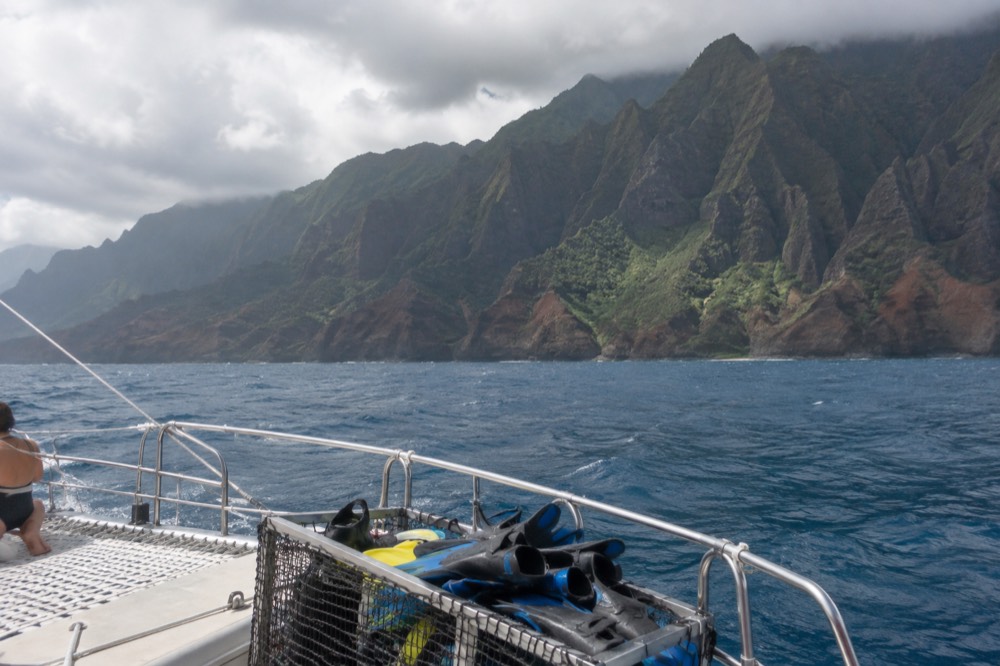
The timing numbers come from the CDC Yellow Book's motion sickness guidance. Oral meclizine at 25 to 50 mg reaches effect about two hours after you take it and lasts roughly eight hours. Dimenhydrinate behaves the same way, two hours to onset, eight hours of coverage. The scopolamine patch is the long game: it must be applied at least four hours before you need it, per the FDA label, and delivers roughly three days of coverage, which is why it suits a multi day Kauai stay rather than a single tour morning. The full index of guides sits on Napali Coast Boat Tours.
| Option | Onset | Duration | Best for |
|---|---|---|---|
| Meclizine 25 to 50 mg (oral) | About 2 hours | About 8 hours | A single tour day, taken at breakfast |
| Dimenhydrinate 50 to 100 mg (oral) | About 2 hours | About 8 hours | Same use, causes drowsiness in many people |
| Scopolamine 1 mg patch | Apply 4 hours ahead | About 72 hours | Multi day trips, or those who hate tablets |
Beyond medication, the practical list is short and unglamorous. Eat something: an empty stomach tips into nausea faster than a lightly fed one, and every tour on this roster includes food, from snacks to full breakfast and lunch. Sit mid ship and low on the transit, where pitch and roll are smallest. Look at the horizon, not at the deck or your phone. Go easy on the reef: floating calmly and breathing slowly is both the safest and the least nauseating way to snorkel, and chasing fish hard is the fastest way to feel wrong.
For anyone planning the wider day around the boat, the practicalities of getting to the west side harbours are covered in the guide to getting to Port Allen and Kikiaola, and the general question of whether you will get seasick on a Napali boat tour has its own breakdown of the on deck experience.
Should You Skip The Snorkel Stop?
Most people should not skip it, and a few absolutely should. If you have asthma, a heart condition, a recent respiratory illness, or you felt genuinely unwell after a previous snorkel, the honest answer is to stay on the boat and enjoy the coast from the deck, which is the majority of the tour anyway. If you are simply motion sick prone, the smarter move is a summer morning booking on a large boat, not skipping the water.
The decision grid is simpler than it looks:
| Your situation | Skip the stop? | Better move |
|---|---|---|
| Motion sick prone, no other issues | No | Book a summer morning on a large catamaran, take tablets at breakfast |
| Asthma or heart condition | Yes | Enjoy the deck, tell the crew at check-in |
| Felt breathless or ill after a past snorkel | Yes | Treat it as a flag, ask a doctor before the trip |
| Pregnant, back or neck problems | Check the operator's policy | Several operators exclude these guests from raft products entirely |
| Confident swimmer, first time snorkeling | No | Ask the crew for a fitting mask and stay near the boat |
Two things make the skip painless. First, the snorkel stop is typically 30 to 60 minutes of a tour that runs four to eight hours, so the cliffs, the caves and the commentary are untouched. Second, the crew will not pressure you. Operators on this coast would far rather you sit out than have a bad ten minutes in the water, and every product on this roster lists snorkeling as conditions permitting rather than as the point of the trip.
The one genuinely bad decision is the middle path: getting in the water because you paid for it, feeling wrong, and staying in because you do not want to look difficult. That is the exact pattern the safety data warns about. Get out early, sit up, look at the horizon, and the day recovers.
Which Boats Handle It Best?
For a weak stomach, size and weight are your friends, and on this roster that means the power catamarans. The Na Pali Coast Power Catamaran from Na Pali Experience, a 5 rating from 811 reviews at from $274.93 per person, runs 4 hours 30 minutes from Kikiaola with snacks included, and its hull carries the steadiest ride of the snorkel products listed here. Rigid rafts are the opposite trade: closest to the caves, most motion in the swell.
The physics is straightforward. A wide, heavy catamaran has more inertia and two hulls that bridge chop rather than following it, so the deck moves less for the same sea state. A rigid inflatable raft is light, narrow and designed to sit on the water rather than through it, which is exactly what you want for sliding into sea caves and exactly what you do not want for a settled stomach. The trade is real and not a marketing distinction: cave entry belongs to the rafts, comfort belongs to the catamarans.
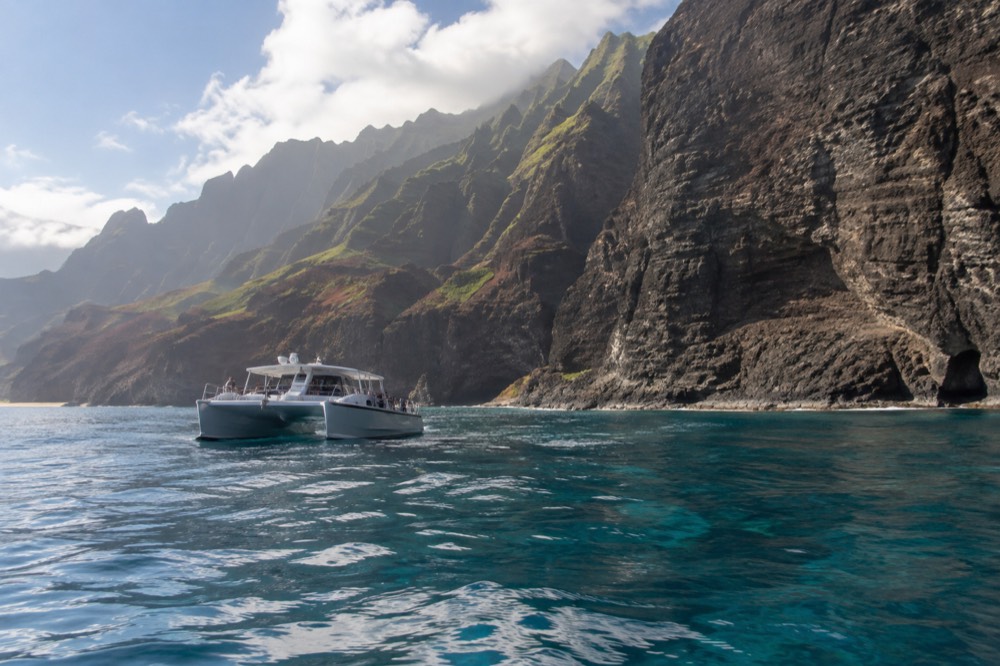
The power catamaran above is the pick for this specific question because it pairs that stable platform with a full snorkel stop and sea cave viewing from the deck, conditions permitting, and because its 4 hours 30 minutes is long enough to include the stop without a full day on the water. Free cancellation is standard across the roster, so a nervous first timer is not locked in.
If you want the fuller comparison of hull types, including where the rafts win, the guide to Napali Coast catamaran tours and the one on Napali Coast raft tours break down the trade from the other direction. And the honest framing matters here: no boat on this coast is a smooth guarantee in winter swell, and the same captain's discretion that governs the caves governs your comfort.
Which Tour Suits A Weak Stomach?
For a nervous stomach, the best fit on this roster is a large catamaran snorkel tour in the summer morning window, and the two strongest candidates are the Deluxe Na Pali Snorkel Cruise aboard Lucky Lady, from $233.73 with breakfast included and a 4.7 rating from 1639 reviews, and the Na Pali Coast Snorkel Tour With Lunch from Napali Navigators, from $215 with a deli lunch and a 5 rating from 23 reviews.
The Lucky Lady cruise is the established choice: a power catamaran carrying up to 49 guests, 5 hours 30 minutes from Port Allen, with breakfast included, so you are fed without eating heavy, and a long, steady transit rather than a fast run. The Napali Navigators lunch tour is the value option, from $215 per person, 5 hours from Kikiaola with a deli lunch, and a smaller operation with a 5 rating from 23 reviews, a small pool but a perfect one so far. Both are calm water products by design.
The deciding factors between them are departure harbour and crowd preference. Port Allen sits slightly closer to the main Poipu and south side lodging, Kikiaola slightly closer to Waimea, and both are covered in detail in the where Napali Coast boat tours leave from breakdown. Whichever you choose, book the earliest morning slot available: the trades build through the day, and the first departure of the morning is almost always the calmest water you will get.
For the full spread of options, from the stable catamaran to the breakfast cruise to the small group lunch run, these are the three that answer this question best on this site.
Common Questions About Feeling Sick After Snorkeling
Why Do I Feel Sick After Snorkeling?
Usually a stack of three things: motion sickness from rolling in swell while your eyes are fixed on the reef, the breathing resistance of the snorkel itself, and swallowed saltwater irritating your stomach. The first responds to medication taken early, the second to calm floating, the third to time. Get out of the water at the first sign of queasiness rather than pushing through.
Is it normal to feel dizzy or foggy for hours after a snorkel stop?
Mild dizziness that fades within a few hours is common and usually just motion sickness working its way out of your system. Rest, fluids and a horizon view help. Breathlessness, a persistent cough or chest tightness are different and should be checked by a medical professional, since the snorkel safety literature treats those symptoms seriously in swimmers of all experience levels.
Does swallowing seawater actually cause nausea?
Yes. A few mouthfuls of saltwater directly irritate the stomach lining, and the nausea it produces feels the same as motion sickness. Motion sickness tablets will not touch it, which is why people are sometimes confused when their medication "fails." Ginger, small sips of plain water and time are the honest remedies.
When should I take motion sickness medication for a Napali tour?
Oral tablets such as meclizine need about two hours to take effect, so take them at breakfast before a morning departure, not at the dock. The scopolamine patch must go on at least four hours before boarding and lasts about three days. Both timings come from CDC and FDA label guidance.
Which month has the calmest water for snorkeling on Kauai?
June through September. Two recent years of buoy data show offshore wave heights in those months essentially never reach 2.5 metres, while December and January readings hit that mark about half the time. Book the earliest morning slot you can within that window.
Should I skip the snorkel stop if I get seasick easily?
No, but choose the right boat. A large power catamaran in summer gives the steadiest platform and the calmest water. Do skip it, and tell the crew at check-in, if you have asthma, a heart condition or you felt genuinely unwell after a previous snorkel. The stop is 30 to 60 minutes of a much longer day, and the coast is the main event either way.