Napali Coast Whale Watching Tours: What To Book In Humpback Season
Humpbacks arrive off Kauai every winter, but the dedicated whale-watch products run from the west and south shores, not along the Napali Coast itself. Here is what the season actually looks like from a Napali boat, which tours still run in the rough months, and what a winter booking costs.
Short answer
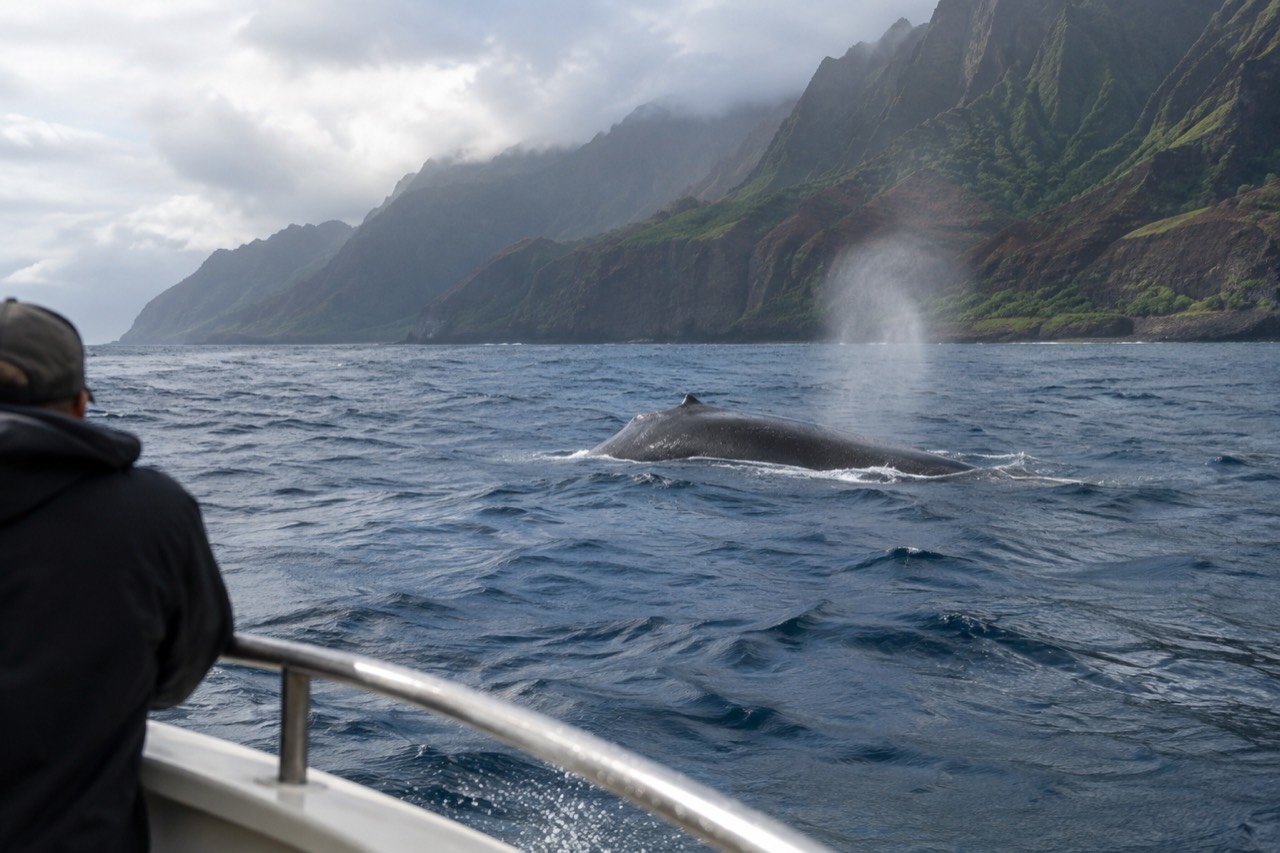
Humpback season on Kauai runs November through April, with commercial whale-watch windows inside that. This site's roster has no dedicated whale-watch tour: every product listed is a Napali Coast sightseeing, snorkel or sunset cruise, from $190 per person, that may include incidental whale sightings. Winter tours run from Port Allen and Kikiaola, conditions permitting.
The humpbacks that reach Kauai each winter are the same animals that make the sea along the Napali Coast complicated in those months. That single overlap shapes everything about whale watching here: the whales arrive with the swell, the dedicated whale-watch boats respond by staying on the sheltered west and south shores, and the Napali Coast tours that keep running through winter sell the coast, with whales as a possible bonus rather than the headline. This page walks through what that means in practice, month by month, tour by tour, and it is honest about one thing up front: the roster on this site contains no dedicated whale-watch product. What it contains are Napali Coast cruises that run in the same season the whales do.
When Is Humpback Season On Kauai?
Humpback season on Kauai runs November through April, per the Hawaiian Islands Humpback Whale National Marine Sanctuary, with the strongest commercial whale-watch windows from December through March or April depending on the operator. Peak sightings cluster in January and February. The same months are the roughest for boats along the Napali Coast, which is why dedicated whale-watch products depart the west and south shores rather than the coast itself.
The sanctuary's own season statement is the authoritative one: whales can be seen from November through April. Operators publish narrower windows inside that. Captain Andy's puts its whale season on Kauai at December through March, with most sightings in January and February. Holo Holo Charters says seasonal humpbacks can be seen December through April. Kauai Sea Tours sells its whale tour December to March. All of those dedicated products share one feature: they run along Kauai's south or west shore, not the Napali Coast, because the north and west swells that define winter make the coast itself unreliable.
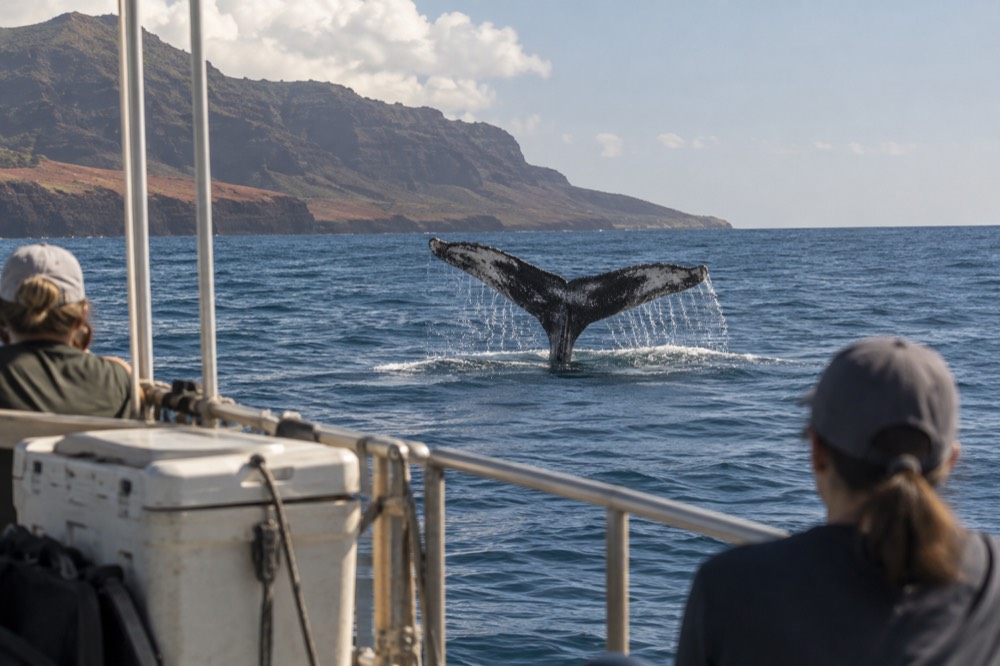
The numbers behind the season are large. NOAA's most recent stock assessment puts the minimum population estimate for the Hawaii humpback stock at 7,265 animals, and sanctuary reporting describes a population that peaked around 33,000 in 2012 and sat near 26,000 in 2021, still recovering from the 2014 to 2018 marine heatwave. Community-science counts give a Kauai snapshot: the February 2026 Sanctuary Ocean Count recorded 337 humpback sightings from Kauai shore stations alone, part of 1,935 sightings across 46 stations statewide.
| Window | Who says it | Where those trips run |
|---|---|---|
| November to April | NOAA sanctuary | Island-wide, viewing from vessels and shore |
| December to March | Captain Andy's | West or south side of Kauai, not Napali |
| December to April | Holo Holo Charters | South and west shore routes |
| December to March | Kauai Sea Tours | Along Kauai's south shore |
For a visitor, the practical reading is simple. If whales are the primary goal, the dedicated products exist and they deliberately avoid the Napali Coast in winter. If the coast is the primary goal, winter tours do run from the west-side harbors, and the whales you meet will be the ones feeding the same corridor your boat travels out and back. More on the season itself sits in the Napali Coast boat tour season guide.
Which Napali Tours Are Whale Watching Tours?
None of the tours on this site is a dedicated whale-watch tour, and no Napali Coast product here is sold as one. The 26 tours listed are sightseeing, snorkel, raft and sunset cruises from $190 to $361.31 per person. In whale season, several of them still run, and humpback sightings from the deck happen as an incidental encounter on the outbound and return legs.
That is the honest gap, stated plainly. A search for "napali coast whale watching tours" finds pages selling winter whale boats, but those products cruise Kauai's south and west shores, because the Napali Coast is exactly where the winter swell lands. This site's roster has no whale-watch listing, and pretending otherwise would be selling a product that does not exist. What the roster does have is a set of tours that operate in the whale months, and a whale sighting from any of them is a real possibility rather than a promise.
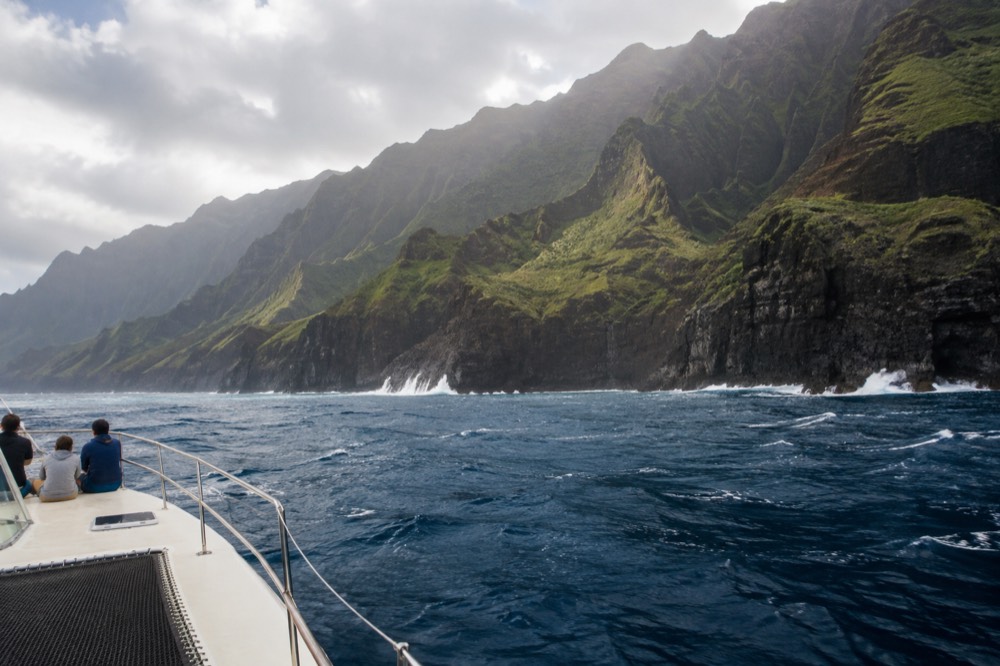
Which roster tours make sense in the whale window? The sunset and sightseeing products are the natural fit, since winter afternoons drop the snorkel stops more often and the light on the cliffs is the reliable half of the trip. The express sunset tour aboard 'Imiloa runs year round, conditions permitting, from $190 per person, with a 4.5 rating from 224 reviews and a late lunch included. The Amelia K's 5-hour tour from Makana Charters, from $227.13 per person with lunch, rated 4.9 from 2050 reviews, also runs through the year. The Leila sunset dinner sail, from $263.82 per person, rated 4.7 from 609 reviews, is the sailing option.
Each of those three is a Napali Coast cruise first. Whales, when they appear, appear on the transit: the run out of Port Allen or Kikiaola crosses open water where humpbacks travel, and crews stop or slow for a sighting when the rules allow it. If a winter whale sighting is the thing you most want, pair a Napali cruise with a dedicated south-shore whale product from another operator, or read the best Napali Coast boat tour guide to weigh the formats.
How Close Do The Boats Get?
Federal law prohibits approaching within 100 yards, about 91 meters, of any humpback whale by any means, including by vessel, anywhere within 200 nautical miles of Hawaii. Boats do not chase whales; they hold distance, and whales sometimes approach the boat on their own. Spinner dolphins carry a separate 50-yard vessel rule in main-island waters.
The 100-yard limit comes from 50 CFR 216.19, and it applies to the Napali Coast because that regulation covers all waters within 200 nautical miles of the islands, regardless of sanctuary boundaries. In fact the sanctuary's Kauai unit sits on the north shore, from Kailiu Point east to Mokolea Point, and the Napali Coast lies outside it. The approach rule follows you anyway. Interception, causing another vessel to close the distance, and disrupting normal whale behavior are all prohibited alongside the distance limit itself.
Spinner dolphins add a second rule: since October 2021, vessels may not approach or remain within 50 yards of Hawaiian spinner dolphins in waters within 2 nautical miles of the main Hawaiian Islands. Monk seals and turtles carry their own distances, 50 feet for a seal and 150 feet for a mother with a pup, per DLNR guidance.
| Animal | Approach limit | Source of the rule |
|---|---|---|
| Humpback whale | 100 yards by vessel, 1,000 feet by aircraft | 50 CFR 216.19, federal |
| Spinner dolphin | 50 yards by vessel, within 2 nmi of main islands | NOAA final rule, 50 CFR 216.20 |
| Hawaiian monk seal | 50 feet, 150 feet for mother with pup | DLNR and NOAA guidance |
| Green sea turtle | 10 feet on land or in water | DLNR guidance |
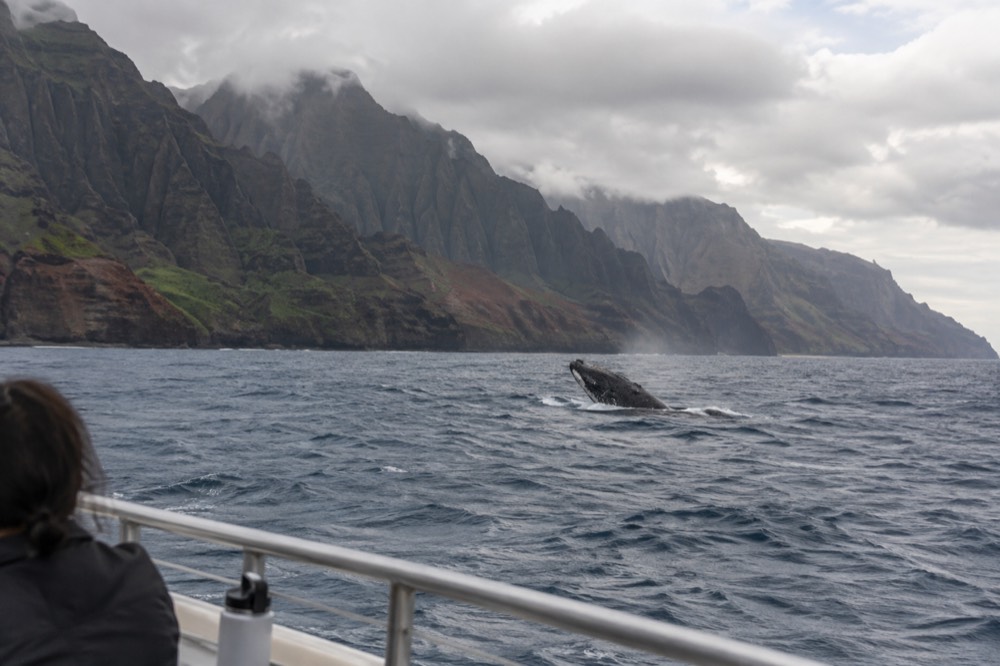
What this means on deck is that a good whale moment from a Napali tour is a slow, distant one: a blow on the horizon, a fluke as an animal dives, occasionally a full breach if the day is generous. Captains will idle or hold course and let the scene come to the boat. A whale that chooses to pass close is legal; a boat that closes the gap is not. If you want the closest reliable viewing, a dedicated whale-watch product with the legal framework built around the encounter is the better buy, and the Napali Coast sunset cruise guide explains what the winter sunset products do instead.
Is The Winter Sea Rougher?
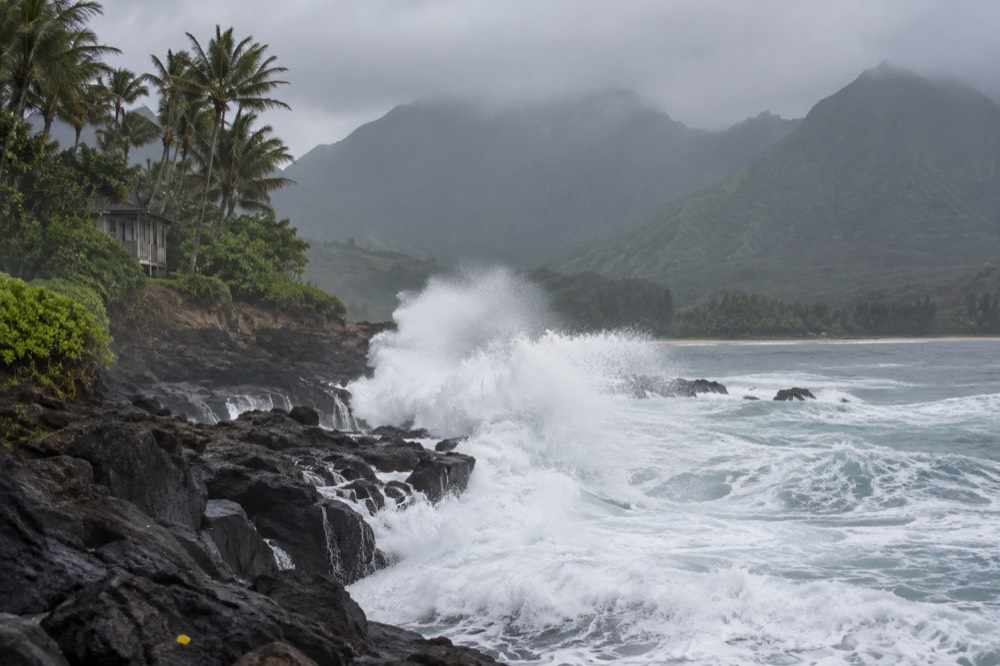
Yes, measurably. Two recent years of offshore buoy data off Kauai's north shore show mean wave heights above 2.4 meters in December and January, with roughly half of winter observations at or above 2.5 meters, against summer means near 1.5 meters. Summer observations almost never reach 2.5 meters. Winter tours run between swells, not through them.
The data comes from NOAA buoy 51208, the Hanalei Waverider, which records offshore significant wave height in about 200 meters of water. It is offshore sea state, not breaker height at the cliffs and not how the ride feels, but it is the clearest measured picture of why the coast changes character in winter.
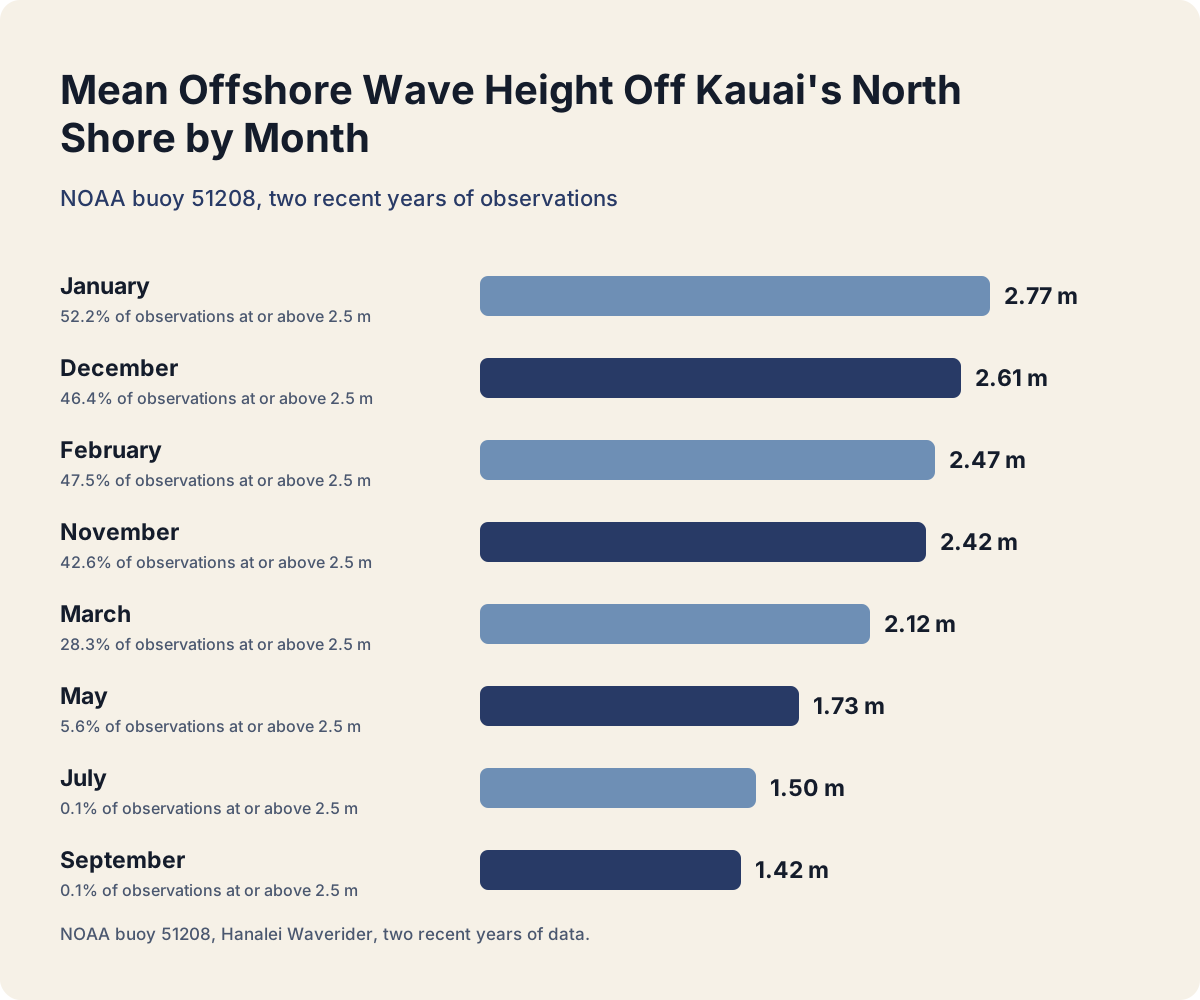
| Month | Mean height | Share of observations at or above 2.5 m |
|---|---|---|
| January | 2.77 m | 52.2% |
| February | 2.47 m | 47.5% |
| March | 2.12 m | 28.3% |
| May | 1.73 m | 5.6% |
| July | 1.50 m | 0.1% |
| September | 1.42 m | 0.1% |
| November | 2.42 m | 42.6% |
| December | 2.61 m | 46.4% |
Two caveats travel with that table: it is two recent years, not a 30-year average, and the percentages are shares of observations, not shares of hours. The pattern it shows is still the real one. April and October are the true shoulders, not the May and September dates travel writing borrows from the kayak rules. Operators confirm the same thing from the water: Holo Holo Charters states that wind and swell are the primary cancellation factors, that rain alone does not stop a tour, and that guests offered a route change can continue, reschedule or take a full refund.
The National Weather Service issues separate high-surf thresholds for each shore orientation, with west-facing Kauai shores under advisory at 12 feet and warning at 20. That is the forecast language a captain reads before deciding whether a Napali run goes. If a winter booking makes you nervous about the ride itself, the will I get seasick on a Napali boat tour answer covers medication timing and boat format in detail.
Do Caves And Snorkel Stops Still Happen In Whale Season?
Sometimes, never guaranteed, and less often in winter. Cave entry depends on ground swell size rather than time of day, and operators state plainly that winter conditions make full cave access less likely. Snorkel stops narrow to the calmer mornings, and some winter products drop snorkeling from the itinerary entirely.
No operator on this coast guarantees cave entry or snorkeling, and several say so in writing. Captain Andy's FAQ is explicit: caves are affected by ground swells, swell size is mostly unrelated to time of day, and in winter it is less likely you will explore all the caves. The phrasing that belongs in every winter plan is "conditions permitting", because that is what the captain decides on the day, once the water is in front of the boat. The wider set of guides lives on Napali Coast Boat Tours.
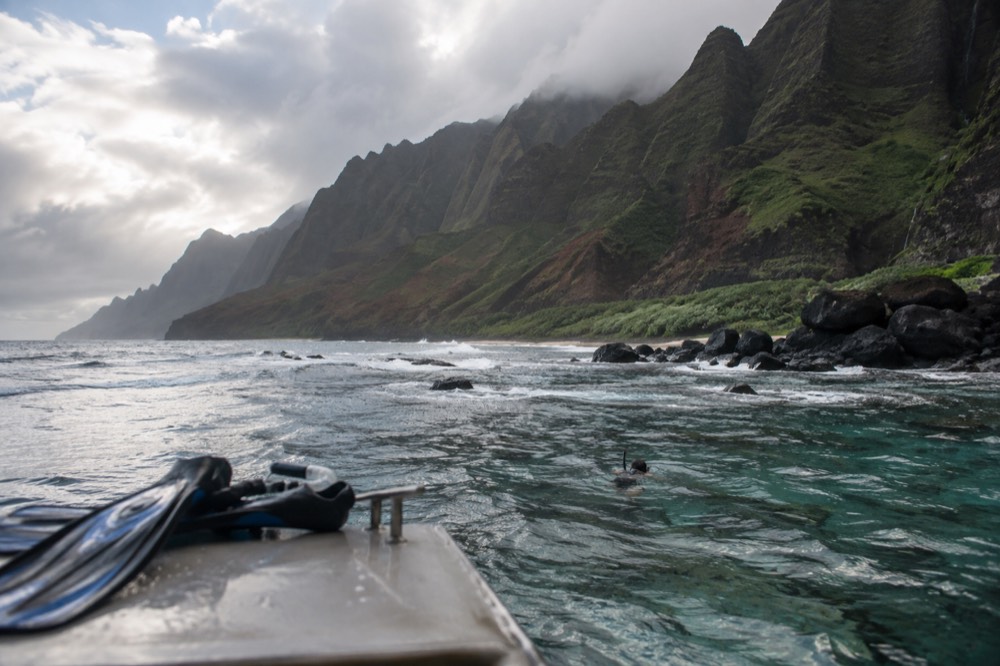
Rafts are the cave boat. Rigid-hull inflatables enter when the swell allows; large sailing catamarans do not, and the roster reflects that split. On the snorkel side, the season is real: Makana Charters describes Nualolo Kai access as roughly April through October when northwest swells settle, and one north-shore operator's winter product drops snorkeling entirely by design. For a winter booking, the honest expectation is a sightseeing and sunset coast with a cave pass-by and a snorkel stop only if the day allows. The Napali Coast sea caves guide covers the cave formats in full.
Which Harbor Runs In Whale Season?
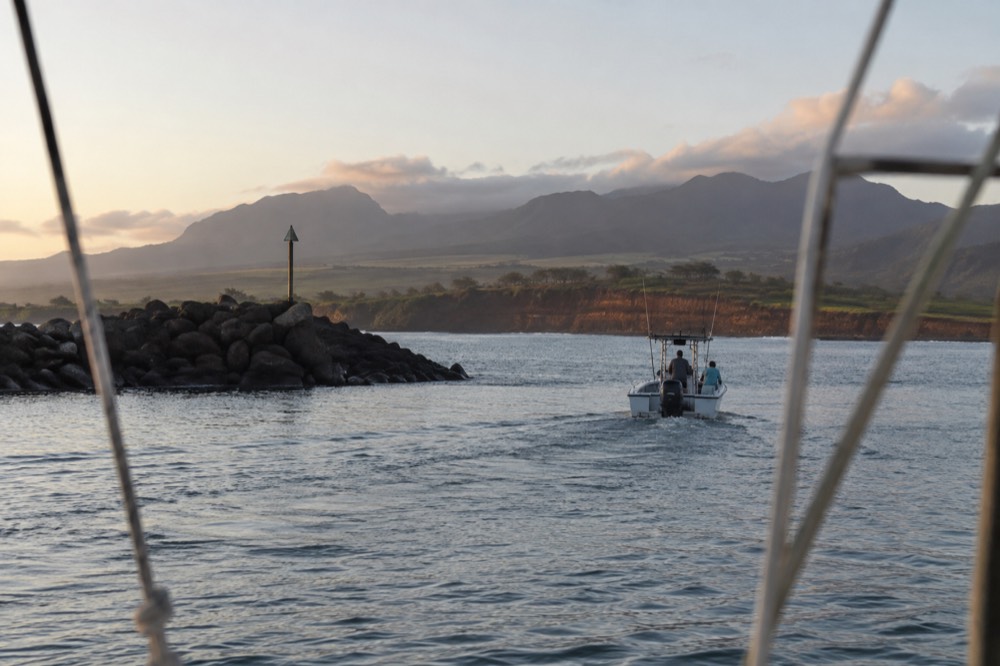
Both west-side harbors do. All 26 tours on this roster depart either Port Allen in Eleele, 18 of them, or Kikiaola near Waimea and Kekaha, 8 of them, and both harbors serve winter departures. There is no north-shore harbor at all: Hanalei has no harbor facility, and whale-season boats work from the west side.
That geography is the whole story of winter whale watching on this coast. The dedicated whale products stay south and west precisely because the harbors that run year-round sit on the leeward side. Port Allen, at 4353 Waialo Road in Eleele, offers free first-come parking in the gravel lot and office-row check-in at the Marina Center before anyone walks to a dock. Kikiaola, two miles west of the Waimea River mouth, switched to paid parking run by a third party in mid-2025, free for Hawaii residents with a state ID, with rates posted at the harbor.
| Harbor | Location | Tours on this roster | Parking | Check-in |
|---|---|---|---|---|
| Port Allen | Eleele, 4353 Waialo Road | 18 | Free, first-come gravel lot | Office row at the Marina Center |
| Kikiaola | Near Waimea and Kekaha | 8 | Paid, rates posted on site, free with Hawaii state ID | At the harbor |
The classic first-timer error is booking a raft tour that leaves Kikiaola and driving to Port Allen, or the reverse. The two harbors are about 12 kilometers apart, and the operator's listing states which one your tour uses. Build in time for the drive from wherever you are staying: the getting to Port Allen and Kikiaola guide has the drive times, including the long run from the north shore.
What Does A Winter Tour Cost?
Winter seats cost the same as summer seats on this roster: prices run from $190 to $361.31 per person, and no tour carries a whale-season surcharge or a whale-watching premium. The realistic winter choice is between sunset and sightseeing products at the lower end, from $190 to $263.82 per person, all with free cancellation.
The price floor across all 26 tours is $190, and that happens to be the winter-friendly express sunset tour aboard 'Imiloa: 5 hours from Port Allen, a late lunch included, a 4.5 rating from 224 reviews, capped at 36 guests. From there the sunset and dinner products step up gently. Nothing on the roster is a private charter, and every single tour carries free cancellation, which matters more in winter than any other season, because a swell can move your date.
| Tour | Format | Duration | From (per person) | Rating |
|---|---|---|---|---|
| Express sunset aboard 'Imiloa | Power catamaran | 5 hours | $190 | 4.5 from 224 reviews |
| Sunset sailboat tour with dinner | Sailing catamaran | 4 hours 30 minutes | $247 | 4.7 from 234 reviews |
| Sunset dinner cruise | Power catamaran | 3 hours 30 minutes | $247 | 4.7 from 104 reviews |
| Sunset and sightsee tour | Power catamaran | 3 to 4 hours | $263.82 | 4.7 from 1249 reviews |
| Leila sunset dinner sail | Sailing catamaran | 4 to 5 hours | $263.82 | 4.7 from 609 reviews |
| Amelia K tour with lunch | Power catamaran | 5 hours | $227.13 | 4.9 from 2050 reviews |
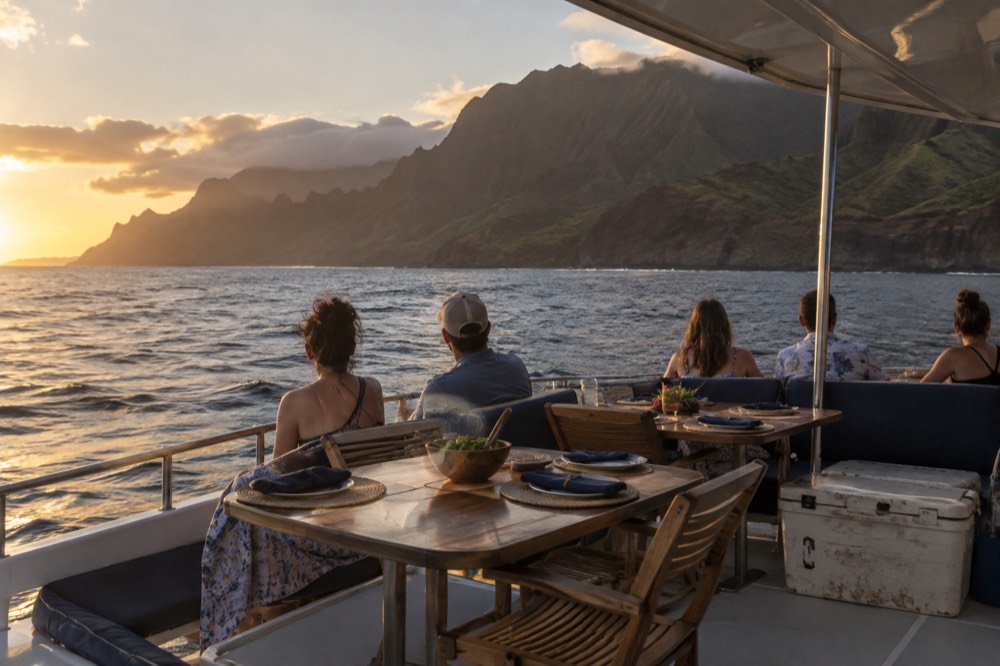
The express sunset is the value pick for a winter week: it is the cheapest seat on the roster, it runs year round conditions permitting, and a late-afternoon departure rides the calmer part of most winter days. If you want the longest day on the water for the money, the Amelia K's 5-hour lunch tour from $227.13 pairs the coast with a meal, and its 4.9 rating from 2050 reviews is the deepest review pool on the roster. The full price breakdown, including what taxes add at checkout, lives in the Napali Coast boat tour cost guide.
Is A Winter Napali Tour Worth Booking?
Yes, if you book it for the coast and treat whales as a bonus. Winter delivers emptier boats, dramatic light, and a real chance of a humpback sighting on the transit, against a higher chance of a route change or a moved date. Free cancellation on every roster tour makes the bet cheap: book early in your stay so a swell day can be rebooked.
The honest case for winter is the case for the coast itself in its least crowded season. Kauai's visitor counts were down in the first half of 2026, and winter weeks are thinner still, which means smaller crowds at the harbor and more deck space when the boat does go. The cliffs do not hibernate. When a winter window opens, the same 16 miles of coastline, the same 6,175-acre wilderness park, and often a flatter-calm leeward morning deliver one of the best boat days of the year.
The honest case against winter is volatility. Operators themselves recommend booking early in your stay precisely because a moved date needs a spare day to land on. Holo Holo gives continue, reschedule or full refund at check-in when the route changes, and Na Pali Catamaran notes its cancellation notice could come 24 hours or 20 minutes before departure. That is not a reason to skip winter; it is a reason to hold your plans loosely and pick a tour with a schedule that can flex.
So the decision rule is simple. If whales are the whole point of the trip, book a dedicated south-shore whale product and take a Napali cruise on a good day as a second outing. If the coast is the point and a whale would make the day, book a winter sunset or sightseeing tour from this roster, early in your stay, with free cancellation doing the work a weather forecast cannot. The best time to visit Kauai guide puts the whale months in the context of the whole year.
Common Questions About Napali Coast Whale Watching Tours
When is humpback season on Kauai?
November through April per the NOAA sanctuary, with operator whale-watch windows from December through March or April and peak sightings in January and February. The same months bring the largest swells to the Napali Coast, which is why dedicated whale boats run the south and west shores.
Are there dedicated napali coast whale watching tours?
No. The dedicated whale-watch products on Kauai deliberately cruise the south and west shores in winter rather than the Napali Coast, and this site's roster contains no whale-watch listing. Winter Napali tours do run from Port Allen and Kikiaola, and humpback sightings from those boats happen as an incidental encounter on the transit.
How close can a boat get to a humpback whale?
Within 200 nautical miles of Hawaii, federal law prohibits approaching within 100 yards of a humpback by any means, including by vessel. Boats hold their distance and whales sometimes approach on their own. Spinner dolphins carry a separate 50-yard vessel rule near the main islands.
Is the winter sea rougher on the Napali Coast?
Yes. Two recent years of offshore buoy data show winter mean wave heights above 2.4 meters with roughly half of January observations at or above 2.5 meters, against summer means near 1.5 meters. Winter tours run between swells, and operators offer reschedule or refund when conditions force a change.
Do winter Napali tours still enter the sea caves?
Sometimes, never guaranteed, and less often than in summer. Cave entry depends on ground swell size, decided by the captain on the day, and operators state that winter conditions make full cave access less likely. Rafts are the cave boat; large sailing catamarans do not enter.
What does a winter Napali tour cost?
The same as summer: from $190 per person for the express sunset tour aboard 'Imiloa up to $361.31 for the longest Niihau expedition, with winter-appropriate sunset and sightseeing options between $190 and $263.82. Every tour on the roster carries free cancellation.