What Is The Best Time Of Day For A Napali Coast Boat Tour?
Morning, midday, afternoon or sunset: how to choose the right departure slot for a Napali Coast boat tour, with sea state, crowd and booking advice.
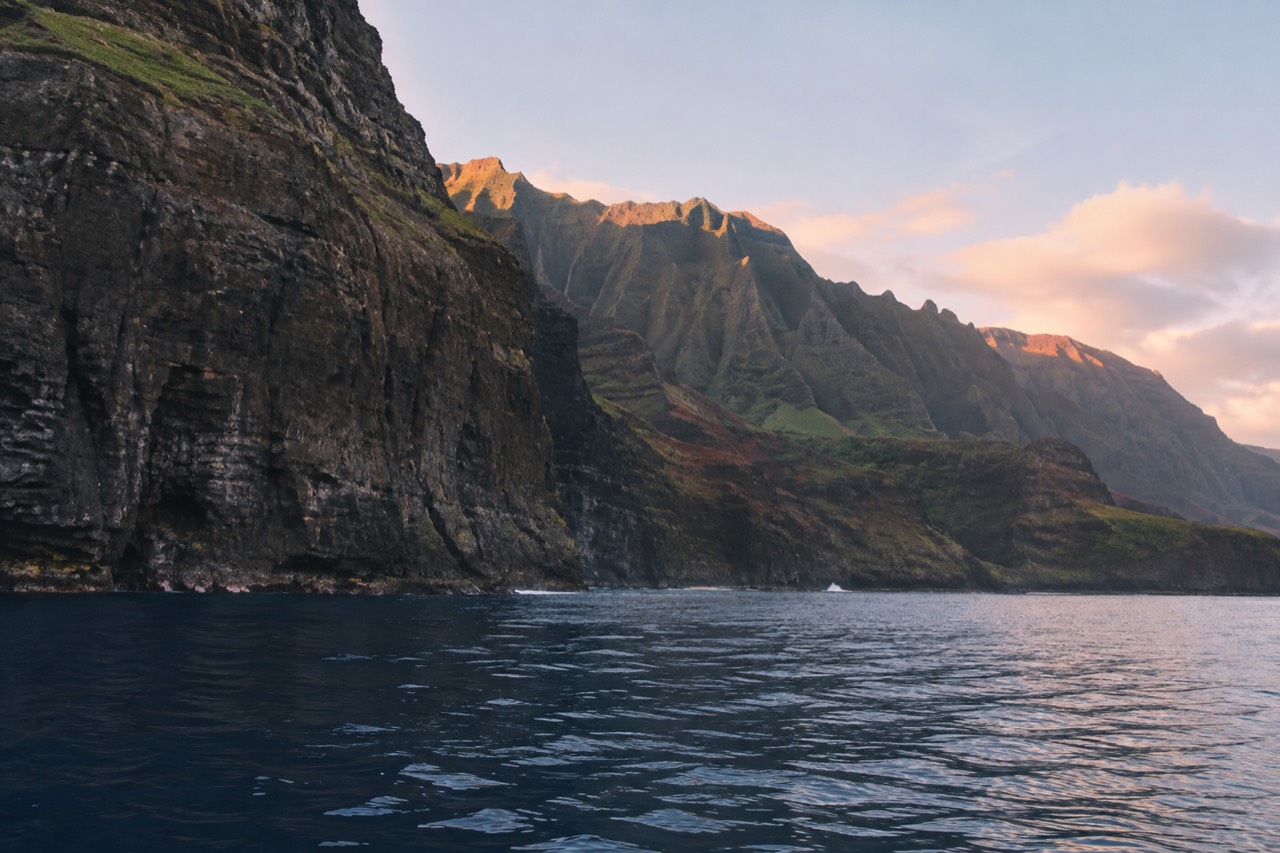
The clock matters more on the Napali Coast than on almost any other boat tour in Hawaii. The coast faces north-west into the open Pacific, so the sea state, the cloud cover and even the colour of the cliffs change through the day, and the tour you get at 7 a.m. is not the tour you get at 3 p.m. Every one of the 26 tours on this site leaves from Port Allen near Eleele or Kikiaola near Waimea, both on Kauai's west side, and the run out to the cliffs takes a while, so the slot you book decides the water you ride and the light you see.
This page walks through each departure window in order: what morning gives you, what midday gives you, what the afternoon gives you, and how those trade off against coast coverage, calm water and sell-out pressure. The short version, and the one most crews give when asked, is that the morning is the safest all-round bet, and the sunset is the one worth booking for the light alone. The long version is below.
What Is The Best Time Of Day For A Napali Boat Tour?
The best time of day for a Napali Coast boat tour is the morning, ideally the first departure of the day, when the trade winds are lightest and the offshore sea state is usually at its calmest. Sea caves and snorkel stops are governed by swell rather than by the hour on the clock, but calm mornings raise the odds of both. The exception is the sunset slot, which trades water time for the best light of the day.
That answer comes with an honest caveat that most booking pages skip: no operator guarantees cave entry or snorkelling, and the decision is made by the captain on the day, not by your departure time. Captain Andy's, one of the coast's longest-running operators, states plainly on its own FAQ that the caves are affected by ground swells and that swell size is generally not related to the time of day. So the morning is not a promise of flat water, it is a statistical tilt in your favour, plus a few practical advantages that are fully reliable: smaller crowds at the harbour, the widest choice of tour types, and the most rebooking options if the trip is cancelled.
The reason the morning tilt exists is the diurnal wind pattern. Under moderate trade winds, the National Weather Service coastal waters forecasts for Kauai's leeward waters typically describe east to north-east winds around 15 to 20 knots persisting through the day, with scattered showers mainly in the morning. The wind builds as the land heats, so an 8 a.m. departure rides the day's lightest air, and a 2 p.m. departure rides its peak. That is why nearly every snorkel-focused product on this coast is a morning tour, and why the sunset products, which accept bumpier water as the price of golden light, cluster at the other end of the day.
For choosing among actual products, the three below cover the main morning strategies: a stable power catamaran for comfort, a second power catamaran option from the same operator, and a fast raft for the most cave and coast time per hour.
If you are still weighing the whole decision, the deeper morning-versus-evening breakdown lives in morning or afternoon for a Napali tour, and the slot-specific snorkelling angle is covered in the best time of day to snorkel in Kauai.
Why Do Crews Prefer The Morning?
Crews prefer the morning because the trade winds are at their lightest, the sea state is usually the calmest of the day, and the full menu of tour types is available, from short raft runs to all-day snorkel expeditions. Morning also leaves the most daylight for a rebooking if weather cancels the first attempt, which is why operators tell visitors to book early in their stay.
The calm-water logic is real and measurable. The offshore wave record for Kauai shows the summer months, June through September, as the quietest of the year, and within any given day the wind-driven chop layers on top of whatever swell is running. Wind chop is the part that changes through the day, and it is smallest in the first hours after sunrise. The swell itself does not care what time it is, but the roughness you feel on the deck does.
The second reason is product availability. Nearly every snorkel tour on this coast is built as a morning product, because the operators want the calmest water for the water portion of the day. The Amelia K's 5-hour tour with lunch included, rated 4.9 from 2050 reviews and from $227.13 per person, is a morning-style product. Kauai Sea Tours' raft snorkel adventure, 5 hours 30 minutes with breakfast included, rated 4.8 from 1656 reviews and from $217 per person, is the same idea on a smaller, faster hull. The afternoon and sunset side of the schedule is dominated by dinner and sightseeing cruises that spend little or no time in the water.
The third reason is the rebooking buffer. Kauai operators are explicit that weather cancellations can come with as little as 20 minutes' notice, and their standing advice is to book a tour early in your stay so there is room to reschedule. A morning tour cancelled for swell leaves you the whole rest of your trip to try again; a sunset tour cancelled on your last evening leaves you nothing. Every product on this roster carries free cancellation, which softens the money side, but it cannot give you back a lost day.
One practical note on the morning itself: west-side mornings are typically dry and warm. The Waimea station's long-term climate normals put the January mean maximum at 79.5°F, and summer mornings run warmer still, so a light layer for the outbound ride is usually enough.
What Does Midday Bring?
Midday brings the brightest light, the best conditions for photography of the cliff faces, and the most reliable visibility for snorkelling, but also the strongest trade winds and the choppiest water of the day. It is the slot where the coast looks its most vivid and the deck feels its most lively, so it rewards stable hulls and confident swimmers.
The photography case for midday is genuine. The Napali cliffs run roughly north to south along a 16-mile stretch of coast, and a high sun lights the green valley walls and the red and grey rock bands without the deep shadows that morning and afternoon produce. If your goal is sharp, even photographs of the coastline rather than dramatic silhouettes, the middle of the day is the best light you will get all trip.
The trade-off is the wind. By midday the land has heated and the trade winds are at full strength, which means whitecaps on the offshore stretch, spray on the ride, and a wetter, bouncier hour on a raft. On a large power catamaran that is a comfort question; on a rigid-hull inflatable it is part of the fun or part of the problem, depending on your back and your stomach. If you are prone to motion sickness, midday is the slot to treat most seriously, and the medication timing matters more than the willpower: the scopolamine patch needs to be applied at least 4 hours before it takes effect, while oral meclizine needs about 2 hours.
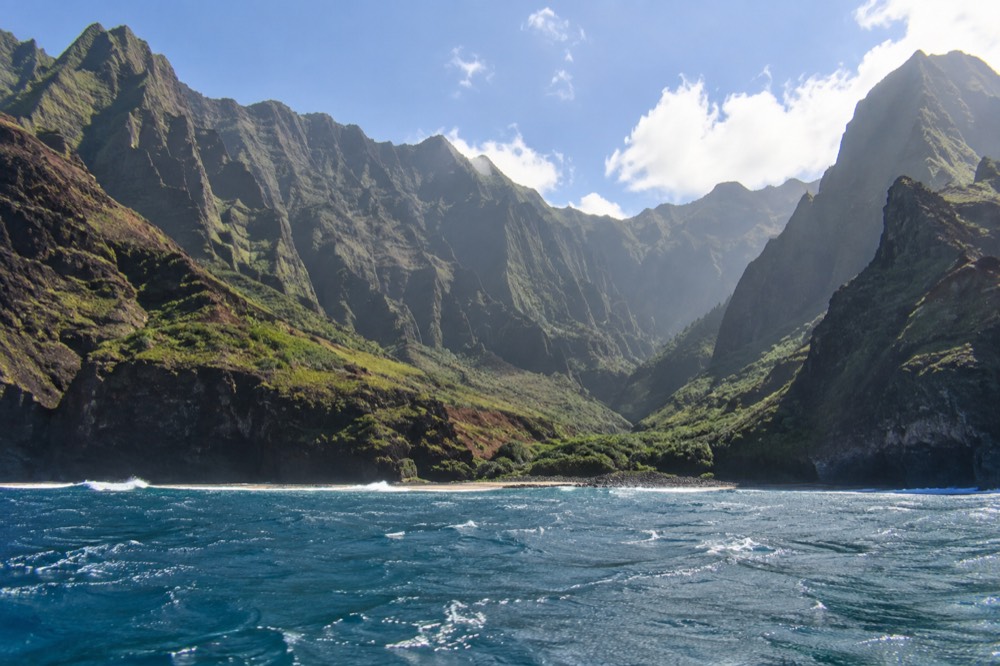
Few tours are actually built as midday products, which is worth knowing before you go hunting for one. The schedule structure on this coast is a morning block of snorkel tours and an afternoon-to-evening block of sightseeing, sunset and dinner cruises, with the midday hours mostly used as the return leg of morning trips or the outbound leg of afternoon ones. If you want the midday light, the practical way to get it is a long morning tour that is still on the water at noon, such as a 5-hour or 6-hour product, rather than a tour that departs at noon.
What Does The Afternoon Give You?
The afternoon gives you warmer water and air than the morning, smaller tour groups as the day's snorkel crowd disembarks, and the start of the golden light that builds toward sunset. It also gives you the day's strongest winds and choppiest water, so it suits sightseeing and photography better than snorkelling, and stable catamaran hulls better than rafts.
The afternoon products on this coast are honest about what they are. The 3-hour Zodiac sea caves option from Na Pali Riders, rated 4.9 from 279 reviews and from $225 per person, sells the cave run rather than a long water stop. The express sunset tour aboard 'Imiloa, 5 hours with a late lunch included, rated 4.5 from 224 reviews and from $190 per person, is the roster's price floor and leans into the evening. These are tours that accept the afternoon sea state and plan around it.
What the afternoon genuinely wins is light direction and crowd thinning. The morning fleet is large, and the first departures queue out of Port Allen and Kikiaola within the same hour or two. By mid-afternoon the harbours have emptied, the boats carry fewer passengers, and the crew-to-guest ratio on a part-full catamaran is a real upgrade in itself. The light on the cliffs also turns warmer and lower, which is why so many of the coast's best photographs are taken after 3 p.m.
The snorkelling question is where the afternoon loses ground. Operators on this coast say it plainly: the calm-water months, roughly April through October, are when afternoon snorkelling works, and in the rougher half of the year the afternoon products drop the water portion entirely and become sightseeing or whale-watching runs. If your heart is set on swimming at the base of the cliffs, the afternoon is the wrong slot in winter and a coin flip outside the calm season.
Which Slot Sees The Most Coast?
The slot that sees the most coast is the longest tour you can board, not any particular hour: the 6-hour snorkel and sail tours and the 7 to 8-hour Niihau expeditions cover far more coastline than any 3-hour run. Within equal durations, morning tours spend more of their time on the coast itself, because the outbound ride is smoother and the captain can hold the cliff line longer.
Duration is the honest variable here, and the roster makes the spread plain. A 3-hour Zodiac sea caves expedition from Na Pali Riders, rated 4.9 from 155 reviews and from $235 per person, is built for the caves and a fast pass along the cliff line. The 6-hour snorkel and sail tour from Holo Holo Charters, rated 4.8 from 582 reviews and from $292.48 per person, has time to run the full coast, stop for a long snorkel and still cruise the sea arches. The 8-hour Niihau and Napali snorkel tour, rated 4.7 from 481 reviews and from $361.31 per person, crosses the 17.2-mile Kaulakahi Channel to Lehua and adds a second island to the day.
| Tour | Duration | Hull | Coast coverage style | From (per person) |
|---|---|---|---|---|
| Zodiac raft sea caves expedition | 3 hours | Rigid-hull inflatable | Fast cave and cliff-line pass | $235 |
| Deluxe power catamaran tour | 4 hours 30 minutes | Power catamaran | Full coast with cave runs, conditions permitting | $275 |
| Na Pali boat tour on the Amelia K | 5 hours | Power catamaran | Full coast plus snorkel and sunset leg | $227.13 |
| Snorkel and sail tour | 6 hours | Sailing catamaran | Full coast, long snorkel stop, two meals | $292.48 |
| Niihau and Napali full-day tour | 7 hours | Power catamaran | Napali coast plus the channel crossing to Niihau | $339 |
The morning-versus-afternoon effect on coverage is smaller than the duration effect but real. A smooth morning run lets the captain linger at the caves and the snorkel reef and still complete the coast; a bumpy afternoon run spends more minutes pushing into wind and fewer minutes drifting. On a raft, where speed compensates for conditions, the gap narrows. On a sailing catamaran, where the boat only goes as fast as the wind allows, the gap widens.
The deluxe power catamaran tour sits in the sweet spot for coverage per hour: 4 hours 30 minutes on a fast, stable hull from Kikiaola, the closer of the two harbours to the coast itself, rated 4.9 from 157 reviews. Kikiaola departures shave transit time off the front of the trip, which is one reason the west-side raft fleet is based there.
Which Slot Is Calmest?
The calmest slot is the first departure of the morning, in the calm season, on a large power catamaran. Calmness comes from three stacked factors: the time of day, which controls wind chop; the month, which controls swell; and the hull, which controls how the remaining motion feels. You control all three at booking, and the captain controls the rest on the day.
Stack the three factors deliberately and you get the smoothest realistic day on this coast. On the swell side, the offshore record shows June through September as the quiet months and December through January as the roughest, with the shoulder months of April and October sitting genuinely in between rather than splitting cleanly into calm and rough halves. On the wind side, the morning wins for the reasons above. On the hull side, a power catamaran's twin hulls and low profile handle chop more gently than a monohull, and far more gently than a rigid-hull inflatable, which by design trades comfort for speed and cave access.
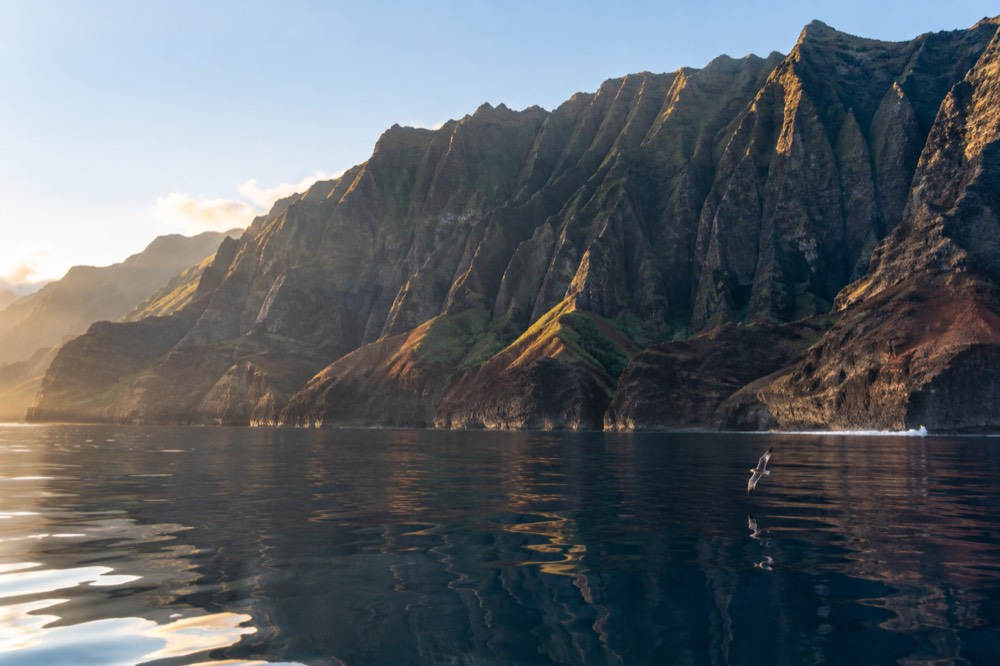
The honest limit on all of this is that calm is a forecast, not a fact, when you book. The National Weather Service publishes the surf and coastal waters forecasts that operators watch, and its advisory thresholds for west-facing shores, 12 feet for an advisory and 20 feet for a warning, give a sense of how large the range of "go" days is. A morning booking in July on a catamaran is the best bet you can construct, and it still gets cancelled sometimes, which is exactly why every operator on this coast repeats the same advice: book your boat day early in your stay, not at the end.
For motion-sickness planning, treat the patch and pill timelines as hard numbers rather than suggestions. The scopolamine patch needs to go on at least 4 hours before boarding, oral meclizine about 2 hours, and both work far better taken before symptoms start than after. The morning slot helps here too, simply because the water is gentler in the hours when the medication is at full strength.
Which Slot Sells Out First?
The morning snorkel tours sell out first, especially the small-group rafts capped at 14 guests and the long 6 to 8-hour expeditions, because morning inventory is smaller and demand for calm water is larger. Sunset dinner cruises sell out next, driven by date-specific demand from couples and groups. Mid-length afternoon tours are the most bookable at short notice.
The capacity numbers explain the morning squeeze. The raft snorkel adventure from Kauai Sea Tours carries a maximum of 14 guests, and the ultimate Zodiac tour from Kauai Sea Rider Adventures carries the same cap, rated 4.7 from 111 reviews and from $257.28 per person. A 14-seat raft that departs once in the morning has 14 morning seats, full stop. The large catamarans, such as the Lucky Lady products carrying up to 49 guests, have more seats per departure, so they hold out longer.
| Booking pressure | What sells out first | Why |
|---|---|---|
| Highest | Small-group morning rafts (max 14 guests) | Tiny inventory, high demand for calm-water cave runs |
| High | Long morning expeditions, 6 to 8 hours | One departure a day, premium itineraries, Niihau crossings |
| High in peak weeks | Sunset dinner cruises | Date-specific demand, couples and celebrations |
| Moderate | Morning large-catamaran snorkel tours | More seats per departure, up to 49 guests |
| Lowest | Afternoon and midday sightseeing runs | Larger inventory, less date-specific demand |
Season matters as much as slot. Kauai's visitor counts peak in the summer months, with 139,974 air arrivals recorded in July 2026, and the calm-season mornings are when every visitor who wants flat water wants the same seats. The winter months thin the crowds, but they also thin the product menu, so the tours that do run in winter are not automatically easy to book. The practical rule: whatever the season, book the morning snorkel tour you want first, then fill the rest of your trip around it.
Which Slot Should You Book?
Book the morning if you want caves, snorkelling or the calmest water; book the sunset if you want the best light and a relaxed dinner cruise; book a long midday-spanning tour if you want maximum coastline; and book the afternoon only if the morning is sold out or your group cannot do an early start. If you can only take one tour, take the first morning departure of your stay, so weather has time to be rescheduled.
Matching the slot to your priorities is the whole decision, and the table below is the shortcut. It assumes you have already chosen your dates, which matters just as much: the calm season runs roughly April through October on this coast, and the cave-entry odds are highest in summer.
| Your priority | Slot to book | Roster example |
|---|---|---|
| Sea caves and a fast, close-up ride | First morning raft | Super raft snorkel adventure, 4 hours 30 minutes, from $235 |
| Calm water and comfort | First morning power catamaran | Deluxe power catamaran tour, 4 hours 30 minutes, from $275 |
| Maximum coastline and snorkel time | Long morning tour, 5 to 6 hours | Snorkel and sail tour, 6 hours, from $292.48 |
| Golden light and dinner | Sunset cruise | Deluxe sunset cruise aboard Lucky Lady, 5 hours, from $222.86 |
| Lowest price with a meal | Late afternoon or sunset | Express sunset tour aboard 'Imiloa, 5 hours, from $190 |
Two closing notes on execution. First, book the boat day early in your stay, not at the end, so a weather cancellation has somewhere to go; this is the single most repeated piece of operator advice on this coast and it costs nothing to follow. Second, when you are torn between two slots, take the one with the earlier departure, because the rebooking math only runs one direction. A cancelled morning leaves you the afternoon, the next morning and every day after; a cancelled sunset leaves you the next sunset at best.
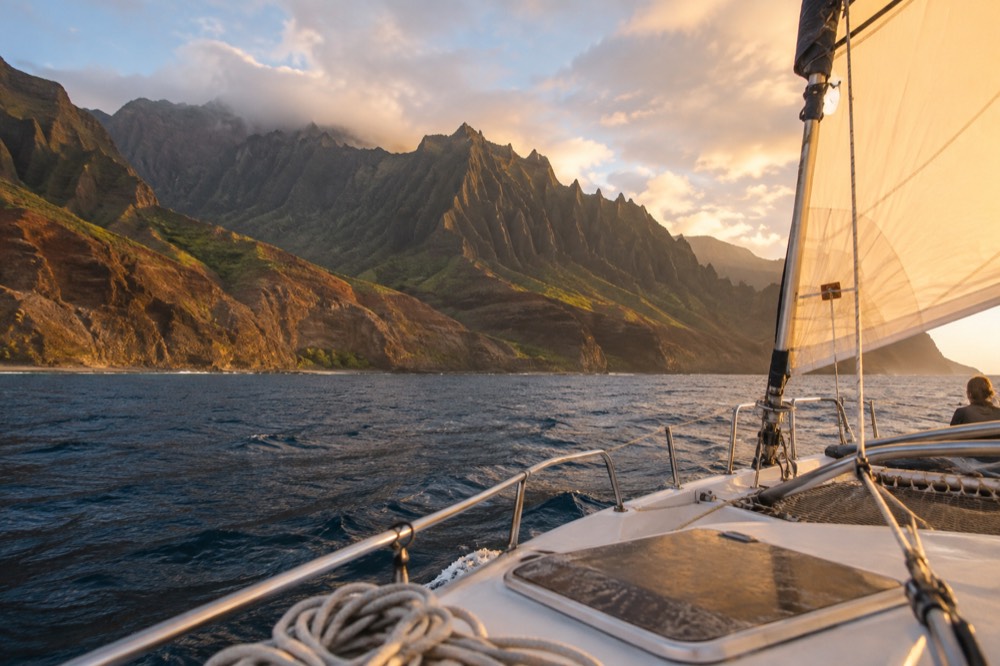
For the full evening-side picture, including the dinner-cruise products and what they include, see the Napali Coast sunset cruise guide. And if you are still deciding between the two harbours, the getting to Port Allen and Kikiaola guide covers the drive, the parking and the check-in logistics for both. This page is part of Napali Coast Boat Tours, where every product on the roster is listed with its verified price, rating and review count.
Common Questions About The Best Time Of Day For A Napali Coast Boat Tour
What Is The Best Time Of Day For A Boat Tour?
The best time of day for a Napali Coast boat tour is the first morning departure, when the trade winds are lightest and the water is usually calmest, giving the best odds for sea caves and snorkel stops. The sunset slot is the exception worth making, trading water time for the day's best light.
Are Napali sea caves more accessible in the morning?
Cave entry is governed by ground swell rather than the time of day, so the morning is not a guarantee. That said, calmer mornings are more common than calm afternoons, and operators state that summer months offer a higher likelihood of cave entry than winter.
Is the afternoon too rough for a Napali tour?
Not usually, but the afternoon carries the day's strongest trade winds and choppiest water. Afternoon tours lean toward sightseeing and sunset runs rather than snorkelling, and in the rougher half of the year many afternoon products drop the water portion entirely.
Which tours sell out first?
Small-group morning rafts capped at 14 guests and long 6 to 8-hour expeditions sell out first, followed by sunset dinner cruises in peak weeks. Large-catamaran morning tours and afternoon sightseeing runs are the most bookable at short notice.
Should I book the morning or sunset tour?
Book the morning if caves, snorkelling or calm water are the priority; book the sunset for light, dinner and a relaxed pace. If you can only take one tour, take the morning, and book it early in your stay so a weather cancellation can be rescheduled.
Does the time of day affect how much coast you see?
Duration matters more than hour: a 6-hour tour sees far more coast than a 3-hour run. But within equal durations, a smooth morning departure lets the captain linger at the caves and reefs, while a bumpy afternoon run spends more time pushing into wind.